

Effective defence has always been about more than brute strength, and in today’s landscape this truth is more critical than ever. Carl Miller, UK Sales manager Defence and Public Safety, Getac, explores how data and technology are working to reshape defence strategy, with digital supremacy emerging as a decisive force multiplier.
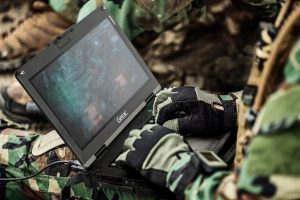
From frontline tactics to global command coordination, technology now drives almost every facet of defence operations. The conflict in Ukraine has spotlighted how drones, cyber tools, and real-time data can reshape outcomes at speed. But as digitisation accelerates, so too do the challenges: fragmented forces, vast operational theatres, and multinational command structures make seamless data sharing a logistical minefield.
To stay ahead, defence coalitions must prioritise resilient, interoperable networks, powered by rugged, mission-ready technology. Without it, digital innovation risks becoming a liability instead of a strategic advantage that provides a tactical edge.
Real-time decision-making increasingly influences outcomes
Speed has always been a critical component of battlefield strategy, but the ability to strike fast means nothing if it’s in the wrong place or at the wrong time. Decisions must be made swiftly but also based on accurate information if they are to be truly impactful. Doing this requires putting data into the hands of decision makers as quickly and efficiently as possible, which can only be done when the right equipment is in place.
The days of carrier pigeons and bike messengers delivering information from the front lines are long gone. Today’s connected soldiers operate as mobile data hubs, using IoT sensors, live video feeds, and edge computing to enhance situational awareness and deliver mission-critical intel to command centres in real time. This enables rapid, data-driven decision making at the highest levels – replacing educated guesswork with precision. If adversaries can’t access the same levels of intelligence, this strategic edge provides significant advantage both on and off the battlefield.
Effective interoperability is a strategic asset
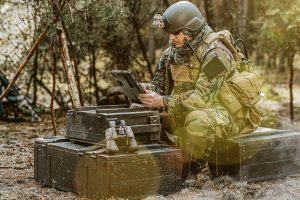
Coalitions remain the backbone of global security, but in today’s dynamic defence environment, seamless collaboration is no longer optional – it’s mission-critical. Allied commanders must share intelligence quickly, coordinate units remotely, and respond as a unified force in a constantly demanding defence environment. Without integrated digital systems to enable this level of synchronisation, even the strongest alliances risk fragmentation when under pressure.
In recognition of this, defence alliances define their own interoperability standards – established through formal Standardisation Agreements (STANAGs) – which provide rules, guidelines, and characteristics to help member nations achieve effective collaboration. This encompasses technical, procedural, and human dimensions, from common equipment and procedures to shared terminology and training.
Rugged military hardware and solutions manufacturers like Getac also help facilitate effective interoperability through the use of open computing standards and military I/O connectors in their devices, provision of NATO Stock Numbers, and extensive customisation options that enable users to tailor new devices to their exact interoperability needs and requirements.
Better technology means better survivability – both digitally and physically
Modern soldiers aren’t just combatants; they are individual connections in large-scale digital information networks. These networks underpin strategic operations, providing commanders with the eyes, ears and information they need to make decisions and coordinate with allies. Ensuring their survivability – against physical, environmental, and cyber threats – is therefore mission-critical.
This is where trusted, battle-tested technology and hardware plays a crucial role. Devices deployed to service members must meet stringent operational criteria before they can be considered mission-ready and suitable for the task at hand. They must be compact and lightweight for ease of use in the field, equipped with powerful processors and provide secure uncompromising connectivity; all to support mission-critical performance in a high-risk, high-pressure scenario. This includes compliance with MIL-STD-810H for environmental durability, and advanced encryption protocols for secure data transmission to protect against cyber-attacks and data breaches. Only then can defence organisations be confident that their systems balance reliability, advanced performance, and secure interoperability while addressing obsolescence, customisation, and mission-critical demands.
Today’s true force multiplier
While assets like tanks, jets, and ballistics will always play a critical role, the modern defence advantage lies in real-time data sharing, seamless interoperability, and rugged, secure computing. Digital supremacy has shifted from a support function to a strategic centrepiece. Forces that embed resilient, rugged, tech into their core operations will shape the next era of battlefield dominance.