

Ukraine’s Operation “Spider’s Web” marks a defining moment in the history of irregular warfare: a series of simultaneous precision drone strikes conducted deep inside Russian territory against high-value strategic assets. By fusing off-the-shelf technologies, open-source command and control (C2) systems, covert assets, and asymmetric tactics honed over two years of full-scale war, Ukraine teaches us yet another lesson on what under-equipped forces can achieve through ingenuity instead of brute force.
This operation also highlights that technological innovation must be matched by tactical maturity, organizational creativity, and meticulous planning for it to deliver battlefield effects. Beyond its immediate success in targeting Russia’s strategic bomber fleet, “Spider’s Web” has broad implications for the future of key mission sets, including the suppression and destruction of enemy air defenses (SEAD/DEAD), covert strike against high-value targets, and the evolving character of special operations as great power competition returns on the center stage.
The strategic bombers’ asymmetry
Since late 2022, Ukraine has been seeking ways to target Russia’s long-range bomber fleet, responsible for launching cruise missile strikes on civilian infrastructure. As Russia increasingly relied on Tu-95 and Tu-22M3 bombers stationed at deep rear bases such as Engels, Shaykovka, and Soltsy, Kyiv forces began exploring solutions to offset this strategic imbalance without an air force capable of deep-penetration strikes.
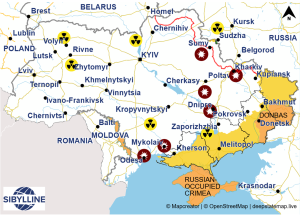
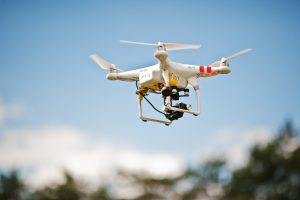
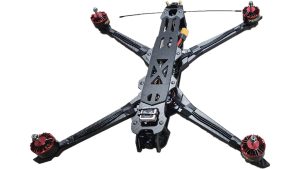
From a technological standpoint, Operation “Spider’s Web” represents the culmination of Ukraine’s efforts to bridge that gap, although it may not be the last chapter of this specific story. Leveraging customized commercially available first-person view (FPV) drones produced by the Ukrainian company First Contact and concealed within specially designed wooden cabins that were smuggled into Russia, Ukrainian forces hit with successive strikes four Russian airbases – Olenegorsk, Belaya, Ryazan-Dyagilevo, and Ivanovo-Severnyy – destroying or damaging multiple aircraft parked on the tarmac. Latest battle damage assessments confirm the destruction of at least 12 aircraft, with up to ten suffering damage, including seven Tu-95Ms and four Tu-22M3 strategic bombers, and one An-12 transport aircraft. Imagery of the operation released by the Ukrainian Security Services (SBU) indicates that the drones were equipped with high-explosive warheads to cause maximum damage to the targets and were remotely flown by Ukrainian operators using ArduPilot’s ArduCopter mission planner suite and UART-based control architecture, connected via local 3G/4G cellular connectivity. In this way, Ukrainian operators could exploit the system’s autonomous mission planning, 3D waypoint navigation, and flight stabilization features to diminish reliance on active control signals and compensate for any latency issues caused by the vast geographical distance between them and the drones.
It is also worth noting that accurate pre-mission intelligence collection and analysis have played a major role in the success of the operation. This is reflected not only in the cunning logistics and deployment of strike assets based on a distributed and minimal footprint approach, but also in the careful selection of targets’ aim points by Ukrainian planners, chiefly the most delicate parts of the aircraft, such as missile pilons and wing roots. Interestingly, SBU later acknowledged the integration of AI-enabled terminal guidance into the drones to offset potential loss of signal issues.
Technology as enabler, not panacea
Overall, these elements show that the value of a weapon system is not inherent but relative to its integration and employment. Even small, low-cost drones can deliver strategic effects when combined with robust intelligence, flexible command and control, and mission planning. Furthermore, while “Spider’s Web” showcases technological ingenuity, it was the human element – planners, operators, drone engineers – who ensured its success. In fact, many of the tools used – ArduPilot, COTS drone components, 3D-printed parts – are widely available. The difference lies in Ukraine’s ability to creatively integrate them with covert logistics, mission planning, and operational execution.
This human-machine synergy is key, for technology only becomes an asset when embedded within coherent tactics, techniques, and procedures (TTPs). Ukraine has spent years maturing its TTPs for drone-based ISR, targeting, and strike, often under fire and the result should come as a surprise.
This reinforces a key lesson for future military innovation: success depends not only on fielding new systems but also on adapting them into effective operational concepts.
The Spider’s Web as a Concept of Operations
The term “Spider’s Web” is not merely symbolic — it reflects a specific and innovative operational logic. As already described elsewhere by this author and other observers, the operation involved layered infiltration as a key prerequisite. It is also possible that local supporters or even Ukrainian special operators provided key on-the-ground reconnaissance and human intelligence to complement the overall intelligence preparation of the battlefield (IPB) behind the operation. This means that rather than massing firepower or relying on long-range stand-off munitions, Ukrainian planners deliberately chose dispersion, deception, and persistence, spending more than 18 months to plan the mission. This modus operandi diverged from most deep-strike operations conducted by Ukraine in the past two years, which typically relied on larger long-range kamikaze drones but, aside from a few episodes, struggled to deliver strategic effects at the scale desired.
As noted by some commentators, “Spider’s Web” mirrors earlier British SAS operations during WWII and echoes lessons from recent Western SOF practices in Iraq and Afghanistan.
Strategic effects on a (minimal) budget
Another metric to understand the success of “Spider’s Web” is its cost disproportionality: small, cheap systems achieving outsized results. The destruction or damage of multiple Russian bombers – estimated at several billion dollars – forced the Kremlin to relocate its assets, disperse its fleet, and invest in costly base security upgrades. Some Tu-22Ms were moved over 600 km further from Ukraine – complicating Russia’s missile campaign and partially reducing sortie generation, at least in the short term. But its implications for the Russian strategic airpower are also long-term, given that even the loss of a few aircraft has a significant impact on a capability segment that – except for the Tu-160 – is not under production anymore, and will likely increase operational wear of remaining assets.
Moreover, the psychological effect was significant. Russian command structures and defense planners were shaken by the realization that their strategic rear was no longer safe, while the operation publicly humiliated Russia. This mirrors classical guerrilla logic: making the enemy feel vulnerable where they expect safety.
“Distributed lethality”: what implications for SEAD/DEAD and deep strike operations
Traditionally, Western offensive counter air (OCA) operations, including SEAD/DEAD missions, rely on the combination of multiple high-end capabilities such as high-performance fast jets, electronic warfare, cyber-attacks and a variety of dedicated long-range kinetic effectors to suppress or destroy air defenses and related high-value assets in order to establish air superiority in the initial phase of a conflict.
If properly contextualized, the “distributed lethality” concept shows that the traditional approach is not the only viable model to conduct certain elements of OCA operations. At a minimum, it demonstrates that distributed, pre-positioned drones and other systems can achieve SEAD/DEAD-like effects without the need for dedicated air formations, including low-visibility aircraft. Likewise, pre-deployed distributed strike assets offer at least some complementary options – if not valuable alternatives depending on the circumstances – to the use of both manned and unmanned stealth platforms to penetrate adversarial A2/AD umbrellas and conduct other OCA missions (i.e., attack operations) in order to establish air superiority and, eventually, air supremacy. What is more, this aspect connects with the broader issue of how small unmanned aircraft systems (sUAS) affect both ground and air operations, and how this reverberates on the West’s very notion of air dominance, among other aspects.
By launching drones at static aircraft and facilities, Ukraine inflicted structural damage aligned with some of the goals of OCA operations: it denied or degraded Russia’s ability to operate key aircraft (bombers in this case) and use major airbases. There is no reason to avoid applying this distributed concept of operations toward targeting fighter jets, radars, communication nodes, and missile batteries in contested environments. At the same time, the Spider’s Web operation also showed that achieving strategic effects is not inherently tied to the use of traditional long-range strike capabilities or a pre-existent context of air superiority. That said, it is worth stressing that this approach doesn’t replace the use of traditional assets for OCA mission sets. Instead, it complements it and provides planners with additional options that increase planning flexibility.
Front line drone technology to fuel UK – Ukraine partnership.
Five C-UAS lessons from Ukraine’s Operation Spiderweb
Operation Spiderweb has shattered long-held assumptions about what drones can do—and how far they can reach. Ukraine’s audacious strikes deep inside Russian territory exposed critical blind spots in traditional counter-UAS strategies.
Ukraine weaved together months of covert logistics, telecom exploitation and ground infiltration to strike targets thousands of kilometers from the front.
This evolution will force defenders to rethink every layer of their air defenses, from human intelligence and cargo screening to telecom monitoring and point-defense systems.
The Spiderweb attacks mark a new era of drone warfare, one where distance offers no safety, civilian networks become weapons and threats can emerge from trucks parked meters from billion-dollar assets. We take a look at five counter-UAS lessons the world has learned from Operation Spiderweb.
- Counter-intelligence is now a core component of counter-UAS
The Spiderweb strikes were not a simple set of random raids. They were the culmination of 18 months of clandestine planning, smuggling drones and payloads deep into Russian territory before launch.
As Institut Montaigne observed, this “reveals the current dominance of Ukrainian counter-intelligence” over its adversary.
In practice, that means traditional counter-UAS defenses (radars, jammers, guns) are not enough on their own. Security services must also prioritize human intelligence and counter-espionage to detect hidden UAS networks and supply chains before they strike.
Effective counter-UAS now requires guarding against long-term infiltration and routinely hunting for secret drone caches or sleeper networks just as much as it requires radar detection.
- Telecom networks offer a new attack surface
The Spiderweb drones were not flown in via typical operator control links, they essentially functioned as mobile phones. As the U.S. think tank CSIS notes, each FPV strike drone was “remotely controlled through Russian mobile telecommunications networks, including 4G and LTE”.
In effect, civilian telecom infrastructure became part of Ukraine’s targeting chain. This means adversaries can exploit commercial networks, or even local Wi-Fi/5G, to pilot drones from extreme distances.
Defenders will need to deny or harden those networks. Counter-UAS plans should include monitoring or jamming suspect cell/LTE signals near sensitive sites, enforcing strict communications encryption and working with telecoms organizations to flag unusual drone-related traffic.
The border between cyber/telecom security and physical air defense is blurring. Attackers can weaponize any data link, so defenders must secure them as vigorously as they secure airspace.
- Distance is no longer a defense
Before Operation Spiderweb, bases 2,000 – 4,000 km behind the frontlines were thought safe by virtue of distance. This is no longer the case.
The Strikes hit both Olenya, ~2,000 km from Ukraine, and Belaya, ~4,000 km away, demonstrating that geographic depth alone will not protect high-value assets.
Many modern UAS have reliable autopilot (e.g. open-source ArduPilot) and can recover GPS dropout by dead reckoning, while LTE/satellite links allow pilots to guide them from thousands of kilometers away.
In practice, even remote bases or ships at sea can now be reached by low-cost drones. Defenders must assume that any point on the map is potentially within range. This drives the need for persistent, multi-layered surveillance including radars, acoustics and cameras, not just at the border, but around every asset.
- UAS threat vectors have expanded beyond the sky
Defenders conventionally focus on airborne threats, but Spiderweb showed that UAS threats can arrive along roads among civilian traffic. The Ukrainian drones never flew across the front line, they were smuggled in by truck and assembled in rented warehouses.
According to security service reports, dozens of drones were hidden inside cargo containers, then placed on trucks and driven near target airfields. At the pre-planned time a remote mechanism opened the container roofs and the drones flew out right next to their targets.
This tactic bypassed most radar and standoff defenses entirely. The key takeaway is that attackers can exploit any vector, including containers, trucks, ships or even trains, to position UAS deep inside a theater.
To be entirely comprehensive, counter-UAS planning must therefore include ground-based countermeasures, screening inbound cargo and vehicles, interdicting clandestine logistics networks and using intel to patrol routes.
In short, protect “the last mile” of the threat chain. If a hostile drone can be driven or smuggled in nearby, it can strike almost unimpeded once launched.
- Traditional air defenses are not equipped for close-range drone threats
Conventional anti-air systems simply aren’t optimized for tiny, close-proximity drones. In the Spider Web attacks, the drones were launched from just outside the airfields, often meters away, making them virtually invisible to systems like the Pantsir or S-300, which are tuned for jets and missiles.
CSIS reports that “Pantsir and S-300 units” failed to detect or engage the low-flying quadcopters launched from cargo trucks nearby. In effect, the enemy slipped inside the ring of traditional air defenses. For defenders, this means even a modern air-defense battery is insufficient against swarming, ground-level threats.
Solutions require dedicated short-range counters such as small radar/optical sensors, quick-reaction drones or anti-drone missiles, acoustic gunfire locator systems or even handheld jammers. https://cuashub.com/en/content/5-c-uas-lessons-from-ukraines-operation-spiderweb/ (Source: https://cuashub.com/)
Landmark Drone agreement between the UK and Ukraine

On June 23rd a landmark agreement between the UK and Ukraine to share battlefield technology was reached,
boosting Ukraine’s drone production and linking up the UK’s defence industry with the cutting-edge technology being developed on the front lines in Ukraine.
Prime Minister Keir Starmer and President Zelenskyy reached the agreement during the Ukrainian leader’s visit to Downing Street.
Technology data sets from Ukraine’s front line are set to be plugged into UK production lines, allowing British defence firms to rapidly design and build, at scale, cutting edge military equipment available nowhere else in the world.
Ukraine is the world leader in drone design and execution, with drone technology evolving, on average, every six weeks. The agreement will allow that data to be shared with UK firms to quickly build and produce large numbers of drones for Ukraine’s front lines. It will also ensure a defence dividend continues to be delivered across the country – boosting Ukraine’s defence with deliveries of new equipment, while also supporting British jobs. Initial agreements between defence firms in both countries are expected to be rolled out in the coming weeks, with the aim of delivering Ukraine large numbers of battle-proven drones to continue to stave off Russia’s barbaric invasion over the coming months and years.

Prime Minister Keir Starmer said: “By harnessing Ukraine’s battlefield innovation and combining it with British industrial strength, we are not only accelerating support for Ukraine’s defence, we are also delivering security for working people through our Plan for Change. This agreement is not just about today’s fight, it’s about building the defence capabilities of tomorrow, together. The agreement, which covers the next three years, underscores the unbreakable friendship between the two countries, comes after the two leaders signed the 100-year partnership between the UK and Ukraine in January.”
The UK will also allocate up to £280m of bilateral assistance to Ukraine for financial year 2025-2026 today to keep the country in the fight and ensure Ukrainians living through Russia’s illegal invasion have access to vital support.
The funding will support humanitarian, energy, stabilisation, reform, recovery and reconstruction programmes. Today’s extra funding takes the UK’s non-military support to Ukraine since the start of the invasion to over £5bn. This includes £4.1bn in fiscal support, and over £1.2bn in bilateral assistance.
The industrial pilots and subsequent orders will be funded through the UK’s £4.5bn of military support this year. It also delivers on the Strategic Defence Review’s recommendations for the UK Armed Forces to move towards a greater use of autonomy.
Initially, the industrial partnership is expected to increase information and expertise sharing between the UK and Ukraine on drone-based air defence, but the agreement also paves the way for both countries to work on capabilities for the future, long after the war finishes.
It comes after strong collaboration between UK and Ukrainian innovation and military teams and builds on the partnerships created through the UK’s joint leadership of the international drone coalition.
The pilots and subsequent orders will be funded through the UK’s £4.5bn of military support this year and the UK’s commitment to provide £3bn a year of military support to Ukraine in future years. It also delivers on the Strategic Defence Review’s recommendations for the UK Armed Forces to move towards a greater use of autonomy.
UK Drone Technology Companies
This agreement brings into focus the growth of advanced drome technology being developed in the UK.
Marlborough Communications

Marlborough Communications (MCL) a Cohort company has developed MCL Flight Stack an advanced chip control system for drones.
Key Features
Security & Control
- UK Designed & Built– Engineered and manufactured entirely within the United Kingdom
- Non-Chinese Critical Components– Complete supply chain assurance for sensitive applications
- Total Authority Control– Maintain full oversight and control of your flight systems
Technical Specifications
- Integrated ESC & Flight Controller– Complete flight stack solution in one package
- BetaFlight Compatible– Pre-configured with industry-standard BetaFlight firmware
- 7″ FPV Configuration– Optimised for 7-inch FPV drone platforms
- 5 x 30.5mm Mounting– Standard hole pattern for universal compatibility
Operational Advantages
- Training & Mission Ready– Suitable for both training exercises and operational deployment
- Consumable Pricing– Competitively priced for expendable mission requirements
- Market-Leading Performance– Comparable specifications to premium commercial alternatives
- Field-Tested Reliability– Currently undergoing final validation trials
Quality Assurance
- UK Engineering Standards– Developed to rigorous domestic manufacturing standards
- Secure Supply Chain– Traceable components from trusted sources
- Performance Validated– Comprehensive testing programme ensuring mission readiness
Drone Evolution
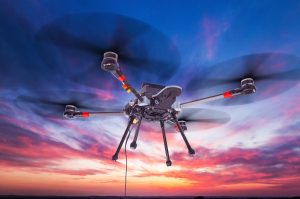
Evolution-a High-Level Overview
Based in rural South Wales, Drone Evolution are a highly motivated and focused team of
Drone experts that are transforming the market in this dual use technology area. Drone
Evolution’s products and services play into the defence, security and civilian markets and
are equally suited to performing missions such as surveillance, intelligence collection or
delivering humanitarian aid.
The strategic motivation and commitment to help UK Defence, is drawn from the UK
Strategic Defence Review 2025. At the supplier level, Drone Evolution are leading the
charge to supply Drones and the associated enabling technologies to improve the
effectiveness of the UK and international forces-allowing them to rapidly field capabilities
that are matched to the evolving threats we face.
Whilst technology is important, Drone Evolution believe in supporting their turnkey
solutions from requirements-based design, training, support and, if required,
infrastructure and the development of concepts of operations for each user.
Whether the user needs ISR1, persistent overwatch, force protection or tactical resupply,
Drone Evolution provide ‘payload agnostic’ platforms of various sizes that allow success
over a broad range of missions. Whether the user needs ‘eyes-on’ inside buildings, wider
ISR or resupply by day or night, Drone Evolution will work with sensor and other payload
manufactures, to supply the most appropriate mix of systems at a price point that offers
true value for money.
Backed-up by ‘ready-to-go’ manufacturing and UK friendly suppliers, Drone Evolution are
uniquely positioned to quickly supply the large quantities of drones to support the
stockpiling of these sometimes ‘attritable’ capabilities-this again supports the 20/40/40
vision articulated in SDR 25.
Drone Evolution are at the cutting edge of this rapidly evolving battle-winning technology.
The Drone Evolution Team are experts in their respective fields, but it is their collective
knowledge base, enthusiasm and experience that brings them to the fore.
Flare Bright

Flare Bright is a UK-based company that specialises in advanced navigation solutions. Flare Bright’s patented technologies and machine learning process combine with our emphasis on scalability using non-exquisite hardware to give you access to next-generation flight capabilities at game changing speed and cost. Flare Bright’s patented technologies and machine learning process combine with our emphasis on scalability using non-exquisite hardware to give you access to next-generation flight capabilities at game changing speed and cost.
Flare Bright was founded in 2015 by Dr. Kelvin Hamilton and Dr. Conrad Rider who have a combined 30 years of experience in subsea autonomy. Their vision was to take their experience of subsea autonomy and bring it to the skies, this was brought to life with an initial contract awarded by DASA (Defence and Security Accelerator) in 2021, where Flare Bright quickly became a success story for DASA, and started the evolution of their capabilities.
Flare Bright were then consequently awarded a follow-on contract, this time it was to develop their GPS-Free navigation system (now known as Intera) and on-board this system onto a commercially available platform to prove the system. Off the back of this contract Flare Bright started working with the US DoD C5ISR DEVCOM, to further improve this capability.
This product has now evolved to the current flagship product called Tactera. Tactera is Flare Bright’s ‘Low & Fast’ Terrain Navigation solution which utilises an automotive LIDAR system for terrain scanning, it has an accuracy of 30 meters, (Flare Bright are on roadmap to improve to 10 meters by the end of 2025) when flying between 30 feet – 300 feet at 600 knots. This system can be retrofitted to the majority of platforms due to its Low-Size, Weight and Power requirements. Flare Bright offers evaluator units for this capability which allow this system to be evaluated on a UAS system prior to purchasing in volume.
Tactera can also be coupled with Flarebright’s software enhanced INS, Intera, to enable GPS-Free navigation over featureless terrain, it has a current drift rate of 5km/hour with a MEMS chip. There is also the option to choose a swarm plug-in, which acts like a distributed sensor, to increase lethality.

Flare Bright has developed a cost-effective GPS-free navigation solution called Tactera. Tactera is our ‘Low & Fast’ Terrain Navigation solution which utilises an automotive LIDAR system for terrain scanning, it has an accuracy of 30 meters, (this is expected to improve to 10 meters by the end of 2025) when flying between 30 feet – 300 feet at 600 knots. This system can be retrofitted to the majority of platforms due to its Low-Size, Weight and Power requirements. Evaluator units for this capability are available to allow this system to be evaluated on a UAS system.

Tactera can also be coupled with Flarebright’s software enhanced INS, Intera, to enable GPS-Free navigation over featureless terrain, it has a current drift rate of 5km/hour with a MEMS chip. There is also the option to choose a swarm plug-in to increase lethality.
Federico Borsari
Non-Resident Fellow
Transatlantic Defense and Security
Center for European Policy Analysis (CEPA)
1275 Pennsylvania Ave NW, Suite 400
Washington, DC 20004