

Dstl has been part of a major MOD programme which will fundamentally change electromagnetic warfare surveillance and anti-ship missile defence capabilities.
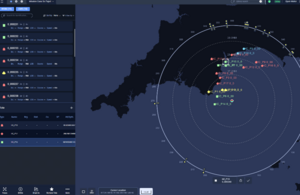
In a significant advancement for UK maritime defence, the Defence Science and Technology Laboratory (Dstl) has played a crucial role in revolutionising the Royal Navy’s electromagnetic warfare (EW) capabilities through the Maritime EW Programme (MEWP).
Working alongside industry partners, Dstl has provided operational analysis, technical expertise and advice to help the UK and allies maintain operational advantage.
Meeting modern challenges
Modern naval operations face an increasingly crowded and contested electromagnetic environment. In order to better sense and understand this complex picture for improved situational awareness and to better react to growing threats from sophisticated anti-ship missiles and EW systems, the Royal Navy needed to significantly upgrade its capabilities.
This fundamental reappraisal, informed and spearheaded by Dstl’s evidence and analysis, has led to a comprehensive modernisation programme that addresses the technical capabilities and allows future capability spirals via an open architecture approach; as well as the operational frameworks for maritime EW. MEWP doesn’t just replace equipment, it reimagines how EW integrates into the command chain.
A 2-pronged approach
MEWP represents an unprecedented investment in naval EW capabilities, following 2 complementary tracks:
- Maritime EW System Integrated Capability (MEWSIC), which will replace the Navy’s existing EW system and deliver improved sense and understanding together with advanced EW command and control.
- EW Counter Measures (EWCM), which will ensure Royal Navy ships are fitted with enhanced decoy launchers (Ancilia) to provide rapid protection (right effect, right place, right time) against hostile threats including modern anti-ship missiles and directed energy weapons.
Technological leap forward
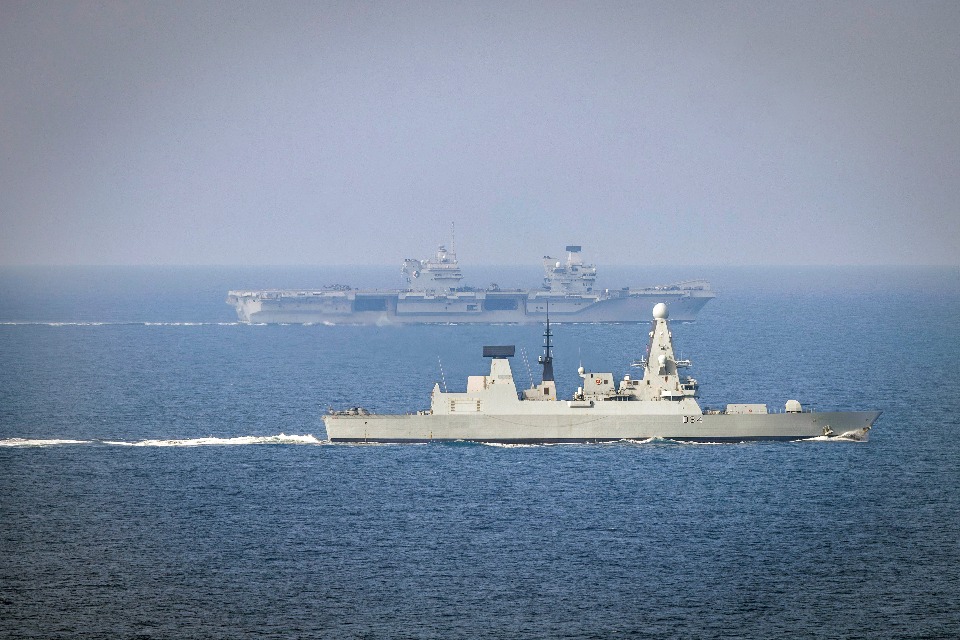
The programme represents a generational leap in capabilities. MEWSIC will equip 21 ships, including:
- 2 Queen Elizabeth class carriers
- 6 Type 45 destroyers
- 8 Type 26 frigates
- 5 Type 31 frigates
The Type 45, 26 and 31s will each receive 2 Ancilia launchers to ensure complete coverage.
A key innovation is the shift from fixed decoy launchers to trainable systems that can place the right effector in the right place at the right time to deceive incoming anti-ship missiles. This approach is already generating international interest and is being proposed as a NATO standard.
Transforming information processing
The new technology fundamentally changes how EW information is collected and presented to decision-makers. This will provide:
- more time to plan
- more time to react
- a clearer picture
- better information
- a higher level of automation
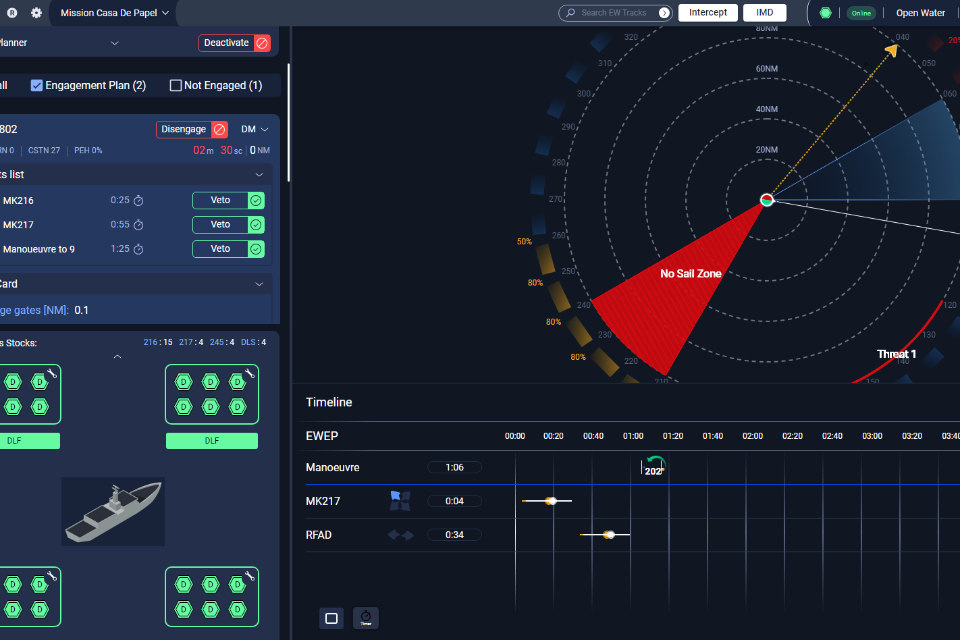
Dstl helped drive the shift in EW surveillance capability by defining what needed to be sensed. This included not just threat emissions but also defined the EM operating environment – seeing the wood from the trees – and how command and control needs to use the detected emissions and enabling machine-speed warfare by moving to the use of machine-readable data.
Dstl has created a new template for describing EW effectors in a digital format, enabling automatic weapon allocation and streamlined threat evaluation. By automating elements of sense and understand, the highly skilled operators are freed to manage ‘on the loop’ rather than struggling with data manipulation ‘in the loop’.
This improved system provides commanders with enhanced situational awareness, allowing for faster and better-informed decision-making in complex environments.
Open architecture for future growth
MEWP adopts an open architecture approach that facilitates continuous innovation and growth throughout the system’s lifecycle. This design choice reduces the barriers to entry for emerging technologies, particularly lower Technology Readiness Level innovations such as novel threat evaluation and weapon assignment algorithms. This enables early testing of improved techniques in areas such as signal detection and processing, command and control, and decision aids for force defence.
Dstl and its partners are already exploring potential incremental developments, including artificial intelligence and machine learning algorithms.
Other longer-term plans under consideration could provide persistent offboard radio frequency countermeasures for task group defence. Dstl has already begun research into potential concepts, including maritime recoverable decoys deployable from uncrewed vehicles.
Collaborative approach delivering mission success
The success of MEWP relies on strong relationships across the defence enterprise.
Dstl’s expertise has been crucial in generating the evidence needed to shift the Royal Navy from fixed EW decoy launchers to more flexible systems. Simultaneously, Dstl has pushed a paradigm shift in the human system interface engaging closely with naval EW operators to understand the current and future challenges they face in relation to data presentation, understanding and decision making. This will enable MEWP to better deal with future challenges, such as the need to deal with directed energy weapons–and to see how technology could be applied to maximise the skills of the human operator.
Through operational analysis, Dstl provides impartial, evidence to support capability planning and inform equipment procurement decisions, ensuring the Royal Navy receives capabilities that are truly fit for purpose.
A fundamental shift in approach
The MEWP programme represents more than just new equipment. It’s a complete rethinking of how EW integrates with naval operations.
The shift to a new open architecture system will facilitate continuous innovation and development throughout the system’s lifespan. By removing previous constraints in EW information processing, the Royal Navy will be better prepared to face evolving threats in the electromagnetic domain.
With initial operational capability planned for 2027, this Dstl-supported programme ensures the Royal Navy remains at the forefront of maritime EW capability, able to operate effectively in increasingly challenging environments.
Find out more about how Dstl delivers mission success through science and technology advantage:
https://www.gov.uk/government/collections/dstls-areas-of-work-programmes-and-project-portfolios
(Source: https://www.gov.uk/)