

Across the globe, rapid production and innovative deployment of Unmanned Aerial Vehicles are redefining modern warfare, with additive manufacturing at the frontline of the battlefield revolution, writes Foster Ferguson, Vice President, Industrial Business at Stratasys
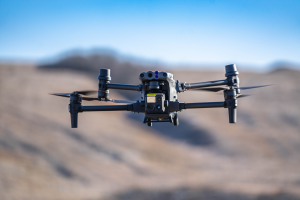 Source: Stratasys (Shutterstock)
The future of air superiority is not just in the skies—it’s on the factory floor. And increasingly, that factory floor is wherever additive manufacturing systems are deployed.
In today’s contested environments, where threats evolve daily and conventional supply chains face unprecedented stress, factors such as speed, adaptability, and localised production have become mission-critical. Unmanned Aerial Vehicles (UAVs)—once the product of years-long development pipelines—are now being designed, tested, and deployed in weeks or even days, with critical systems and components being replenished through additive manufacturing on the frontline.
The frantic pace of activity is a catalyst for future UAV development, and an exciting period of further innovation awaits.
UAV use in dynamic military environments
So, let’s examine the recent deployment of UAVs in ongoing conflicts before assessing how additive manufacturing has matured into a strategic capability—one that enables defence forces to rapidly iterate, produce complex components in-theatre, and respond to changing mission requirements in real time.
Ukraine acts as a microcosm of recent developments. In the early days of the war, Ukraine deployed UAVs extensively, carrying out numerous precision air strikes using Turkish-made Bayraktar TB2 UAVs. Ukrainian armed forces were able to operate them in relatively uncontested airspace during the early stages of the Russian invasion, scoring multiple high-profile successes.
However, the Ukraine conflict has also provided other lessons, notably the speed at which battlefield circumstances can change. Russia quickly reinforced its air defences along the 600-mile front, and these new capabilities meant the Bayraktar UAV soon became a less common sight in the sky.
According to the European Council for Foreign Relations (ECFR), what followed was an unprecedented period of UAV innovation on both sides. Russian and Ukrainian armed forces looked to deploy new platforms in smarter ways, and in a matter of months, as many as 100 different types of UAVs were developed and introduced. These UAVs ranged from palm-sized ‘first person view’ (FPV) systems to larger wingspan models. Some of these UAVs were bought from established defence suppliers, while others were put together in a piecemeal fashion by Ukraine and Russia themselves, or upgraded from civilian platforms.
The ECFR says the impressively fast innovation circles in the early stages of the Ukraine war have ushered in a new normal for UAV development. Long gone are the days of protracted procurement, which comprised a well-worn path of conceptualization, prototyping, testing, approval, manufacturing, and market introduction. In its place is a rapid-fire design and development process critical to asserting power and averting defeat. Indeed, in 2024 alone, Ukraine produced an incredible 1.3 million UAVs of various types, including reconnaissance, strike, and FPV kamikaze UAVs, virtually doubling output from the previous year.
The role of additive manufacturing in UAV innovation
The adoption of additive manufacturing proved vital during this intense period of innovation. Ukrainian forces have used it to produce 3D-printed UAV parts to adapt commercially available UAVs for precision strikes and anti-armour missions. By adding 3D-printed fins to existing munitions, military support teams could turn commercially available systems into tactical assets, providing flexibility and versatility in fast-moving battlefield environments.
Furthermore, the conflict in Ukraine has led to a growing interest among armed forces globally in how additive manufacturing might be used to increase flexibility in future combat situations. The US Air Force, for example, recently demonstrated the assembly and deployment of a 3D-printed UAV within a 24-hour window. Other defence departments, such as the UK Ministry of Defence, have also been experimenting with additive manufacturing for spare part production across air, land and sea platforms.
The message is clear: the design and production of UAVs have changed. From “traditional” multi-purpose UAVs to smaller, nimbler attack UAVs, accelerated design and production are now expected to meet the more dynamic nature of modern warfare—and additive manufacturing is helping to lead the charge.
Printing lighter, stronger UAV parts across platforms
Now, let’s examine in greater depth how additive manufacturing can support the development of unmanned aircraft across various UAV platforms. From small, rudimentary reconnaissance tools with limited range to long-endurance platforms capable of intelligence gathering, target acquisition and precision strikes, additive manufacturing helps engineers design better-performing parts in less time while eliminating supply chain/inventory challenges.
Taga, a manufacturing engineering company specializing in industrial design, is a case in point. It has been using a Stratasys J35™ Pro PolyJet™ 3D printer to accelerate UAV development – specifically through faster and more effective testing of new parts.
Caption: A Taga UAV prototype printed using Stratasys J35 Pro. Source: Stratasys
On one project, Taga was developing a safety feature for UAVs to improve UAV rotary durability. The rotary needed a high level of flexibility, and engineers were uncertain about the best level of rigidity. With the J35 Pro, Taga has adopted multi-material printing, with the combination of flexible and rigid materials enabling them to design prototypes to meet various product needs. The J35 Pro was used to quickly print four different samples with varying levels of rigidity, which immediately enabled Taga’s clients to prove and then adopt the appropriate design.
Beyond this example, additive manufacturing has proof points in several key areas. As mentioned, it leads to faster prototyping and iteration and the creation of lightweight and high-strength structures. In addition, it supports customization and mission-specific adaptability, with multi-material printing encouraging embedded functionality. Additive manufacturing also results in localized production and quicker maintenance, opening up the possibility of damaged UAVs being repaired in the field. In short, additive manufacturing represents a highly adaptable technology for UAV design, development and operation.
Bright future for additive manufacture in UAV applications
In summary, recent conflicts have revolutionized how UAVs are designed, built, and used, with additive manufacturing emerging as a critical enabler of this increased innovation. The ability to rapidly iterate and scale designs, manufacture locally, and eliminate supply chain uncertainty has proved a highly desirable characteristic on the moving chessboard of military engagement—and will undoubtedly continue to be so.
Consequently, Stratasys will continue to help customers drive the ascent of additive manufacturing in UAV development. As we look forward to a renewed period of innovation, we believe the sky really is the limit.