

The focus on the new drone warfare tactics and technologies was once more centre state at AUSA. In Ukraine a tech refresh is required every 10-14 days to keep ahead of the latest Russian technologies, not the two year procurement cycle currently the norm, The cycled is quietly speeding up with such developments as DIU and DARPA initiatives.
What has ben noticeable this year is a slowdown in attendance at the civil Critical Infrastructure conferences and events. Ss one exhibitor told the Editor, last month the exhibitors are supporting the speakers in their ‘wait and see’ policies,’ we won’t spend the money until an event. This is obvious by the lack of funding from the met Police, the FBI and other police agencies.
As another Exhibitor said to the Editor, “When it happens the graph will go vertical!”
The scenarios under consideration appear to be the usual airport drone incursions thru one off hits to a sporting venue using white power dropped on the crowd causing chaos on evacuation to a multiple drone attack on 10 NFA or Premier League Stadia in one wee-end which would bring the sport to its knees.
The other headline which will come, as it did when JLR were found not to have insured against the major cyber intrusion, is, “Major stadium company brought to bankruptcy by failing to carry out a Martyn’s Law assessment which cost it million.”
The look at their eye watering insurance quote for the coming year and wince!
Its not if, its when it will happen. This time there will be no need for passenger aircraft flying into buildings, just heavy drones filled with explosives to cause the next 9/11.
The Editor talked to the companies below about their C-UAS technologies, Mat Milas president, Defense and Space, Honeywell Aerospace Technologies, had some particularly interesting observations.
“Can you tell us about your thoughts on the evolution of drone warfare?” The Editor asked
“Modern warfare is rapidly changing and the threat swarm drones pose to high-value assets can have a devastating effect on military operations,” said Matt Milas, president, Defense and Space, Honeywell Aerospace Technologies. “Our Stationary And Mobile UAS Reveal And Intercept system is a highly reliable, scalable and fully integrated defensive system that has been developed after extensive research and testing with the needs of military operators in mind. This system’s multi-layered defensive capabilities set it apart in the industry and enable it to not only track and detect, but also defeat multiple threats. We’re excited to demonstrate this technology for the Air Force and are confident the system can provide critical new capabilities on the battlefield.”
“Do you see drone swarms as the next high-risk area?”
“Swarm drones pose increasing risks to high-value assets – as a result, the ability to detect, track and counter them is a crucial part of modern military operations,” said Matt Milas, president, Defense and Space, Honeywell Aerospace Technologies. “Our recent successful demonstrations not only provided strong examples of how Honeywell’s Stationary and Mobile UAS Reveal and Intercept system can provide critical capabilities on the battlefield, but they also proved the technology is highly reliable, scalable and ready to integrate into existing defensive systems.”

Echodyne
Echodyne, the radar platform company, announced the launch of its next-generation software platform, EchoWare, to enable partners and customers to swiftly integrate and deliver advanced radar capabilities into their systems and solutions. With quickly maturing requirements for precise situational awareness data across markets and applications, from defense and security to drone as first responder (DFR) and a robust drone delivery infrastructure, EchoWare enables customers and integrators to quickly deploy and consistently deliver advanced radar capabilities across fixed, portable, temporary, and on-the-move (OTM) modalities.
“Radar is the foundation sensor, the building block upon which every great system and solution is delivered,” said Dr. Tom Driscoll, CTO of Echodyne. “When the building blocks are zeros and ones, MESA radars deliver more accurate and precise data than conventional ESA radars. EchoWare is the connective tissue for networks of radar systems delivering advanced cognitive radar capabilities to global markets.”
EchoWare is a robust software platform that acts as middleware between Echodyne radars and system Command and Control (C2) and solution platforms, delivering a single high fidelity data interface for Echodyne’s advanced cognitive radar capabilities. EchoWare combines configuration, deployment, and lifecycle management of individual radars into a single interface, allowing for seamless control and monitoring of deployed radar systems. The most requested feature across all markets is Single Track ID, which maintains a single data identity across all radars in the system.
“We have learned a great deal from hundreds of customer engagements across all geographies and markets,” said Eben Frankenberg, CEO of Echodyne. “The path to high fidelity solutions is built on flexing advanced radar resources, like Single Track ID, to maintain precise geospatial data about every object in every radar’s field of view. EchoWare helps every customer reach that capability quickly.”
EchoWare capabilities enable an operator to:
- Deploy Seamless Networks of Radars: Operators can configure, manage, and operate multiple EchoShield radars and integrate the C2 to ingest 10 Hz unified Track data in fixed and OTM modalities.
- Customize Radar Performance: Operators can refine radar performance with filters and masks and record radar data, apply advanced features like Single Track ID across all radars in the network, as well as quickly toggle to advanced feature windows.
- View Radar Data with 2D Mapping and Work Offline: With full offline capabilities for contested or austere locations, EchoWare plots Tracks on an interactive map with classification icons that clearly define the operating environment.
New integration embeds counter-drone intelligence into the widely adopted TAK platform, enhancing mission coordination for security and public safety operators.

Leonardo DRS
Leonardo DRS Wins First Place in DoD Counter-UAS Competition, Reinforcing Leadership in Air Defense Capabilities for the U.S. Military.
Leonardo DRS, Inc. (NASDAQ: DRS) announced today that it won first place in a Department of Defense counter drone competition by demonstrating an advanced electronic warfare system that can be integrated into the company’s range of proven and fielded counter-UAS (C-UAS) capabilities. This latest capability highlights the company’s leadership role as a developer and provider of proven counter-UAS and air defense systems that enhance force protection across today’s complex and dynamic battlespace.
During a demonstration event hosted by the DoD’s Joint Counter-small Unmanned Aircraft Systems Office (JCO), Leonardo DRS demonstrated the cutting-edge Ring C-UxS system that employs proprietary, advanced radio frequency-based electronic warfare capabilities to detect, identify, and defeat enemy drones and autonomous systems, from air, land, or sea.
Leonardo DRS and its technology partner, Regulus, excelled in the portion of the demonstration that focused on Dismounted Detect-Identify-Track-Defeat of group 1 and 2 UAS. During the demonstration, Leonardo DRS successfully employed the system to detect, identify and defeat mock enemy drones with its radio frequency-based electronic warfare capabilities. The demonstration gave industry the chance to inform the JCO of new capabilities that are able to operate in a contested electromagnetic environment.
“We are proud to have been recognized with a first-place award in this critical JCO demonstration used to inform requirements for keeping ahead of the ever-growing small UAS threat,” said Aaron Hankins, senior vice president and general manager of the Leonardo DRS Land Systems business unit. “As an agile and experienced company in the space, we are honored to support the JCO as they identify capabilities that can be quickly integrated and deployed to defend our warfighters across the battlespace.”
The Ring system leverages radio frequency (RF) detection, unique Global Navigation Satellite Systems techniques, and RF datalink manipulation to counter both commercial and military uncrewed threats. The technology has been actively deployed across multiple platforms and operational theaters and has demonstrated exceptional effectiveness against uncrewed threats—from commercial Group 1 systems to military Group 3 platforms.
The Ring demonstration highlights Leonardo DRS’ proven capability to identify and rapidly integrate best-of-breed technologies to enhance its counter-UAS and air defense portfolio to support the critical needs of its customer. The company’s leadership in this space includes serving as prime contractor and lead systems integrator for the Mobile-Low, Slow Small Unmanned Aircraft Integrated Defeat System (MLIDS) program as well as developer and provider of the integrated Mission Equipment Package for the SGT Stout Maneuver Short Range Air Defense (M-SHORAD) program. The company’s integration capability also extends across all domains to support force protection, computer networking and C5I, as well as naval power and propulsion systems.
In August Leonardo DRS, Inc. (NASDAQ: DRS) announced today that is had successfully completed its first series of open-water demonstrations of its advanced maritime Mission Equipment Package (MEP) for counter‑UAS (C‑UAS) naval fleet protection.
The DRS maritime MEP is a scalable C-UAS system based on DRS’s proven land-based mobile short-range air defense and C-UAS systems. This system is designed to be mounted on a range of small uncrewed surface vessels providing remote ship protection at varying distances, providing a real solution as the Navy looks to autonomous surface vessels to protect ships from air and surface threats.
The initial demonstrations were conducted under realistic sea conditions and demonstrated the MEP’s core integrated systems performance – the detection, identification and tracking of a UAS threat and counter-surface ship tracking. The mission equipment package used in the demonstration included a suite of DRS sensors and command-and-control technologies including the BlackLab passive radio frequency (RF) detection system, STAG electro-optic/infrared (EO/IR) gimbal with advanced thermal cameras, and a tactical data management system using DRS’s sensor fusion operating system and AI to support fusion and target recognition using RF and Optical modalities.
“The U.S. Navy faces the same evolving drone threats as our land forces, and we recognize the urgency of delivering a reliable solution to protect the lives of sailors,” said Cari Ossenfort, senior vice president and general manager of the Leonardo DRS Naval Electronics business unit. “By leveraging our proven expertise in mobile ground-based counter-UAS and short-range air defense systems, we have rapidly developed and demonstrated a maritime force protection capability that provides sailors with full-spectrum situational awareness and the tools to detect, track, and defeat threats at the tactical edge.”
The DRS Maritime MEP is designed for mission-flexibility through modularity and platform agnosticism. It is able to integrate advanced active and passive RF, EO/IR sensors, 4G/5G electronic‑warfare systems, and scalable kinetic or non‑kinetic effectors using its MOSA open system architecture embedded in the Leonardo DRS operating system.
The development and integration of the maritime Mission Equipment Package is an example of DRS’s deep experience as a leading innovator and integrator supporting a wide range of missions for the U.S. military and allies around the world. The company’s integration capability extends across all domains to support force protection, computer networking and C5I, as well as naval power and propulsion systems.

Northrop Grumman
Northrop Grumman Improved Threat Detection System Missile Warning Sensor
BATTLESPACE Editor Julian Nettlefold met up with the Northrop Grumman ITDS Team at AUSA. The ATHENA sensor that Northrop Grumman provides for ITDS is designed for Transport, Rotary Wing and Unmanned Aircraft Systems.
Attribution to Trevis Crane, survivability development programs director, Northrop Grumman: “ITDS is a state-of-the-art aircraft survivability system that will protect warfighters in the most challenging threat environments. The system incorporates ATHENA, our next-generation, multi-spectral sensor that provides a generational leap in threat detection capabilities.”
The ATHENA sensor is the world’s most capable multi-function/multi-spectral warning sensor. The sensor is designed for use on helicopters, fast jets, tactical and wide body transport aircraft and Unmanned Aircraft Systems.
ITDS offers unprecedented functionality: missile warning capability, hostile fire indication, UAS detection and situational awareness. In all applications, this lightweight system provides outstanding clutter rejection, missile detection, and accurate hostile fire warning, to include point of origin and increased visual situational awareness capabilities, via a heads-up display (HUD) or other cockpit presentation.
Designed for high performance protection, the ITDS outpaces legacy warning systems by providing passive detection and rapid classification as a threat followed by information to the countermeasures system for an optimum response. Advanced technology permits detection of hostile fire and loitering munitions.
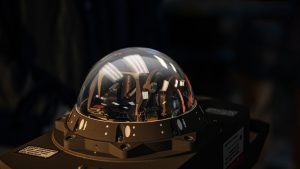
The ITDS can be interfaced to a chaff/flare countermeasures dispenser system (CMDS) or integrated as part of a directional infrared countermeasures (DIRCM) self-protection suite. With its adaptive open-system design, all applications can use common hardware and software. System simplicity allows for internal airframe installations or external mounting in a pod or pylon.
Demonstrated Benefits
- * High sensitivity for extended detection range
- * 2-Color Infrared technology optimized to reject non-threat clutter sources
- * Cutting edge software provides a high probability of detection while minimizing false alarms
- * Full specification performance across entire FOV
- * No mission reprogramming required
- * Extensive live fire testing and development program
- * Extremely fine angle of arrival provides precise threat location
- * Form, fit compatible with our legacy sensors
System Description
The ITDS system consists of one to six high resolution multi-function/multi-spectral sensors and one processing unit. A unique and compact design approach results in a system with the lowest size, weight and power (SWaP) requirements.
A comprehensive built-in-test capability, in conjunction with high system reliability allows for implementation of a low life-cycle cost approach that matches perfectly with a two-level maintenance concept.
The ITDS can be employed in an autonomous or integrated method of operation. The system can operate as a stand-alone subsystem within an aircraft’s defensive suite with information displayed on an existing multi-function display.
The ITDS can also function as a federated system with another electronic warfare controller as the pilot interface.
Northrop Grumman can provide a customized installation that is best able to meet customer-specific platform, mission and budget requirements.
BATTLESPACE was briefed on enhancements to the current ITDS system to accommodate a new adjunct C-UAS capability built in as a secondary aperture with a FLIR sensor located below the current missile warning sensor linked to the CIRCM laser system. CIRCM stands for Common Infrared Countermeasures, a U.S. Army program for a lightweight laser-based system that protects aircraft from infrared-guided missiles. Northrop has sold between 750-800 CIRCM systems manufactured in association with Leonardo in Edinburgh. A common fit for rotary winged systems such as Apache is to have 6 systems located around the aircraft giving 360 degree protection.
As well as rotary airborne platforms, Northrop is actively looking at mounting the new ITDS systems on manned and unmanned ground systems.
Northrop Grumman was recently approved by the U.S. Army recently approved Northrop Grumman to continue into Phase II of an Other Transaction Agreement (OTA) for ITDS.
Demonstrated Benefits
- * High sensitivity for extended detection range
- * 2-Color Infrared technology optimized to reject non-threat clutter sources
- * Cutting edge software provides a high probability of detection while minimizing false alarms
- * Full specification performance across entire FOV
- * Hostile fire indication uses high-speed frame rates to detect small arms, anti-aircraft artillery and rocket propelled grenades
- * No mission reprogramming required
- * Extensive live fire testing and development program
- * Extremely fine angle of arrival provides precise threat location
- * Form, fit compatible with our legacy sensors
System Description
The Advanced Threat Warning system consists of one to six high resolution multi-function/multi-spectral sensors and one processing unit. A unique and compact design approach results in a system with the lowest size, weight and power (SWaP) requirements.
A comprehensive built-in-test capability, in conjunction with high system reliability allows for implementation of a low life-cycle cost approach that matches perfectly with a two-level maintenance concept.
The ATW can be employed in an autonomous or integrated method of operation. The system can operate as a stand-alone subsystem within an aircraft’s defensive suite with information displayed on an existing multi-function display.
The ATW can also function as a federated system with another electronic warfare controller as the pilot interface.
Northrop Grumman can provide a customized installation that is best able to meet customer-specific platform, mission and budget requirements.
BATTLESPACE was briefed on enhancements to the current ATW system to accommodate a new adjunct C-UAS capability built in as a secondary aperture with a FLIR senor located below the current missile warning sensor linked to the CIRCM laser system. CIRCM stands for Common Infrared Countermeasures, a U.S. Army program for a lightweight laser-based system that protects aircraft from infrared-guided missiles. Northrop has sold between 750-800 CIRCM systems manufactured in association with Leonardo in Edinburgh. A common fit fot rotary winged systems such as Apache is to have 6 systems located around the aircraft giving 360 degree protection.
As well as rotary airborne platforms, Northrop is actively looking at mounting the new ATW systems on manned and unmanned ground systems.
The new system is currently under a three-year EMD development programme, privately funded by Northrop Grumman.

Electro Optic Systems (EOS)
EOS showcased high energy lasers and counter-drone systems at AUSA.
From battlefield-proven Slinger, EOS’ counter-drone remote weapon system, to strengthening layered defence with new technologies and partnerships.
Electro Optic Systems (EOS), which in August secured the world’s first export contract for its 100 kW-class High Energy Laser Weapon (HELW) with a European NATO member state – a historic milestone for both the company and the global HELW sector – today announced the official identity of its HELW: Apollo.
Scalable to 150 kW, Apollo is being unveiled ahead of DSEI UK (9–12 September 2025), where EOS will showcase its high energy laser capabilities as part of Team Defence Australia.
Drones have become a defining feature of modern conflict, used for surveillance, reconnaissance, and strike missions. Their increasing numbers, fast and erratic movements and autonomy make them increasingly difficult to defeat with conventional systems.
Apollo has been developed to counter these threats at the speed of light. It is designed to defeat Group 1–3 drones and to disrupt their sensors at range. With scalable power up to 150 kW, Apollo provides 360° coverage including vertical engagements, unlimited shots with external power, and more than 200 stored engagements when isolated. It is packaged for mobility, whether containerised or vehicle mounted.
Apollo can be fielded as a stand-alone weapon or integrated into a layered counter-drone defence alongside kinetic effectors such as EOS’ Slinger remote weapon system and missile-based defences. It is designed to connect with NATO fielded command-and-control and integrated air defence systems.
Building on its longstanding heritage in laser and optical technologies, EOS has leveraged this expertise to develop Apollo – a next-generation system designed for counter-drone operations.
Dr Andreas Schwer, EOS Group CEO, said: “EOS has developed its high energy laser weapon to meet the urgent market need and emerging strategic requirement to defend against drone swarm attacks at an economical cost. There is strong international interest in high energy laser weapons, and it is increasingly clear they will play a central role in counter-drone defence. The demand is urgent and accelerating, which is why EOS has invested for years to bring this capability to a level of maturity. Being ITAR-free and fully controlled by EOS, Apollo is ready for partners to adopt, localise and sustain as their own.”

KONGSBERG
KONGSBERG is the world’s leading provider of Remote Weapon Systems (RWS) and has to date delivered more than 20.000 PROTECTOR Remote Weapon Systems to 29 nations.
The PROTECTOR family of Remote Weapon Systems are suitable for any mission whether on land or at sea. Integrated on mobile or static platforms, the systems enable remote operation of payloads ranging from small caliber weapons to medium caliber automatic cannons. The system is modular, and all of the different variants of the PROTECTOR family share the same baseline technology.
The PROTECTOR family includes the RS4 and RS6 Remote Weapon Stations, – with weapons from light machine guns (5.56mm) to light cannons (30mmx113mm). It also includes the Remote Turrets, – designed for medium caliber cannons like 30mmx173mm and 40mmx180mm.
For the last 20 years KONGSBERG has delivered more than 20.000 PROTECTOR Remote Weapon Systems to a total of 29 nations. This includes the major US program Commonly Remotely Operated Weapon Station (CROWS). CROWS is a US Army Program of Record for acquisition and sustainment of Remote Weapon Stations for all U.S. Army vehicle programs.
Kongsberg offers a range of counter-unmanned aerial systems (C-UAS) that integrate radar, command and control, and various mitigation methods to detect, track, and neutralize drones. Key systems include the CORTEX Typhon, which can be delivered to Ukraine and includes remote weapon stations and sensor integration, and the NOMADS system, a mobile air defence and C-UAS platform for the Norwegian Army. Kongsberg also partners with other companies, such as Advanced Protection Systems (APS), to develop interoperable C-UAS solutions and is working with the US Army to add C-UAS capabilities to its Common Remotely Operated Weapon Station (CROWS) program.
Key Kongsberg C-UAS systems and initiatives
* CORTEX Typhon:
* This system is being delivered to Ukraine and includes software and hardware from both Kongsberg and Teledyne Flir.
* It uses a surveillance system, Remote Weapon Station (RWS), and the CORTEX Integrated Combat Solution (ICS).
* Its purpose is to neutralize a wide range of UAVs using either kinetic or non-kinetic (soft-kill) methods.
* NOMADS:
* The National Manoeuvre Air Defence System is a mobile C-UAS platform for the Norwegian Army.
* It combines elements of the medium-range NASAMS system with a short-range air defence (SHORAD) module on a tracked armored vehicle.
* It is designed to detect and intercept drones, as well as other threats like cruise missiles and aircraft.
* Partnerships:
* Advanced Protection Systems (APS): Kongsberg has a teaming agreement with APS to jointly develop and deliver C-UAS solutions with a focus on being fully interoperable within NATO.
* US Army CROWS: Kongsberg is collaborating with the US Army to add C-UAS capabilities to the thousands of remote weapon stations already supplied under the CROWS program.
* Technology:
* Kongsberg leverages its expertise in air defense systems, sensor fusion, and command and control (C2).

L3Harris
L3Harris Integrates VAMPIRE Aboard GM Defense’s Infantry Squad Vehicle.
VAMPIRE has been integrated onto GM Defense’s Infantry Squad Vehicle (ISV), providing a mobile solution to effectively and affordably counter small drone threats, enhancing tactical mobility and protection for U.S. Army operations.

L3Harris Technologies recently installed its VAMPIRE™ counter-unmanned system aboard a GM Defense Infantry Squad Vehicle (ISV), demonstrating a mobile solution to take out drone threats.
VAMPIRE is a self-contained platform that delivers advanced reconnaissance and precision strike capabilities against drones and remotely piloted aircraft. It has been used extensively in support of European combat operations since 2023 and has successfully shot down hundreds of small drones.
“Deploying VAMPIRE on GM Defense’s ISV is a great example of how quickly and seamlessly this system can be used by our Army customer to defeat the rapidly growing threat of small, hostile drones,” said Tom Kirkland, Vice President and General Manager, Targeting and Sensor Systems, L3Harris. “Working together, we have swiftly responded to the urgent need to defeat small unmanned autonomous systems accurately and affordably while allowing ground forces to stay tactically mobile.”
The GM Defense ISV is uniquely engineered to fulfill U.S. Army requirements for rapid deployment. With robust off-road capabilities, the ISV significantly improves tactical mobility across a range of military operations. The vehicle is easily maintainable and highly adaptable to meet diverse mission and operational needs.
GM Defense partners with companies like L3Harris to design and produce diverse kits to support the broad range of mission requirements for a variety of general purpose and special operations forces. Incorporating a Counter-small UAS system like VAMPIRE adds new capability to protect operators from hostile drone attacks.
“The versatility of the ISV is one of its core strengths, and integrating a critical counter-UAS capability like VAMPIRE showcases our ability to rapidly adapt the vehicle to meet evolving threats,” said John ‘JD’ Johnson, Vice President of Government Solutions and Strategy, GM Defense. “This successful integration highlights how the ISV’s modular design and commercial-based architecture can quickly incorporate next-generation technologies to deliver immediate value and enhanced protection to our warfighters.” (Source: ASD Network)

Dedrone by Axon
At AUSA, Dedrone by Axon highlighted how AI, interoperability, and alliance-driven innovation is shaping the future of collective defense. The TYTAN partnership represents the first in a series of upcoming collaborations with emerging defense innovators, marking a new phase in Axon’s investment and support for technologies that protect democratic nations.
Because the nature of security is changing — and defending democracy now depends on how quickly nations can see, share, and respond together. Protecting life is a mission at Axon that has never stopped at public safety. It means standing up for nations that defend democracy — and building the technologies that make that defense possible. In every era, threats evolve. But with purpose, partnership, and innovation, so does protection.
Dedrone by Axon Expands Capabilities to Further Protect NATO Airspace.
Europe’s borders are no longer defined by terrain — they’re defined by the airspace that surrounds them. In the past year alone, Russian-origin drones have entered the airspace of many countries, including reports in Poland, Estonia, Lithuania, Latvia and Romania, triggering NATO intercepts and disrupting civil aviation. What once were isolated incidents are now deliberate tests of how fast democracies can adapt.
As these incursions grow more frequent, particularly from Group 3 drones classified under U.S. military standards such as the Shaheds, NATO allies are facing a pivotal challenge: how to build an air defense network that’s as agile and intelligent as the threats themselves. Group 3 drones sit in a “gray zone” of modern warfare — too small and inexpensive for traditional missile systems, yet too capable to be ignored. These are the drones increasingly used along NATO’s eastern borders, prompting urgent investment in scalable, AI-driven counter-UAS systems.
Dedrone by Axon is taking that challenge head-on, expanding its ecosystem to deliver end-to-end airspace defense across NATO’s operational landscape. The company’s AI-powered command-and-control platform now integrates with emerging partners to protect against Group 1 through Group 3 drone threats, creating a unified capability for defense and national security agencies.
Lessons from Ukraine: Innovation at the Edge of Conflict
Earlier this year, Axon CEO Rick Smith visited Ukraine, where he saw firsthand how necessity is accelerating innovation at the edge of conflict. From frontline engineers to defense accelerators like BRAVE1, Ukraine has become a model for how rapid iteration and collaboration must redefine national defense.
“Ukraine has become a proving ground for the future of defense innovation — especially in unmanned and counter-unmanned systems,” said Rick Smith, CEO and Founder of Axon. “Shahed-type drones have replaced cruise missiles as a cheaper, devastating way to hit critical infrastructure, while FPV drones have become the new IED — low-cost, everywhere, and deadly at the front lines. To meet these threats, the world needs bold advances in UAS and counter-UAS technology. The future of defense will be defined by how fast we can connect sensors, systems, and allies into one network that acts at machine speed.”
During that visit, Axon committed to advancing the next generation of UAS and cUAS technology emerging from Ukraine and its allies. Through BRAVE1 and collaborations with companies both within Ukraine and in partner nations supporting its defense, Axon has begun identifying and empowering startups developing the tools needed to protect democratic airspace. These innovation hubs and early-stage companies are becoming key partners in Axon’s broader effort to scale battlefield-proven technologies across NATO’s defense ecosystem.
Dedrone by Axon and TYTAN Partner to Strengthen NATO Airspace Defense. Building on these lessons, Dedrone by Axon has entered into several strategic partnerships to advance our technology for use in strengthening NATO airspace defense. The first of these is with TYTAN, a Munich-based defense technology company developing interceptor systems for Group 3 drones. Both companies share German roots and a commitment to advancing responsible innovation in defense — connecting leading-edge capabilities to protect lives and critical infrastructure.
The collaboration combines Dedrone by Axon’s AI-powered sensor fusion and technology with TYTAN’s kinetic interceptors, creating a complete detect, track, identify, and mitigate (DTI-M) capability. This end-to-end solution expands Dedrone by Axon’s coverage from Group 1 through Group 3 threats, delivering the unified airspace picture NATO allies need to act faster and defend smarter.
“This alliance allows us to offer our customers a seamless CUAS platform that spans Group 1 through Group 3 threats,” said Aaditya Devarakonda, CEO, Dedrone by Axon. “Together, Dedrone and TYTAN are helping NATO and its partners build the connected network that will define the future of air defense.”
“Together, Dedrone and TYTAN aren’t just responding to emerging threats; we’re helping NATO and its partners build the connected network that will define the future of air defense,” said Balazs Nagy, Co-Founder and CEO of TYTAN. “Our partnership with Axon shows what true pan-NATO innovation looks like, built through collaboration across the US and Europe, proven in combat, and integrated with global allies to protect NATO airspace. This is Europe and NATO’s moment to lead, and TYTAN’s mission is to make that intent real — to turn collective vision into action.”
Expanding the Ecosystem of Democratic Defense
At the center of this effort is DedroneTracker.AI — a NATO-compatible platform that fuses radar, radio frequency (RF), optical, and acoustic inputs into a single, unified airspace picture. Integrated with TYTAN’s autonomous interceptor technology, this collaboration transforms detection into decisive action, closing the loop from identification to neutralization within seconds. TYTAN’s AI-driven kinetic interceptors, developed and manufactured in Europe, extend this capability into the higher, more militarized range of Class III UAS threats, giving NATO allies a complete, layered defense system that is both scalable and sovereign.
Already deployed in more than 30 countries and responsible for over 800 m drone detections worldwide, DedroneTracker.AI enables operators to autonomously coordinate responses across agencies, critical infrastructure sites, and borders in real time. The platform scales from localized deployments with DedroneCity to nationwide networks, offering a flexible foundation for future command-and-control innovation.
By integrating with TYTAN’s interceptor technology, Dedrone by Axon extends its CUAS mitigation capability into a higher, heavier and more militarized range of drone threats — ensuring NATO allies have the intelligence, tools, and operational flexibility to defend airspace at every layer. This partnership embodies the shared values of technological sovereignty, responsible innovation, and the protection of democratic nations from emerging unmanned threats.
“NATO is at an inflection point. The threats are already here — what’s missing is the speed and scale to counter them,” said Batuhan Yumurtaci, Co-Founder and CTO of TYTAN. “It’s no longer enough to announce new frameworks or strategies for our air defence; we have to build them.”
DroneShield
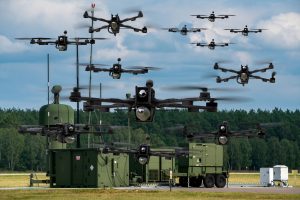
DroneShield (ASX:DRO), a global leader in counter-drone technology, today announced the release of its RfPatrol-Plugin for the Team Awareness Kit (TAK) ecosystem, now available for RfPatrol Mk2 users via the DroneShield Access Portal. The plugin integrates DroneShield’s counter-drone intelligence directly into the civilian TAK command-and-control (C2) environment, supplementing existing data streams, gRPC API, and involvement in the SAPIENT ecosystem.
This means that operators who use the widely adopted, government-developed Civil Team Awareness Kit (CivTAK) platform can now seamlessly incorporate their RfPatrol drone detection data into their operational view, improving situational awareness and coordination in real time. The plugin advances the Company’s strategy to deliver scalable, SaaS-enabled solutions that meet customers where they operate.
CivTAK is the civilian variant of the TAK platform originally developed by the U.S. Department of Defense. Today, TAK is the de facto standard for real-time geospatial mapping, situational awareness, and data sharing across security, public safety, and critical infrastructure organisations. As of 2020, the TAK ecosystem had more than 250,000 users worldwide, a figure that has grown significantly since, underscoring the demand for trusted integrations such as DroneShield’s RfPatrol-Plugin.
The RfPatrol-Plugin enables detections from the handheld RfPatrol Mk2 to appear directly on the CivTAK map interface in real time. Integrated notification cards provide instant alerts, helping field teams make faster decisions. Operators can overlay DroneShield detections with data from other sensors and telemetry from mobile devices, all within a single operational picture.
The plugin has successfully passed the official TAK application vetting process and is now available to RfPatrol users for direct installation on Android devices worldwide via the DroneShield Access Portal. This ensures rapid accessibility for operators without the need for standalone systems.
For end users, this integration delivers seamless situational awareness without the need for standalone systems. For DroneShield, it paves the way for the rest of the flagship range – including the DroneSentry-X Mk2 – to enter the TAK ecosystem, reinforcing the Company’s commitment to scalable, SaaS-enabled counter-drone capabilities.
“Delivering a native plugin into the TAK ecosystem reflects DroneShield’s philosophy of interoperability and customer focus,” said Angus Bean, Chief Product & Technology Officer at DroneShield. “By embedding our detection capabilities directly into the systems operators already rely on, we are expanding mission effectiveness and strengthening DroneShield’s position as the trusted leader in end-to-end counter-drone technology.”
CivTAK is subject to the Export Administration Regulations (EAR) administered by the Department of Commerce, Bureau of Industry and Security (BIS). CivTAK is not authorised for release to an embargoed or sanctioned country, to a party of concern, or in support of a prohibited end use. Laws limiting the availability of DroneShield products may apply in other jurisdictions, and any sale, lease, or use will be conducted only in compliance with the applicable laws.
CHAOS Industries and Forterra today announced a strategic partnership, successfully integrating their complementary technologies to address one of the Department of Defense’s most urgent operational challenges: countering rapidly evolving unmanned aerial system (UAS) threats.
The collaboration brings together CHAOS Industries’ advanced sensing, detection, and protection capabilities with Forterra’s autonomous vehicle architecture. The integrated systems have been tested in multiple field environments and demonstrated seamless operation, proving their ability to detect, track, and respond to aerial threats with unprecedented flexibility.
As part of recent trials, VANQUISH™, CHAOS’s distributed radar system, was embedded onto a Squad Multipurpose Equipment Transport (SMET) powered by Forterra’s AutoDrive. This configuration improves survivability and maneuverability. The joint system has been validated in field exercises ahead of the Army’s xTech Program scheduled for late October in Texas.
“Defense leaders have made clear they want deployable solutions, not experiments. Together with Forterra, we are bringing the best technologies in their respective categories together, and proving this works, now, in the field,” said John Tenet and Bo Marr, co-CEOs of CHAOS Industries. “By combining our air defense systems with Forterra’s autonomous mobility package, we’ve delivered a capability that is greater than the sum of its parts and immediately relevant to the warfighter.”
Forterra’s drop‑in autonomy package allows the pairing with CHAOS’s systems to be mounted flexibly across multiple vehicle classes—from small ground robots to squad‑level mobility platforms—without dependency on proprietary vehicle configurations. This enhances mobility for dispersed units and creates new options for applications ranging from frontline Army platoons to homeland defense missions.
“Forterra was founded on the belief that autonomy should be modular, adaptable, and quickly fieldable across mission sets,” said Josh Araujo, CEO of Forterra. “This partnership with CHAOS Industries demonstrates that principle in action. Together we offer the Department of Defense and allied customers a proven, integrated solution for counter‑UAS operations that can also scale to convoy protection, border security, and homeland defense.”
The partnership comes as the Pentagon evaluates industry offerings for ground‑based counter‑UAS systems under initiatives. The CHAOS‑Forterra integrated solution is positioned to meet the Department’s emphasis on solutions that are field‑proven, modular, and rapidly available.
CHAOS Industries and Forterra showcased the integrated system during upcoming demonstrations and at the Association of the U.S. Army (AUSA) Annual Meeting this fall.

Israel Aerospace Industries
Israel Aerospace Industries (IAI) announced at AUSA the unveiling of the new generation C-UAS Swarm solution. This cutting-edge defense system is designed to detect, identify, disrupt and intercept swarms of UASs and drones. It was developed in response to the needs of the Israeli defense ministry, and its operational readiness was demonstrated to senior officials. This system reflects the operational insights and evolving needs shaped by the current war. In recent months, the system was successfully demonstrated multiple times to senior Israeli defense officials, showcasing its advanced capabilities and operational readiness.
Boaz Levy, President and CEO of IAI: “As Israel’s radar systems house, IAI, plays a critical role in the nation’s defense, especially since the onset of the current war, where they successfully detected, classified and guided the interception of threats targeting Israel. The new generation counter swarms solution is another testament to IAI’s commitment to providing innovative, up-to-date and operationally relevant solutions to the evolving challenges faced by Israel’s defense forces. As part of our comprehensive suite of detection and interception systems, the new generation development represents a significant leap forward, enhancing Israel’s ability to defend against a broad spectrum of aerial threats with precision, speed and adaptability. This is the kind of high-impact, high-quality capability that reflects IAI’s legacy of excellence and its role at the forefront of defense technology.”
At the core of the new generation C-UAS solution is an advanced autonomous C4I mission system that integrates unique algorithms, artificial intelligence and machine learning to deliver real-time threat detection, analysis and response management. The system intelligently recommends optimal interception methods to operators, enabling rapid response to threats and performing neutralization and interception actions autonomously, while keeping human involvement in the decision-making process. Enabling a seamless sensor-to-target loop targeting and attack using a variety of interceptor configurations, the system is deployed across vast areas and equipped with electro-optical, radar and other sensors. These sensors provide the operator with a detailed, real-time aerial picture, allowing for coordinated launches of multiple interceptors per target until a successful interception is confirmed. The system can operate numerous detection assets in different layers, while deploying jamming and electronic warfare measures for soft-kill interceptions, or using various interceptors to provide a comprehensive response for low-altitude threats.
To date, IAI has provided hundreds of UAV detection and interception systems to customers worldwide, with cumulative sales totaling hundreds of ms of dollars and systems in operational use across the United States, Europe and Asia, providing critical protection for ground facilities, mobile platforms and strategic infrastructure. The new advanced C-UAS swarm solution represents the next generation of these detection systems, adding automation capabilities within an open architecture to enable seamless integration with a variety of sensors and interception tools, as well as rapid adaptation to diverse mission requirements.

Anduril
Anduril has introduced a unified AI military system EagleEye. EagleEye integrates mission coordination, sensory perception, and unmanned asset management into a compact system.
Building upon the US Army’s Soldier Borne Mission Command (SBMC) programme, EagleEye streamlines mission planning and enhances the perception and control of unmanned assets.
By integrating these functions into a single, lightweight system, EagleEye aims to reduce both the physical load carried by soldiers and the cognitive demands placed upon them.
The system’s foundation rests on the SBMC and SBMC-A programmes currently being delivered by Anduril to the US Army.
These programmes offer a mixed-reality environment that furnishes soldiers with tools for situational awareness, mission planning, and training, ultimately enhancing decision-making processes and agility on the ground.
EagleEye advances this platform by integrating mission command software with a heads-up display (HUD) and helmet-based equipment, ensuring equilibrium, safety, and efficiency in combat situations.
A key feature of EagleEye is its high-resolution 3D sand table, which facilitates collaborative mission rehearsal and coordination.
Operators can overlay live video streams onto terrain models to establish a collective operational understanding both prior to and during missions.
The HUD component of EagleEye augments the user’s vision by superimposing digital data onto their natural view, providing essential contextual information.
The system includes distinct HUDs optimised for both daylight and night-time operations.
Furthermore, EagleEye utilises Anduril’s Lattice network to merge real-time data from distributed sensors across the battlefield, enabling threat detection even when visibility is compromised.
In terms of survivability, EagleEye offers advanced ballistic protection and blast wave mitigation within an ultra-lightweight helmet shell designed for extended use.
Additional sensors provide peripheral awareness while spatial audio and radio frequency detection systems warn operators of concealed or imminent dangers.
EagleEye also enhances edge connectivity by consolidating networking and command tools into a wearable system. This enables soldiers to operate drones, request artillery support, and manage robotic allies on the move.
The Lattice mesh network ensures reliable command and control capabilities in challenging environments characterised by limited or compromised communication infrastructure.
Anduril said that it has partnered with Meta, Qualcomm Technologies, OSI, and Gentex to bring proven commercial technologies into the defence sector. This collaboration is aimed at lowering costs, speeding up development timescales, and facilitating continuous improvements.
Anduril founder Palmer Luckey said: “We don’t want to give service members a new tool—we’re giving them a new teammate. The idea of an AI partner embedded in your display has been imagined for decades. EagleEye is the first time it’s real.”
In September 2025, Anduril secured a $159m contract from the US Army to embark on a prototyping phase aimed at developing an advanced helmet-mounted night vision and mixed reality system. (Source: army-technology.com)

DZYNE Technologies
DZYNE Technologies has introduced new Dronebuster Vehicle Kits at the Association of the United States Army (AUSA) Annual Meeting in Washington, D.C., expanding its counter-drone portfolio to include vehicle-integrated systems for mobile defense operations.
The new systems are designed to provide rapidly deployable protection against UAS for convoys, forward bases and other mobile or temporary installations. DZYNE says the kits build on its combat-proven Dronebuster line, which has been fielded in more than 50 countries with over 2,500 units delivered globally.
According to the company, the vehicle kits combine detection, tracking, identification and mitigation capabilities in a lightweight, cost-effective package. Optional networking features allow multiple systems to be linked, creating a distributed defense network across large operational areas.
Two main variants were unveiled at AUSA:
- The Autonomous Dronebuster Vehicle Kit, which integrates the Dronebuster 4 Fixed Site jammer on a precision gimbal with DZYNE’s Detection, Tracking and Identification (DTI) system. Supported by AI-driven target classification and a continuously updated drone library, the system offers automated or operator-assisted mitigation through a simple digital interface.
- The Manual Dronebuster Vehicle Kit, which features the same DTI capability but focuses on operator mobility and responsiveness, including a handheld jammer for immediate manual engagement in dynamic environments.
Both configurations can detect and classify up to 30 drones simultaneously at ranges beyond 7 kilometers, distinguishing between aircraft and their controllers using passive, wide-spectrum sensing across 400 MHz to 6 GHz.
The company says the new vehicle kits reflect growing military demand for scalable, mobile counter-UAS systems capable of keeping pace with the expanding threat from small, low-cost drones used in reconnaissance and attack roles.
DZYNE CEO Matthew McCue described the launch as part of a broader expansion effort, noting the company has doubled its workforce in Portland this year to meet rising production and R&D demands.
The Dronebuster Vehicle Kits are being positioned as ready-to-field, off-the-shelf solutions for U.S. and allied forces seeking adaptable counter-drone coverage in both static and maneuver operations. (Source: https://cuashub.com/

Honeywell
Honeywell (NASDAQ: HON) has successfully showcased its Stationary and Mobile UAS Reveal and Intercept system and its ability to counter swarm drones in two recent demonstrations to local military operators in the United States. The system was utilized in a format in which it can be operated directly from a ground vehicle. Key elements were also demonstrated from an aerostat at more than 1,000 feet above the ground.
Using Model Based System Engineering (MBSE), the Stationary and Mobile UAS Reveal and Intercept system provides a turnkey solution that integrates customer-selected detectors and effectors and meets Modular Open Systems Approach (MOSA) compliance standards for customer modeling, visibility and sustainment. It is designed to be easily operated by security forces or tower personnel. Honeywell also demonstrated the ability for rapid integration for new detectors and effectors to support operator requirements.
With the Honeywell system, military operators can save time and money by optimizing prior investments into key components and integrating them into the overall solution. The system’s reliability is also key – Honeywell provides a single point of contact for updating all components as threat systems evolve.
The system has been developed by integrating components from defense manufacturers such as Blue Halo, Leonardo DRS, Pierce Aerospace, Silent Sentinel, Walaris, Rocky Research and Versatol. These components include radio frequency detection with sensor technology that uses light to detect, track and identify objects as well as offensive drones to counter swarms.
Additional demonstrations are available to both local and international operators seeking a commercial Counter-UAS offering.
Honeywell Unveils New System to Counter Swarm Drones, Protect High-Value Assets
- U.S. Air Force selects multi-layered defense system for upcoming demonstration
Honeywell (NASDAQ: HON) launched a new Stationary And Mobile UAS Reveal And Intercept system to counter swarm drones. By combining beyond-visual-line-of-sight communication with command-and-control capabilities, the multi-layered system is able to detect, track and then counter drone swarms. It can be equipped on vehicles or fixed-based platforms to protect valuable assets.
The U.S. Air Force Global Strike team via STRIKEWERX/AFWERX recently selected Honeywell’s Stationary And Mobile UAS Reveal And Intercept system to demonstrate the protection of high-value assets from swarm drones while on the move. The demonstration will take place in January 2025.
The system has been developed by integrating components from defense manufacturers such as Blue Halo, Leonardo DRS, Pierce Aerospace, Silent Sentinel, Walaris, Rocky Research and Versatol. These components include radio frequency detection with sensor technology that uses light to detect, track and identify objects as well as offensive drones to counter swarms.

Raytheon
Raytheon, an RTX (NYSE: RTX) business, has launched the initial production of its new SharpSight multi-domain surveillance radar. This next-generation system will provide high-altitude, real-time, high-resolution imaging with wide-area search and tracking for land and maritime surveillance, operating day or night in any weather condition.
SharpSight fuses the capabilities of two of Raytheon’s proven radar families – the Highly Integrated Synthetic Aperture Radar (HISAR) and the SeaVue Multi-Role Radar (SVMR) – and can be rapidly integrated on a variety of manned and unmanned systems. Its open architecture enables inexpensive, rapid upgrades, ensuring operators remain ahead of emerging threats.
“This radar represents the next step in Raytheon’s long legacy of intelligence, surveillance and reconnaissance innovation,” said Daniel Theisen, president of Advanced Products and Solutions at Raytheon. “By merging the proven capabilities of HISAR and SeaVue, we’re delivering a flexible, exportable and affordable radar system designed to outperform on the most demanding multi-domain surveillance missions.”
SharpSight is designed for high-altitude precision and persistence, enabling critical missions such as anti-surface warfare, border protection, coastal monitoring, search and rescue, long-range surveillance, and more. It conforms with the latest U.S. Government export policy guidance enabling these advanced intelligence, surveillance and reconnaissance capabilities to be offered to global partners and allies.
Martyn’s Law
Although becoming enshrined in UK law in 2026, there is still a noticeable gap in the understanding and implications of venues who fail to comply with Martyn’s Law.
Martyn’s Law, officially the Terrorism (Protection of Premises) Act 2025, received Royal Assent on April 3, 2025, but it’s not yet in effect. The implementation period is expected to be at least 24 months, meaning the legal requirements won’t be enforceable until that period is over. While the law mandates security measures for public venues, it’s not yet a legal obligation for those within the scope of the Act to comply until it’s brought into force by regulations.
Martyn’s Law Factsheet
The Terrorism (Protection of Premises) Act 2025, also known as Martyn’s Law, received Royal Assent on Thursday 3 April 2025.
This Act delivers the Government’s manifesto commitment to strengthen the security of public premises and events.
The Government would like to pay tribute to Figen Murray, mother of Martyn Hett, who was killed in the Manchester Arena attack. Her campaigning has been crucial in driving this Act forward.
The Government intends for there to be an implementation period of at least 24 months before the Act comes into force. This will allow the SIA’s new function to be established, whilst ensuring those responsible for premises and events in scope have sufficient time to understand their new obligations. This will enable them to plan and prepare appropriately.
Please refer to our wider factsheets and legislation documentation which can be found on GOV.UK.
What does Martyn’s Law do?
The Terrorism (Protection of Premises) Act 20251, also commonly referred to as Martyn’s Law, will improve protective security and organisational preparedness across the UK by requiring that those responsible for certain premises and events consider how they would respond to a terrorist attack. In addition to this, at certain larger premises and events, appropriate steps to reduce vulnerability to terrorist attacks must also be considered. Through the Act, qualifying premises and events should be better prepared and protected, ready to respond in the event of a terrorist attack.
Whilst those that fall within scope of the Act may wish to begin considering the requirements, they should note that guidance will be published in due course. This guidance will assist in understanding the requirements set out in the legislation. The guidance is being designed to be easy to follow, needing neither particular expertise nor the use of third-party products or services.
To support enforcement of the regime, a regulator will be established through a new function of the Security Industry Authority (SIA), which will support, advise and guide those responsible for premises and events in meeting the requirements of this legislation.
How will it work?
The Act establishes a tiered approach, linked to the number of individuals it is reasonable to expect may be present at the same time at premises and events.
Who will be in scope?
Premises that satisfy the following four criteria fall within scope of the Act:
- There is at least one building (or the premises are in a building);
- The premises are wholly or mainly used for one or more of the uses specified at Schedule 1 to the Act, e.g. a restaurant or a shop;
- It is reasonable to expect that at least 200 individuals may be present at least occasionally; and
- The premises are not excluded under Schedule 2 to the Act
If 800 or more individuals may be expected, the premises will be an enhanced duty premises unless the Act says otherwise.
An event that satisfies the following criteria fall within scope of the Act:
- It will take place at premises within section 3(1)(a) of the Act, including land without buildings, that are not enhanced duty premises (or part of enhanced duty premises);
- The relevant premises are accessible to members of the public for the purpose of the event;
- It is reasonable to expect that there will be at least 800 individuals present for the event at once at some point during it;
- There will be measures to check entry conditions are met, such as a ticket checks; and
- The event is not excluded under Schedule 2 to the Act.
Who is the responsible person for qualifying premises?
For qualifying premises, the responsible person is the person who has control of the premises in connection with their relevant Schedule 1 use (e.g. the use of a venue as a sports ground or a hotel). Where there is more than one Schedule 1 use (e.g. a church that also has a creche), it will be the person in control of the premises in connection with whichever Schedule 1 use is the principal use.
Who is the responsible person for qualifying events?
For qualifying events, the responsible person is the person who has control of the premises at which the event will be held for the purposes of the event. The circumstances of the event will need to be considered to determine who the responsible person is. For example, if a concert is to be held in a park and the company putting on the event takes control of an area of the park for the purposes of that concert, the company putting on the event will be the responsible person. Conversely, if a stately home puts on a concert in its grounds and maintains control of the site for the purposes of that concert, the stately home will be the responsible person. This would be the case even if the stately home contracted organisations to do aspects of the event (e.g. to provide door security or ticketing).
What are the requirements for standard duty premises?
Standard duty premises are generally those where it is reasonable to expect that between 200 and 799 individuals (including staff) may be present at the same time at least occasionally. The responsible person will be required to:
- notify the Security Industry Authority (SIA) of their premises; and
- have in place, so far as reasonably practicable, appropriate public protection procedures.
These public protection procedures are those which should be followed by people working at the premises if an act of terrorism were to occur at the premises, or in the immediate vicinity. They are procedures which may be expected to reduce the risk of physical harm being caused to individuals relating to evacuation, invacuation (moving people to a safe place), locking down the premises, and communicating with individuals on the premises.
The requirements for standard duty premises are centred around simple, low-cost activities with costs relating primarily to time spent. There is no requirement to put in place physical measures.
What are the requirements for enhanced duty premises and qualifying events?
Enhanced duty premises and qualifying events are premises or events where it is reasonable to expect that 800 or more individuals (including staff numbers) may be present on the premises at least occasionally2 or attend the event at the same time. In addition to the same requirements as standard duty premises (above), the person responsible for enhanced duty premises and qualifying events will additionally be required to:
- have in place, so far as reasonably practicable, appropriate public protection measures that could be expected to reduce both (i) the vulnerability of the premises or event to an act of terrorism, and (ii) the risk of physical harm being caused to individuals if an attack was to occur there or nearby. For example, enhanced duty premises will be required, so far as is reasonably practicable, to implement measures relating to the monitoring of the premises and their immediate vicinity;
- document the public protection procedures and measures in place, or proposed to be put in place, and provide this document to the SIA. This document should include an assessment of how the public protection procedures and measures reduce vulnerability and/or the risk of harm; and
- Where the responsible person is not an individual, they must designate a senior individual with responsibility for ensuring that the responsible person complies with these requirements.
How to assess how many individuals are reasonably expected to be present?
A range of methods can be used to make a reasonable assessment. This includes methods which those responsible for premises and events may already be familiar with, e.g. safe occupancy calculations for the purposes of fire safety or use of historic data.
How will Martyn’s Law be enforced?
To support enforcement of the regime, a new regulatory function will be established within the Security Industry Authority (SIA). The SIA will seek to support, advise and guide those responsible for premises and events in meeting the requirements of this legislation. Where there are instances of serious or persistent non-compliance the SIA will be able to take enforcement action including compliance notices, monetary penalties and restriction notices. The legislation also includes some criminal offences. The SIA must prepare statutory guidance about how it will discharge its functions under the Act, which must be approved by the Home Secretary before it is published.
There will be a period of time prior to the implementation of the legislation, i.e. when it will come into force. We expect this period to be at least 24 months to allow for the set-up of the regulator and to ensure sufficient time for those responsible for premises and events in scope to understand their new obligations before they come into force, being able to plan and prepare accordingly.
How will my business or organisation be supported on Martyn’s Law?
Guidance will be provided in due course to assist those in scope to understand the requirements set out in the legislation. The guidance is being designed to be easy to follow, needing neither particular expertise nor the use of third-party products or services.
The Home Office continues to build on the materials already published in relation to this legislation. This includes a bespoke landing page on Protect UK, Government factsheets which set out key aspects of the legislation, social media promotion, various press releases, media briefings, and our substantial stakeholder engagement campaign.
Our intention is to augment and further strengthen our communications during the implementation period, to support duty holders and raise awareness amongst the public.
Will Martyn’s Law apply to all of the UK?
The legislation will apply across England, Wales, Scotland and Northern Ireland to ensure consistency in keeping the public safe across all parts of the United Kingdom.
We have been working closely with stakeholders and the Devolved Governments throughout the development of this Act.
Why have we introduced Martyn’s Law?
Since March 2017, Counter Terrorism Policing assesses that there have been 15 domestic terror attacks in the UK (not including Northern Ireland-related terrorism), and security services and law enforcement have together disrupted 43 late-stage plots.
The threat picture is complex, evolving and enduring, with terrorists choosing to attack a broad range of locations. It is not possible to predict where in the UK an attack might happen, or the type of premises or event that could be impacted – either directly as the target of an attack, or indirectly by being located near to the target of an attack.
Engagement with business indicates that preparedness and protective security in the counter-terrorism space often falls behind areas where there are long-established legal requirements, such as health and safety. The police, security services, and other partners continue to do all they can to combat the terror threat; and many businesses and organisations already do excellent work to improve their security and preparedness. However, the absence of legislative requirements means there is no consistency of consideration or of outcomes achieved.
It will take one major event on a venue which hasn’t complied with Martyn’s Law to focus compliance to avoid the mandatory fine of up to 10% of turnover.
Conclusion
The rapid development of new C-UAS technologies gathers apace across the world to meet new and current threats.
As well as new technologies other considerations being made by industry, government and users is whether to buy, hire or lease systems. Companies owning multiple facilities such as racecourses, motor racing venues, sports stadia and concert venues cannot afford to purchase a system for every venue so they are looming to lease or hire systems for the duration of the event.
The other issue raining its head is insurance. BATTLESPACE was told about a leading UK horse trial venue who were told by their insurers that to be covered they had to deploy a C-UAS system.