

2021 began in Lockdown with the whole world facing another turbulent year of COVID until a glimpse of hope arrived when the Astra Zeneca and Pfizer vaccines were approved and started to be used in late 2020.
Given the outbreak there was also turmoil in the global supply chain affecting every industry across the globe. It was a miracle that defence companies reacted so efficiently and there were very few sign of long delays of the supply of equipment.
The main focus of danger remained Taiwan with Chinese sabre rattling, in a process which escalated throughout the year and still continues. Syria now seems to be retreating from our TV screens a change from which was once a daily horror show of killings of men, women and sadly many children and various vicious IS attacks. The true horror of the botched Afghan withdrawal came later in the year.
One benefit of Lockdown appeared to be a sudden drop in terrorist attacks no doubt caused by the lack of people on the streets and the heightened security situation.
In the corporate defence arena, there were flurries of takeovers, mergers and acquisitions focusing mainly on UK and US defence companies whilst the civil air sector remained in the doldrums and vulnerable to Private Equity predators. In the UK, Cobham, Ultra and Meggitt all succumbed to hostile bids with the latter two still under UK government assessment.
There were a number of key Programmes announced in the UK and the USA, with the UK Boxer programme continuing to advance well to full production. The Ajax programme exploded into the news in the middle of the year and the problems rumbled on until the ministerial statement in December.
With all the doubt surrounding whether events would be allowed, it was a credit to to the Clarion Defence team that they not only staged DSEI in September but that it was labelled by some companies as the best DSEI for 10 years.
We have chosen a selection of events which happened in 2021.
We look forward to working with you in 202 as BATTLESPACE enters our 25th year.
January
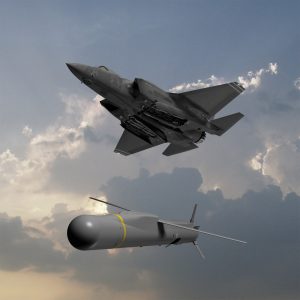
06 Jan 21. UK SPEAR3 F-35 missile contract signed.
SPEAR3 F-35 missile contract signed. A £550m contract for new surface-attack missiles will secure hundreds of UK jobs and provide unrivalled lethality for the UK’s F-35B Lightning jets, Defence Minister Jeremy Quin announced today.
Known as SPEAR3, the next-generation missile can travel long distances at high-subsonic speed and over the next decade will become the F-35’s primary air-to-ground weapon.
At 1.8 metres long, the missile system has a range of more than 140-kilometres and, powered by a turbojet engine, can operate across land and sea, day or night, to overpower enemy air defence systems, while the pilot and aircraft remains a safe distance away.
Its ability to attack moving targets will enhance the UK’s future combat air capability and provide immense lethal capability to the Queen Elizabeth class carrier strike group.
Defence Minister Jeremy Quin said, “The development of this next-generation missile will allow us to protect our personnel and assets on the ground, from thousands of metres in the sky above. Our commitment to this system will secure hundreds of highly skilled jobs across the UK and showcase British technology and weapon expertise on the world stage.”
Following a successful development phase, the new seven-year demonstration and manufacture contract with MBDA will support more than 700 UK jobs, including the creation of 190 highly skilled technology jobs in system design, guidance control and navigation and software engineering.
At the peak of the contract, 570 people will work on various aspects of the system’s development in Bristol, Stevenage and Bolton. Another 200 jobs are expected to be sustained along the supply chain that includes L3/Harris, Roband, Collins, EPS and MSB.
Colonel Martin French, DE&S’ Lightweight and Medium Attack Systems (LMAS) team leader, said, “The placement of this contract marks the next major stage of the SPEAR3 weapon system’s development and is a result of months of detailed negotiations between MBDA and the LMAS project team. Building on the successes and technology achievements of the previous four years’ work with MBDA, we now enter the exciting and challenging demonstration phase where we start to prove the system against the UK’s requirements and ramp up activities to integrate this highly-capable weapon system onto the F-35B aircraft.”
With its unique combination of stealth, cutting-edge radar, sensor technology, and armed with SPEAR3, the F-35 will protect aircraft carriers from enemy ships, submarines, aircraft and missiles.
The UK currently has 21 fifth-generation F-35Bs, having received three new jets on 30 November. The platform’s Initial Operating Capability (Maritime) was recently declared and, later this year, F-35 jets will sail with HMS Queen Elizabeth on her maiden Global Carrier Strike Group ‘21 deployment.
The initial demonstration phase will assess the weapon system against the UK military’s requirement through, testing, simulation and trials, which will include controlled firings from a Typhoon aircraft.
The contract forms part of the Complex Weapons portfolio with MBDA, which is on track to deliver £1.2bn saving to UK defence. It also allows the MOD and MBDA to maximise the export potential of complex weapons, including the first-in-class SPEAR3, which supports UK prosperity and the international agenda. (Source: https://www.gov.uk/)
Éric Béranger, CEO of MBDA, said, “MBDA is delighted to receive this contract, it is the result of many years of hard work by our dedicated and highly skilled engineering team. Stand-off, network enabled and swarming weapons are a key part of MBDA’s vision – SPEAR is leading the way with these technologies and is the most technically advanced weapon of its type.”
The contract for SPEAR will employ a peak of 570 people at MBDA plus a further 200 in the Tier 1 supply chain. This will see the creation of 190 highly skilled technology jobs at MBDA in areas including system design, software engineering, seekers, and guidance control & navigation in Stevenage, Bristol and Bolton. It forms part of the Portfolio Management Agreement (PMA), a partnership initiated in 2010 between the UK MoD and MBDA on sovereign complex weapons design and production. The PMA delivers world-beating military equipment for the UK Armed Forces and has secured over 4,000 UK jobs at MBDA while generating savings worth over £1.2bn.

20 Jan 21. HENSOLDT acquires Austrian company SAIL LABS. Sensor specialist HENSOLDT has acquired the Austrian company SAIL LABS, a leading provider of AI-based Open Source Intelligence (OSINT) solutions. With this step, HENSOLDT completes its sensor portfolio with intelligent solutions for the digital space and thus takes a further step towards becoming one of the leading data analysis houses in the security and defence sector in Germany.
Thomas Müller, CEO of HENSOLDT, says: “National security matters increasingly include issues of smart data collection and analysis. Therefore, governments and security agencies increasingly invest in these capabilities. Smart ISR and Smart Spectrum Dominance will become standard equipment in many security and defence solutions. With the acquisition of SAIL LABS, we continue our strategy of consistently investing in key technologies that will strengthen our position as a leading European champion in the field of defence and security electronics.”
Marian Rachow, CEO of HENSOLDT Cyber and Head of HENSOLDT Ventures, says: “We are delighted to welcome the employees of SAIL LABS to the HENSOLDT family. The acquisition underlines our ambition to become the German technology leader in data analytics and cyber. So far, we have developed groundbreaking technologies such as the highly secure operating system TRENTOS or the RISC-V processor MiG-V primarily in-house. With SAIL LABS’ AI technology, we are now investing in a digital platform approach for the first time, which we will now consistently develop further for our customers.”
Celia Pelaz, Head of Spectrum Dominance & Airborne Solutions Division underlines the importance of this acquisition for HENSOLDT’s Spectrum Dominance strategy: “The electromagnetic spectrum and cyberspace are no longer just a means of communicating or sensing the environment; they have become an operational space of warfare. And mastering this new space has become an indispensable capability for our armed forces. Expanding our signal intelligence capabilities to include cyber intelligence applications is a key element in providing our customers with solutions for comprehensive spectrum dominance, covering both the electromagnetic spectrum and cyberspace.”
Leading solution for OSINT analysis
Founded in Vienna in 1999, SAIL LABS is considered one of the leading providers of OSINT solutions based on artificial intelligence (AI). OSINT refers to the evaluation of all publicly accessible data, both on TV, radio and the surface web as well as in social media and the deep web. SAIL LABS technology can collect, index, analyse and visualise all this data. A core element of the technology is automatic speech recognition and the associated analysis of data in more than 30 source languages. Specific fields of application are the identification of media false news or disinformation campaigns or the early identification of sources of danger for soldiers on a mission.
Scalable platform for intelligent data analysis
At HENSOLDT, SAIL LABS will form the core of the HENSOLDT Analytics division, a scalable sensor platform for intelligent mass data analyses that supports states, authorities, and armed forces in integrating traditional telecommunications and electronic reconnaissance (signals intelligence) and OSINT. The goal is to intelligently analyse the collected data and generate an overarching situation overview in real time in order to be able to make decisions on a sound basis. These multi-intelligence systems significantly increase the range of sensors with little effort. This way, it is possible to provide comprehensive sensor solutions for optical or radar-based monitoring of an operational area at close range up to the real-time display of a situation picture across an entire region.
BATTLESPACE Comment: This acquisition by HENSOLDT of an AI specialist company will not be the last for HENSOLDT to bulk up its advanced technology offering for its existing sensor business. Expect other majors to follow suit throughout 20121 as the use of Cloud, AI and Machine Leaning becomes mainstream. US major Viasat has been developing or buying advanced technologies for some time as have Mercury Systems Inc. and Curtiss-Wright.

04 Jan 21. Teledyne to Acquire FLIR Systems. Teledyne Technologies Incorporated (NYSE:TDY) (“Teledyne”) and FLIR Systems, Inc. (NASDAQ:FLIR) (“FLIR”) jointly announced today that they have entered into a definitive agreement under which Teledyne will acquire FLIR in a cash and stock transaction valued at approximately $8.bn.
Under the terms of the agreement, FLIR stockholders will receive $28.00 per share in cash and 0.0718 shares of Teledyne common stock for each FLIR share, which implies a total purchase price of $56.00 per FLIR share based on Teledyne’s 5-day volume weighted average price as of December 31, 2020. The transaction reflects a 40% premium for FLIR stockholders based on FLIR’s 30-day volume weighted average price as of December 31, 2020.
As part of the transaction, Teledyne has arranged a $4.5 bn 364-day credit commitment to fund the transaction and refinance certain existing debt. Teledyne expects to fund the transaction with permanent financing prior to closing. Net leverage at closing is expected to be approximately 4.0x adjusted pro forma EBITDA with leverage declining to less than 3.0x by the end of 2022.
Teledyne expects the acquisition to be immediately accretive to earnings, excluding transaction costs and intangible asset amortization, and accretive to GAAP earnings in the first full calendar year following the acquisition.
“At the core of both our companies is proprietary sensor technologies. Our business models are also similar: we each provide sensors, cameras and sensor systems to our customers. However, our technologies and products are uniquely complementary with minimal overlap, having imaging sensors based on different semiconductor technologies for different wavelengths,” said Robert Mehrabian, Executive Chairman of Teledyne. “For two decades, Teledyne has demonstrated its ability to compound earnings and cash flow consistently and predictably. Together with FLIR and an optimized capital structure, I am confident we shall continue delivering superior returns to our stockholders.”
“FLIR’s commitment to innovation spanning multiple sensing technologies has allowed our company to grow into the multi-billion-dollar company it is today,” said Earl Lewis, Chairman of FLIR. “With our new partner’s platform of complementary technologies, we will be able to continue this trajectory, providing our employees, customers and stockholders even more exciting momentum for growth. Our Board fully supports this transaction, which delivers immediate value and the opportunity to participate in the upside potential of the combined company.”
Jim Cannon, President and Chief Executive Officer of FLIR, said, “We could not be more excited to join forces with Teledyne through this value-creating transaction. Together, we will offer a uniquely complementary end-to-end portfolio of sensory technologies for all key domains and applications across a well-balanced, global customer base. We are pleased to be partnering with an organization that shares our focus on continuous innovation and operational excellence, and we look forward to working closely with the Teledyne team as we bring our two companies together to capitalize on the important opportunities ahead.”
Advisors
Evercore is acting as exclusive financial advisor and McGuireWoods LLP is acting as legal advisor to Teledyne in connection with the transaction. Goldman Sachs & Co. LLC is acting as exclusive financial advisor and Hogan Lovells US LLP is acting as legal advisor to FLIR in connection with the transaction. Teledyne has entered into a 364-day senior unsecured bridge facility credit agreement with Bank of America as sole lead arranger and administrative agent.

21 Jan 21. £102m Investment In UK Detect And Destroy System. £102m investment in detect and destroy system for British Army. The British Army has invested £102m in a high-end surveillance system which allows frontline soldiers to detect and engage enemy targets in seconds.
Elbit Systems UK (ESUK) – which currently supports over 500 jobs across the UK – will deliver a state-of-the-art ‘sensor to shooter’ system creating an additional 40 highly-skilled engineering and manufacturing jobs split across Bristol and Sandwich, East Kent.
Utilising state-of-the-art thermal sight technology, the Dismounted Joint Fires Integrator (DJFI) will enhance soldiers’ ability to find and identify targets on the Battlefield. It then provides the crucial targeting information necessary to fire more quickly and accurately than ever before.
Using specialist software on a tablet, information gathered by the DJFI is sent digitally to an artillery system or aircraft to instantly engage the target, while the soldier operating the system remains hidden.
Defence Procurement Minister Jeremy Quin said, “This contract with Elbit Systems UK not only delivers the very latest in battlefield technology to our frontline soldiers, but also invests in the British defence industry, sustaining more than 500 jobs across the UK.”
ESUK has also confirmed all five subcontractors will also be UK-based. Additional jobs are expected to be sustained elsewhere through the UK supply chain between now and 2026.
DJFI will deliver six distinct Fires Integration equipment suites – each tailored to specific battlefield mission roles – to be combined with existing hardware and software. The technology is designed to be integrated and used alongside similar equipment used by allied forces, meaning the UK can play a pivotal role in joint overseas operations.
Major General Darren Crook, Director of the Land Equipment Operating Centre for Defence Equipment & Support, the procurement arm of the MOD, said, “Our commitment to equipping and supporting our Armed Forces has never faltered and I am delighted that we have been able to continue to secure state-of-the art equipment for the British Army.”
Colonel Sheldon, Assistant Head of the Army Joint Effects Delivery team: said, “DJFI will enable rapid and highly accurate target engagements. In addition to being fielded across the Army to our fire support teams and joint terminal attack controllers, DJFI will also deliver capability to 3 Commando Brigade, the RAF Regiment and our special forces. This is a key system that will contribute directly to modernising our forces to face future threats.” (Source: https://www.gov.uk/)
Elbit Systems Statement
Elbit Systems Ltd. (NASDAQ: ESLT, TASE: ESLT) (“Elbit Systems” or “the Company”) announced today that its UK subsidiary, Elbit Systems UK Ltd. (“Elbit Systems UK”), was awarded an approximately $137 m (approximately £100m) contract by the UK Ministry of Defence to provide the British Armed Forces with the future target acquisition solution for Joint Terminal Attack Controllers and Fire Support Teams under the Dismounted Joint Fires Integrators (“D-JFI”) program. The contract will be performed over a five-year period.
The D-JFI solution to be provided by Elbit Systems UK, is a networked, passive and active target acquisition solution that acquires, generates and communicates target information to effector systems for effective engagement of joint precision and non-precision fires. The solution is empowered by Artificial Intelligence and will interface with the radio communication systems of the British Army, Royal Air Force and Royal Marines.
The D-JFI solution draws on the Company’s operational experience in providing dismounted network combat solutions. It integrates several of its technologies, including: the TORCH-XTM Battle Management Application; the HattorixTM system for undetectable generation of high-precision targets, the CORAL Multi-Spectral electro-optical payload for enhanced target acquisition in day and night and the RattlerTM XR long range laser designator. The D-JFI solution will enable fast and secured transmission of target information across the British and Allied Armed Forces, allowing swift and accurate utilization of artillery and close air support.
Martin Fausset, CEO of Elbit Systems UK, said: “It is essential for our Armed Forces to be able to operate swiftly and accurately in hostile environments. The systems to be supplied by Elbit Systems UK represent our commitment to continuously provide the most advanced technology to those on the frontline. The D-JFI solution will provide operational advantage to the British Armed Forces in an increasingly complex battlefield.”
Employing over 500 people in 10 sites across the UK, Elbit Systems UK has successfully delivered on multiple projects in the UK both independently and in partnership with other British companies, most notably are the Watchkeeper UAV program for the British Army and the the UK MOD Military Flying Training System (UKMFTS) program. Elbit Systems UK was also recently selected by the UK MOD to provide the Royal Navy Future Naval Training Program, the MORPHEUS Battlefield Management Application for the British Army and networked simulators to train mounted and dismounted Joint Fires teams and Joint Fires Cells.
February

19 Feb 21. RBSL and Rheinmetall Landsysteme award £180m MIV supplier contract to Thales UK. Rheinmetall BAE Systems Land (RBSL) and Rheinmetall Landsysteme have jointly awarded a contract, worth £180m, to Thales UK to supply the state-of-the-art KONGSBERG PROTECTOR RS4 Remote Weapon Station (RWS) and the latest in automated threat warning – the Acusonic® Shot Detection System – for the British Army’s new Boxer vehicles.
Thales UK, as a strategic partner to Kongsberg Defence and Aerospace, will fully assemble and integrate 500 RWS and deliver 500 Acusonic systems onto Boxer vehicles over the next 10 years, as part of the UK MOD’s Mechanised Infantry Vehicle (MIV) programme.
The work for Boxer will be completed at Thales’s facility in Glasgow, which employs 700 skilled engineers and technicians. As a major contributor to the Scottish economy, this contract will support further growth and protect key manufacturing skills in the UK, including 30 apprentices currently receiving training in Glasgow.
The MIV programme aims to support and enhance the UK supply chain. As such, RBSL and Rheinmetall Landsysteme are part of a MIV Joint Procurement Team, which has engaged suppliers in England, Wales, Scotland and Northern Ireland and has begun awarding a series of supplier contracts for the MIV programme.
Following this contract with Thales UK, the Boxer vehicles will be equipped with the latest PROTECTOR RS4, which incorporates a range of new sensor technologies. The system offers a 360˚ observation and engagement capability, as well as armoured protection for the crew whilst firing the weapon. The Acusonic Shot Detection System is designed to accurately sense and report the direction of incoming enemy fire. The system will give the Boxer vehicle’s crew the critical situational awareness to react to threats.
Minister for Scotland, Iain Stewart, said, “We look forward to working with Thales UK on the delivery of these Remote Weapons Stations, knowing this contract will not only contribute to the safety of British military personnel on the front line, but also support industry growth here in Scotland. Protecting hundreds of jobs and supporting 30 apprenticeships, this £180m UK Government investment further demonstrates our commitment to supporting the defence sector in Scotland and underscores the many opportunities available within the United Kingdom economy.”
Minister of State for Defence, Baroness Goldie, said, “This £180m contract with Thales UK will deliver pioneering surveillance and protection for our front line soldiers and our new Boxer fleet. We depend on skills and technology from across the United Kingdom and this order will secure 700 Scottish jobs. Our troops face a myriad of new and emerging threats so it is imperative we invest in critical detect and destroy technology such as this.”
Steven Lockley, Managing Director of Thales in the UK’s vehicle integration business in Glasgow, said, “Thales’ sub-contract is a great step forward after months of hard work. Working with our strategic partners, Thales is bringing new skills and technologies into the programme, our facilities in Scotland and the UK supply chain.”
The overall £2.3bn Mechanised Infantry Vehicle (MIV) contract was announced in November 2019 between the UK MOD and ARTEC – a joint venture between Rheinmetall Landsysteme, Rheinmetall Defence Nederland B.V, and Krauss-Maffei Wegmann. The contract will deliver over 500 Boxer vehicles to the British Army.
Vehicle production is subcontracted equally between RBSL and WFEL. The companies will undertake the fabrication of the armoured vehicle structures together with the assembly, integration and test of the complete vehicles at their respective facilities in Telford and Stockport, with support from the UK supply chain.
Thales
Thales is a global technology leader in the Aerospace, Transportation and Defence & Security markets. Thales in the UK is a team of over 6,500 experts, including 4,500 highly skilled engineers, located across 10 key UK sites. Each year Thales invests over £575 million into its UK supply chain, working with over 2,000 companies. They are dedicated to research and technology, working with partners to invest over £130m+ in R&D in the UK annually.
KONGSBERG
KONGSBERG (OSE-ticker: KOG) is an international, knowledge-based group that supplies high-tech systems and solutions to customers in the merchant navy and oil & gas, defence and aerospace industries. KONGSBERG has almost 11,000 employees in 40 countries.
March


09 Mar 21. Airbus, Fujitsu and Thales in the UK team up for the UK LE TacCIS System Integrator (SI) opportunity.
Airbus, Fujitsu and Thales UK have signed a memorandum of understanding (MOU) to work collaboratively on the upcoming Systems Integrator (SI) opportunity for the UK Ministry of Defence (MOD), Land Environment Tactical Communications and Information Systems programme – known as LE TacCIS.
Following the signature of the MOU, the partners have formed team ICELUS led by Airbus that will bring together a trusted collective of MOD strategic partners who have a unique breadth of expertise of defence communications networks. ICELUS will offer pioneering change through a coherent systems integration approach to ultimately deliver operational effectiveness and information advantage to the end user, whilst sustaining a UK centric, defence industrial base. The three partners will be able to jointly explore how their respective unique expertise and solutions can be combined in order to put forward the best-possible proposals with regard to capabilities and competitiveness for this major programme.
ICELUS will focus on the upcoming LE TacCIS System Integrator (SI) opportunity to lead on the design and integration of the products & services for applications, infrastructures and networks. The LE TacCIS System Integrator is expected to be contracted by 2023/2024.
The LE TacCIS programme consists of multiple sub-programmes and projects with the aim to deliver the next generation of tactical military communications in the land environment, providing the means to make informed and timely decisions enabled by agile Communication Information Systems (CIS).
LE TacCIS is designed to be resilient, working securely in a congested and contested cyber battlespace. It will degrade gracefully and recover when attacked, continuing to provide essential Command and Control (C2) services and capabilities. It will integrate with other systems to allow the quick and easy sharing of information between platforms and weapon systems, delivering full-spectrum, multi-domain effects.
In contrast to the current system’s single source prime supplier model, elements of the LE TacCIS programme will be competed from industry who will be incentivised to deliver increased system agility, capability and value for money.
BATTLESPACE Comment: This is a very strong consortium to deliver LE TacCIS and may cause a wake up call to other competitors as ICELUS provides a technology solution for LE TacCIS from one source but with the benefit of a competed model BATTLESPACE noted the somewhat barbed comment, ‘In contrast to the current system’s single source prime supplier model,’ which is no doubt directed at GDUK, the current incumbent! Expect more of the existing supplier base to form consortia or join ICELUS. The other interesting fact emerging from this Release is the date that the contract is expected, ‘The LE TacCIS System Integrator is expected to be contracted by 2023/2024.’ This suggests that BOWMAN will be extended for longer than expected. Once again as with BOWMAN, the vehicle manufacturers will have to design the vehicles such as BOXER and Challenger 3 with a BOWMAN suite but allow for a design change in the 2024 timeframe. This will create more costs as the BOWMAN systems will have to be replaced with LE TACIS.

01 Mar 21. InVeris Training Solutions introduces VR-DT virtual reality law enforcement trainer, announces State of California as launch customer. InVeris Training Solutions today released details of its all-new advanced training solution called the VR-DT (Virtual Reality Decisions and Tactics) or “Verdict”. The system uses the latest fully immersive VR technology for training de-escalation of force in a wide variety of critical, real-world situations. California’s Commission on Peace Officer Standards and Training (CA POST), which oversees training statewide, will serve as the solution’s launch customer.
The VR-DT was chosen in August 2020 by California POST following a competitive procurement process for its VR Force Options Simulator requirement. InVeris will deliver 50 systems during a six-month period as part of a $2.6m contract award with the option for up to $5 million in additional systems and related equipment. Approximately half the systems are to be delivered and installed by March 1. InVeris will supply 100 scenarios with branching options initially, plus 10 state-mandated ones per year of the contract. In addition, a powerful scenario authoring tool will enable customer-driven content creation to further enhance realism using situations and settings reflective of California.
“California POST’s selection of InVeris’ new VR-DT reinforces our company’s position as the world leader in law enforcement simulation training, now delivered via virtual reality,” said Andrea Czop, vice president of strategy, sales and marketing at InVeris Training Solutions. “The VR-DT will put California law enforcement on the leading edge of force-option simulation training thanks to the unique immersive capabilities of virtual reality.”
The VR-DT enables law enforcement agencies, as well as private and military security forces, to maximize readiness and correctly educate students for field experiences. The system combines state-of-the-art hardware, scalable software and a content library that is always increasing. A variety of officer weapons and equipment can be accommodated, including simulated pistols, rifles, shotguns, batons, TASERs, OC sprays and flashlights. The adjustable and modular system works anywhere, from one to two-person sessions.
“The VR-DT builds on nearly four decades of experience designing projection-based systems, but provides even greater realism,” said Eric Perez, the company’s director of virtual systems sales. “Two officers training in a tactical scenario will benefit from their own viewpoints and spatial orientation, while still being tested on their verbal and physical actions. Moreover, after-action review of decision-making in such situations will be enhanced thanks to the precise tracking and playback of trainee movements in their respective virtual spaces.”
Utilizing the latest wireless, high-definition headsets with impressive 360-degree fields of view and weapons tracking, officers train in fully immersive environments that put them in the action. The ability to perform a traffic stop or intervene in a domestic altercation from two perspectives, create distance and angles between students and move to cover are all enhanced with the VR-DT. A lightweight, fully customized laptop allows the instructor to influence the scenarios, environments and weapons.
Depending on the trainee’s actions, the instructor can branch the scenarios to escalate or de-escalate the situation, then review their decision-making skills to ensure proper tactics are used from any angle during after-action review. These virtual environments and ambient features increase the student’s psychological immersion and focus when dealing with the situation at hand. By increasing the immersions, the trainee’s mental recall is heightened, thus enhancing their overall training experience.
Development of the VR-DT is an evolution of InVeris’ class-leading Firearms Training Systems (FATS®) and recognizes the increased focus and scrutiny on law enforcement training. Community, state and national leaders are concentrating on issues like de-escalation, crisis intervention and active shooters. The VR-DT will help enhance the conveyance of proper decision-making skills to protect lives in California and beyond.
About InVeris Training Solutions
InVeris Training Solutions combines an agile approach with an unmatched expertise in training technology to design and deliver customized, cutting-edge, first-rate training solutions that keep military, law enforcement, private and commercial range clients safe, prepared and ready to serve – Because Seconds Matter™. With a portfolio of technology-enabled training solutions, and a team of 400 employees driven to innovate, InVeris Training Solutions is the global leader in integrated live-fire and virtual weapons training solutions. With its legacy companies, FATS® and Caswell, InVeris Training Solutions has fielded over 15,000 live-fire ranges and 7,500 virtual systems globally during its 90-year history. The company is headquartered in Suwanee, Georgia and partners with clients in the US and around the world from facilities on five continents.

16 Mar 21. Prime Minister Boris Johnson made a statement to the House of Commons on the Integrated Review of security, defence, development and foreign policy.
Mr Speaker, with permission I will make a statement on the government’s Integrated Review of security, defence, development and foreign policy, which we are publishing today.
The overriding purpose of this Review – the most comprehensive since the Cold War is to make the United Kingdom stronger, safer and more prosperous while standing up for our values.
Our international policy is a vital instrument for fulfilling this government’s vision of uniting and levelling up across our country,
reinforcing the Union, and securing Britain’s place as a science superpower and a hub of innovation and research.
The Review describes how we will bolster our alliances, strengthen our capabilities, find new ways of reaching solutions and relearn the art of competing against states with opposing values.
We will be more dynamic abroad and more focused on delivering for our citizens at home.
I begin with the essential fact that the fortunes of the British people are almost uniquely interlinked with events on the far side of the world.
With limited natural resources we have always earned our living as a maritime trading nation.
In 2019 the UK sold goods and services overseas worth £690bn, fully a third of our GDP, sustaining millions of jobs and livelihoods everywhere from Stranraer to St Ives and making our country the fifth biggest exporter in the world.
Between 5 and 6 million Britons – nearly one in ten of us – live permanently overseas, including 175,000 in the Gulf and nearly two million in Asia and Australasia. So a crisis in any of those regions, or in the trade routes connecting them, would be a crisis for us from the very beginning.
The truth is that even if we wished it – and of course we don’t– the UK could never turn inwards or be content with the cramped horizons of a regional foreign policy.
For us, there are no faraway countries of which we know little.
Global Britain is not a reflection of old obligations, still less a vainglorious gesture, but a necessity for the safety and prosperity of the British people in the decades ahead.
I am determined that the UK will join our friends to ensure that free societies flourish after the pandemic, sharing the risks and burdens of addressing the world’s toughest problems.
The UK’s presidency of the G7 has already produced agreement to explore a global Treaty on Pandemic Preparedness, working through the World Health Organisation to enshrine the steps that countries will need to take to prevent another COVID.
We will host COP-26 in Glasgow in November and rally as many nations as possible behind the target of Net Zero by 2050,
leading by example since the UK was the first major economy to accept this obligation in law.
Britain will remain unswervingly committed to NATO and preserving peace and security in Europe, and from this secure basis, we will seek out friends and partners wherever they can be found, building a coalition for openness and innovation, and engaging more deeply in the Indo-Pacific.
I have invited the leaders of Australia, South Korea and India to attend the G7 summit in Carbis Bay in June, and I am delighted to announce that I will visit India next month to strengthen our friendship with the world’s biggest democracy.
Our approach will place diplomacy first and the UK has applied to become a dialogue partner of the Association of South East Asian Nations and we will seek to join the Trans-Pacific free trade agreement.
But all our international goals rest upon keeping our people safe at home and deterring those who would do us harm.
So we will create a Counter-Terrorism Operations Centre, bringing together our ability to thwart the designs of terrorists, while also dealing with the actions of hostile states.
It is almost exactly three years since the Russian state used a chemical weapon in Salisbury, killing an innocent mother, Dawn Sturgess, and bringing fear to a tranquil city.
I can announce that the National Cyber Force, which conducts offensive cyber operations against terrorists, hostile states and criminal gangs, will in future be located in a cyber corridor in the North West of England.
And we will also establish a cross-government Situation Centre in the Cabinet Office, learning the lessons of the pandemic and improving our use of data to anticipate and respond to future crises.
The first outcome of the Integrated Review was the government’s decision to invest an extra £24bn in defence, allowing the wholesale modernisation of our armed forces and taking forward the renewal of our nuclear deterrent.
The new money will be focused on mastering the emerging technologies that are transforming warfare, reflecting the premium placed on speed and deployment and technical skill, and my Right Honourable Friend the Defence Secretary will set out the details next week.
Later this year, HMS Queen Elizabeth will embark on her maiden deployment, leading a carrier strike group on a 20,000-mile voyage to the Indo-Pacific and back, exercising with Britain’s allies and partners along the way, and demonstrating the importance that we attach to freedom of the seas.
By strengthening our armed forces, we will extend British influence while simultaneously creating jobs across the United Kingdom, reinforcing the Union, and maximising our advantage in science and technology.
This government will invest more in research and development than any of our predecessors because innovation is the key to our success at home and abroad, from speeding our economic recovery, to shaping emerging technologies in accordance with freedom and openness. We will better protect ourselves against threats to our economic security.
Our newly independent trade policy will be an instrument for ensuring that the rules and standards in future trade agreements reflect our values.
Our newly independent sanctions policy already allows the UK to act swiftly and robustly wherever necessary and we were the first European country to sanction the generals in Myanmar after the coup last month.
In all our endeavours, the United States will be our greatest ally and a uniquely close partner in defence, intelligence and security.
Britain’s commitment to the security of our European home will remain unconditional and immoveable, incarnated by our leadership of NATO’s deployment in Estonia.
We shall stand up for our values as well as for our interests – and here I commend the vigilance and dedication of Hon Members from all parties.
The UK, with the wholehearted support of this whole House, has led the international community in expressing our deep concern over China’s mass detention of the Uighur people in Xinjiang province, and in giving nearly three million of Hong Kong’s people a route to British citizenship.
There is no question that China will pose a great challenge for an open society such as ours.
But we will also work with China where that is consistent with our values and interests, including building a stronger and positive economic relationship and in addressing climate change.
The greater our unity at home, the stronger our influence abroad, which will, in turn, open up new markets and create jobs in every corner of the UK, not only maximising opportunities for the British people but also, I hope, inspiring a sense of pride that their country is willing to follow in its finest traditions and stand up for what is right.
With the extra investment and new capabilities of the Integrated Review,
I believe the United Kingdom can thrive in an ever more competitive world, and fulfil our historic mission as a force for good, and I commend this statement to the House. (Source: https://www.gov.uk/)
Highlights:
*An integrated space policy: making the UK a meaningful player in space Since 2010, space has proved to be one of the UK’s fastest growing sectors, trebling in size. It now employs 42,000 people and generates an income of £14.8bn each year, with particular strengths in small satellite technology, satellite and deep-space telecommunications, robotics and Earth observation. The UK nevertheless relies heavily on our allies for access to critical capabilities, such as satellite launch. By 2030, the Government’s ambition is for the UK to have the ability to monitor, protect and defend our interests in and through space, using a mixture of sovereign capabilities and burden-sharing partnerships with our allies. To meet this ambition, the National Space Council will develop the UK’s first national space strategy in 2021. This strategy will establish an integrated approach across military and civil space policy, under which we will:
- Establish a new Space Command by summer 2021, ensuring that the armed forces have cutting-edge capabilities to advance UK interests on Earth and in space – enhancing our cooperation with allies and ensuring we can compete with our adversaries.
- Develop a commercial launch capability from the UK – launching British satellites from Scotland by 2022 as part of the UK Space Agency’s programme to enable a UK-wide market for spaceflight services. This will give us greater strategic autonomy and flexibility in terms of what the UK puts into space, and when.
- Develop other critical space capabilities for military and civil use, including Space Domain Awareness, which uses integrated in-space and ground sensing to track space debris, investigate incidents in space, and detect, anticipate and attribute hostile activity.
- Support the UK space sector to realise the economic benefits from this new and dynamic market, and extend the UK’s influence in the space domain. As part of building the UK’s strategic advantage through S&T, the Government will build the enabling environment for a thriving UK space industry developing space- and ground-based technologies. We will promote a ‘whole-of-life’ offer from R&D through finance to satellite operations, launch capability data applications and end-of-life services. Defence will carry out more space-related science activity, R&D and operational concept demonstrators.
- Prevent the proliferation of technologies that pose a threat in space, such as ballistic missile technologies, through robust export controls
- Increase the UK’s international collaboration across our space-related objectives. We intend to continue our participation in the EU’s Copernicus Earth observation programme, and will deepen our cooperation with NATO and through the Combined Space Operations (CSpO) initiative. We will also develop our work with bodies including NASA and the European, Canadian, Australian and Japanese space agencies.
*To modernise the UK armed forces, maintaining a full spectrum of capabilities, as set out in the Defence Command Paper. We will prioritise the development and integration of new technologies – including those required for near-peer, high-tech warfighting – and a ‘digital backbone’ to enable multi-domain operations and interoperability with allies and partners. In the Euro-Atlantic, the UK will be one of only two NATO Allies to bring to bear nuclear, offensive cyber, precision strike weapons and fifth-generation strike aircraft. We will also contribute to missile defence, to space awareness and resilience (including through a new Space Command) and to CBRN resilience. A new generation of warships will support our historic role in keeping the North Atlantic open. Our highly mobile airborne and amphibious forces will be able to reinforce Allies at short notice. Our land force will undergo its most comprehensive modernisation for two decades, becoming better integrated with other domains, better able to intervene quickly and effectively over large distances, better protected from electronic, air and Unmanned Aerial Vehicle threats, and better able to engage an adversary at long range. Our Special Forces will be ready to operate in the most hostile environments and against our most sophisticated adversaries. With international partners including Italy and Sweden, we will continue to develop FCAS as a replacement for our Typhoon fast jets, drawing on ground-breaking technologies from the defence sector and beyond.
*To improve our ability to manage and de-escalate a multi-domain crisis, reflecting the increased intensity of competition from our potential adversaries and the more complex range of routes for escalation, including to nuclear coercion. The UK will run a series of national, strategic-level exercises to test resilience and our ability to navigate crises. We will actively support similar NATO and EU-NATO exercises. IV. Strategic Framework 73
- To sustain our commitment to collective security beyond the Euro-Atlantic, strengthening our ties and understanding. In particular, given the growing importance of the Indo-Pacific, we will reinforce our commitment to the FPDA and increase our regional maritime presence to support norms and laws in the region. In 2021, HMS Queen Elizabeth will lead a multinational task group on a global deployment, visiting the Mediterranean, the Middle East and the Indo-Pacific.
*The nuclear deterrent The UK’s independent nuclear deterrent has existed for over 60 years to deter the most extreme threats to our national security and way of life, helping to guarantee our security and that of our Allies. We have previously identified risks to the UK from major nuclear armed states, emerging nuclear states, and state-sponsored nuclear terrorism. Those risks have not gone away. Some states are now significantly increasing and diversifying their nuclear arsenals. They are investing in novel nuclear technologies and developing new ‘warfighting’ nuclear systems which they are integrating into their military strategies and doctrines and into their political rhetoric to seek to coerce others. The increase in global competition, challenges to the international order, and proliferation of potentially disruptive technologies all pose a threat to strategic stability. The UK must ensure potential adversaries can never use their capabilities to threaten us or our NATO Allies. Nor can we allow them to constrain our decision-making in a crisis or to sponsor nuclear terrorism. The UK’s minimum, assured, credible nuclear deterrent The fundamental purpose of our nuclear weapons is to preserve peace, prevent coercion and deter aggression. A minimum, credible, independent nuclear deterrent, assigned to the defence of NATO, remains essential in order to guarantee our security and that of our Allies. In 2010 the Government stated an intent to reduce our overall nuclear warhead stockpile ceiling from not more than 225 to not more than 180 by the mid-2020s. However, in recognition of the evolving security environment, including the developing range of technological and doctrinal threats, this is no longer possible, and the UK will move to an overall nuclear weapon stockpile of no more than 260 warheads. To ensure that our deterrent is not vulnerable to pre-emptive action by potential adversaries, we will maintain our four submarines so that at least one will always be on a Continuous At Sea Deterrent patrol.
Our submarines on patrol are at several days’ notice to fire and, since 1994, we do not target our missiles at any state. We remain committed to maintaining the minimum destructive power needed to guarantee that the UK’s nuclear deterrent remains credible and effective against the full range of state nuclear threats from any direction. We will continue to keep our nuclear posture under constant review in light of the international security environment and the actions of potential adversaries. We will maintain the capability required to impose costs on an adversary that would far outweigh the benefits they could hope to achieve should they threaten our, or our Allies’, security. UK nuclear weapons policy The UK’s nuclear weapons are operationally independent and only the Prime Minister can authorise their use. This ensures that political control is maintained at all times. We would consider using our nuclear weapons only in extreme circumstances of self-defence, including the defence of our NATO Allies.
- Strategic Framework 77
While our resolve and capability to do so if necessary is beyond doubt, we will remain deliberately ambiguous about precisely when, how and at what scale we would contemplate the use of nuclear weapons. Given the changing security and technological environment, we will extend this long-standing policy of deliberate ambiguity and no longer give public figures for our operational stockpile, deployed warhead or deployed missile numbers. This ambiguity complicates the calculations of potential aggressors, reduces the risk of deliberate nuclear use by those seeking a first-strike advantage, and contributes to strategic stability. The UK will not use, or threaten to use, nuclear weapons against any non-nuclear weapon state party to the Treaty on the Non-Proliferation of Nuclear Weapons 1968 (NPT). This assurance does not apply to any state in material breach of those non-proliferation obligations. However, we reserve the right to review this assurance if the future threat of weapons of mass destruction, such as chemical and biological capabilities, or emerging technologies that could have a comparable impact, makes it necessary. Working with NATO, the US and France NATO recognises that any employment of nuclear weapons against NATO would fundamentally alter the nature of a conflict. Therefore, as long as nuclear weapons exist, NATO will remain a nuclear alliance. Since 1962, the UK has declared our nuclear capability to the defence of the Alliance. We will continue to do so, safeguarding European and Euro-Atlantic security. We will work with Allies to ensure that NATO’s nuclear deterrent capabilities remain safe, secure and effective, adapt to emerging challenges including the growing and diversifying nuclear threats that the Alliance may face, and contribute to the indivisible security of the Alliance. Nuclear cooperation remains an important element of the relationship between the United States and the United Kingdom, enhancing transatlantic security. We will continue to work closely with the United States on nuclear matters, including nuclear deterrence policy. The 1958 Mutual Defense Agreement (MDA) has been central to our shared nuclear security goals and we are committed to its renewal in 2024. Since 1995, France and the United Kingdom, Europe’s only nuclear powers, have stated that they can imagine no circumstances under which a threat to the vital interests of one would not constitute a threat to the vital interests of the other. We will continue our daily and unprecedented cooperation on nuclear issues, including our collaboration under the 2010 Teutates Treaty. Our future capability Our independent nuclear deterrent is relevant not only for today but will also remain relevant for the immediate future. It is for these reasons that we have committed to a once-in-two-generations programme to modernise our nuclear forces.
This investment in the future security of both the UK and our Allies demonstrates that the UK’s nuclear commitment remains undiminished. Parliament has voted to renew our nuclear deterrent and replace the Vanguard Class submarines with four new Dreadnought Class submarines. The programme remains within budget and on track for the First of Class to enter service in the early 2030s. 78 Integrated Review To ensure we maintain an effective deterrent throughout the commission of the Dreadnought Class, we will replace our existing nuclear warhead. We will work with the Atomic Weapons Establishment to build the highly skilled teams, facilities and capabilities needed to deliver this, while also sustaining the current warhead until it is withdrawn from service.
We will continue to work closely with the United States to ensure our warhead remains compatible with the Trident Strategic Weapon System, our cooperation underpinned by both the MDA and the 1963 Polaris Sales Agreement. Delivery of the modernisation of the deterrent will be subject to the Government’s major programme approvals and oversight. We will continue to provide updates through an annual report to Parliament. We will work collaboratively across the defence and civil nuclear sectors to optimise the Defence Nuclear Enterprise for the future. This will ensure that the UK has a minimum, credible, independent nuclear deterrent for as long as is necessary. Arms control, disarmament and non-proliferation: our commitment to international treaties We remain committed to the long-term goal of a world without nuclear weapons. We continue to work for the preservation and strengthening of effective arms control, disarmament and non-proliferation measures, taking into account the prevailing security environment. We are strongly committed to full implementation of the NPT in all its aspects, including nuclear disarmament, non-proliferation, and the peaceful uses of nuclear energy; there is no credible alternative route to nuclear disarmament. The UK has taken a consistent and leading approach to nuclear disarmament. The UK possesses the smallest stockpile of any of the nuclear weapon states recognised by the NPT. We are alone amongst those states in only operating a single nuclear weapon system. We will continue to press for key steps towards multilateral disarmament, including the entry into force of the Comprehensive Nuclear Test Ban Treaty and successful negotiations on a Fissile Material Cut-Off Treaty in the Conference on Disarmament. We will continue to take a leading international role on nuclear disarmament verification; this is an essential step for nuclear disarmament under strict and effective international control. The UK will continue to work internationally to reduce the risk of nuclear conflict and enhance mutual trust and security. We will champion strategic risk reduction and seek to create dialogue among states possessing nuclear weapons, and between states possessing nuclear weapons and non-nuclear weapon states, to increase understanding and reduce the risk of misinterpretation and miscalculation. The UK takes its responsibilities as a nuclear weapon state seriously and will continue to encourage other states to do likewise. IV. Strategic Framework 79 3.2
*SR 2020 Commitment
Nearly £15bn funding including: • Commitment to raising economy-wide investment in R&D to 2.4% of GDP by 2027.
- A multi-year settlement for the National Academies and UK Research and Innovation’s core research budgets, which will grow by more than £400m on average per year for the next three years.
- By 2023-24 the Government will be investing £1.4bn more per year in core funding for its world-leading research base.
- Up to £17m in 2021-22 to establish a new unit and fund that will focus on the last mile of innovation to help ensure that public-sector knowledge assets (R&D, intellectual property, and other intangible assets) translate into new high-tech jobs, businesses and economic growth.
- Innovate UK’s grant programmes and the Catapult Network provide critical support for innovative small and medium-sized enterprises and £490m has been provided for Innovate UK’s core budgets next year. This will support high-tech firms across the UK in developing the technologies of the future.
*Defence R&D: Investment of at least £6.6bn in R&D, enabling research into AI and other battle-winning technologies as part of the MOD’s four-year settlement.
*£695m of additional R&D funding between 2021-22 to 2024-25. To support the development of cutting-edge capabilities in the agencies.
*Cyber: The MOD settlement includes funding for the NCF in partnership with the security and intelligence agencies to enhance the UK’s position as a responsible, democratic cyber power.
- £305m of continued investment in 2021-22 in the crossgovernment National Cyber Security Programme (NCSP), funding transformational cyber security projects to support departments, the private sector and wider society. This investment will enable the UK to stay at the forefront of global action to secure a safe digital future and successfully adopt new technology to drive resilience and economic growth. There is a further £18m in 2021-22 for international cyber, digital and data capacity-building programmes, and projects from the Conflict, Stability and Security Fund.
*Defence (MoD)
- Over £24bn increase in cash terms over four years, including at least £6.6bn of R&D (as mentioned above) to maintain a cutting-edge military. This reaffirms the UK’s commitment to its allies, making the UK the largest European spender on defence in NATO and the second largest in the Alliance.
- The additional funding in this settlement will: • Enable research into AI and other battle-winning technologies.
- Reshape the UK’s armed forces for a more competitive age.
- Establish a new Space Command and enhance the breadth of our space capabilities. • Continue the renewal of the UK’s nuclear deterrent.
- Develop the next generation of naval vessels, including Type 32 frigates and Fleet Solid Support ships, and deliver our plans for eight Type 26 and five Type 31 frigates.
- Progress our Carrier Strike capabilities, with at least 48 F-35s by 2025.
- Develop the Future Combat Air System for the RAF, along with delivering upgraded Typhoon radars.
- Enhance the UK’s position as a responsible, democratic cyber power
*CBRN:
- £22m resource funding in 2021-22 and £329m capital funding from 2021-22 to 2024-25 to enhance nuclear detection capability.
https://assets.publishing.service.gov.uk/government/uploads/system/uploads/attachment_data/file/969402/The_Integrated_Review_of_Security__Defence__Development_and_Foreign_Policy.pdf

22 Mar 21. The UK Defence Secretary has set out the future vision for the UK Armed Forces ensuring the military is prepared for new and emerging threats and challenges. Outlined in ‘Defence in a competitive age’, the UK Armed Forces will become a threat-focussed integrated force with a continued shift in thinking across land, sea, air, space and cyber domains. Defence will spend over £85bn on equipment over the next four years so our Armed Forces can adapt, compete effectively, and fight decisively when needed. This will support 400,000 jobs across all four nations of the UK.
Defence Secretary, Ben Wallace said, “This Defence Command Paper ensures our Armed Forces are threat-focused, modernised and financially sustainable. Our military will be ready to confront future challenges, seize new opportunities for Global Britain and lay the foundations of a more secure and prosperous Union. We will continue to work with allied partners to address future global security threats whilst also enhancing critical outputs in the battlespace domains. Our people and their expertise are at the heart of what we do and further investments into training, welfare and support facilities will be reflective of this and ensure our Armed Forces are well equipped to face tomorrow’s threats today.”
The Army will receive significant investment to become more agile, integrated, lethal and expeditionary. The service will receive an additional £3bn on new vehicles, long-range rocket systems, air defences, drones, electronic warfare and cyber capabilities.
£120m will create new Ranger Regiments; four battalions will form the Regiment that will support Special Forces in collective deterrence activity. This will range from training to accompanying personnel on the ground. The Army will also introduce a new Warfighting Experimentation Battlegroup that draws on elements from across the entire Army designed to fight prototype warfare, focussing on hybrid and conventional threats.
The Royal Navy will develop a new Multi Role Ocean Surveillance ship to help protect vital underwater maritime infrastructure and protect from maritime threats, aiming to come into service by 2024. The fleet of frigates and destroyers will grow through this decade with shipbuilding investment doubling over the life of this Parliament rising to over £1.7bn a year. The Royal Marines will also benefit from a £200m investment over the next ten years to form the Future Command Force, a Commando force that is persistently forward deployed conducting specialist maritime security operations.
UK air capabilities will bolstered with an injection of over £2bn in the Future Combat Air System which will deliver a pioneering mix of crewed, uncrewed and autonomous platforms including swarming drones and the ultra-modern Tempest fighter jet. This programme has already created over 1,800 highly-skilled jobs in over 300 companies across the UK. The Typhoon fleet will be upgraded with a suite of new weapons and state-of-the-art radar.
Chief of the Defence Staff, General Sir Nick Carter said, “For the first time that I can remember we have an alignment of the ends, ways and means to modernise and transform the posture of our nation’s Armed Forces to meet the threats of a more uncertain and dangerous world. The ends were set out by the Prime Minister with the publication of the Integrated Review last week, the ways were confirmed by our new Integrated Operating Concept which was published in September, and finally the means, which were confirmed last year when Defence was given a significant multi-year settlement of £24bn. This gives us the certainty to plan for the long term and deliver the Integrated Force Structure for 2030.”
£6.6bn will also be invested into research and development projects, helping to provide a strategic advantage that, facilitated with science, will lead to cutting-edge equipment capabilities. £60 million over the next four years to develop a programme to develop novel weapons, artificial intelligence, synthetic/digital systems and space-based capabilities. Further to this, £500m will be invested in capabilities to enable our forces to respond in a growingly contested electromagnetic environment.
Space is fundamental to military operations, so the success of our forces greatly relies on control of that domain. We are investing £5bn over the next decade in the Skynet 6 satellite communication programme. This will be complimented by £1.4bn allocated to the new Space Command, National Space Operations Centre, Space Academy and a UK-built Intelligence, Surveillance and Reconnaissance satellite constellation. Space Command will officially launch on 1 April 2021.
Strategic Command will invest £1.5bn over the next decade to build and sustain a ‘digital backbone’ to share and exploit vast amounts of data, through the cloud, and across secure networks that are resilient to cyber-attacks from state, proxy and terrorist adversaries.
With its people at its forefront, Defence is set to invest £1.3bn into improving Single Living Accommodation (SLA), as part of an accommodation strategy, and £1.4bn into wraparound childcare giving personnel more childcare options, as part of a revised families strategy.
The UK will also enhance its global outlook with an investment in overseas training and will add to its Defence Attaché network which supports our integration with allies and overseas partners.
The Integrated Review addresses the challenges and opportunities the UK faces in a more competitive world, where new powers are using all the tools at their disposal to redefine the international order and seeks to examine how the UK uses its capabilities to respond to these threats.
Defence Secretary oral statement on the Defence Command Paper
Defence Secretary Ben Wallace describes Defence’s contribution to the Integrated Review of Security, Defence, Development and Foreign Policy.
Delivered on: 19 March 2021 (Transcript of the speech, exactly as it was delivered)
As a young officer, thirty years ago almost to the day, I was summoned to the drill square to have read aloud key decisions from the government’s defence review, ‘Options For Change’.
We did not know it then but the world was set for massive change. The fall of the Soviet Union, the rise of China, the global impact of the internet and emergence of Al Qaeda were some way off, which meant no one was really prepared for what happened when they did.
They were all some way off and yet no one was really prepared for what happened when they did.
I was part of an Army that, on paper, fielded three armoured divisions in Germany, but in reality could muster much less – it was, in truth, a hollow force.
That is why – while I know some colleagues would rather play top trumps with our force numbers – there is no point boasting about numbers of regiments when you send them to war in Snatch Land Rovers, or simply counting the number of tanks when our adversaries are developing ways to defeat them.
That is why we have put at the heart of the Defence Command Paper the mission to seek out and to understand future threats, and to invest in the capabilities needed so that we can defeat them.
Because in defence it is too tempting to use the shield of sentimentality to protect previously battle-winning but now outdated capabilities. Such sentimentality, when coupled with over-ambition and under-resourcing leads to even harder consequences down the line. It risks the lives of our people, who are truly our finest asset.
It would, of course, similarly endanger our people if we simply wielded a sword of cuts, slicing away the battle-proven on the promise of novelty, without regard for what is left behind. Old capabilities are not necessarily redundant, just as new technologies are not always relevant – we must employ both ‘sword’ and ‘shield’.
Because those of us in government charged to defend the country have a duty to protect new domains, as well as continuing investment in the traditional ones, but always adapting to the threat.
History shows us, time and time again, that failing to do so risks irrelevance and defeat. As the threat changes we must change with it, remaining clear-eyed about what capabilities we retire, why we are doing things, and how they will be replaced.
The Prime Minister’s vision for the UK in 2030 sees a stronger, more secure, prosperous and resilient Union, better equipped for a more competitive age, as a problem-solving and burden-sharing nation with a global perspective. To become so requires Britain’s soft and hard power to be better integrated.
In this more competitive age, a ‘Global Britain’ has no choice but to step up, ready to take on the challenges and shape the opportunities of the years ahead, alongside our allies and friends. Let us be clear, the benefits and institutions of multilateralism, to which we have all become so accustomed, are an extension not an alternative for our shared leadership and our hard power.
UK diplomacy should work hand in hand with the UK Armed Forces abroad. We will invest in our defence diplomacy network in order to strengthen the influence we can bring to bear.
And at this point I wish to pay tribute to all our civil servants, who’s professionalism and dedication is every bit as vital to UK security as all the other components in that enterprise.
Likewise, in the past we have been too tempted to fund equipment at the expense of our service personnel’s lived experience. That is why over the next four years we will spend £1.5bn on improving Single Living Accommodation and £1.4bn on Wrap Around Childcare over the decade.
The Government’s commitment to spending £188bn on defence over the coming four years – an increase of £24bn or fourteen per cent – is an investment in the Prime Minister’s vision of security and prosperity in 2030.
Previous reviews have been over-ambitious and under-funded, leaving forces that were overstretched and under-equipped.
This increased funding offers defence an exciting opportunity to turn our current forces into credible ones, modernising for the threats of the 2020s and beyond, and contributing to national prosperity in the process.
It marks a shift from mass mobilisation to information age speed, readiness and relevance for confronting the threats of the future.
These principles will guide our doctrine and force development.
The Integrated Operating Concept, published last year, recognises that changes in the information and political environments now impact not just the context but conduct of military operations.
The notion of war and peace as binary states has given way to a continuum of conflict, requiring us to prepare our forces for more persistent global engagement and constant campaigning – moving seamlessly from operating to war fighting if that is required.
The UK Armed Forces – working with the rest of government – must think and act differently. They will no longer be held as a force of last resort, but become more present and active force around the world.
Our forces will still be able to warfight as their primary function, but they will also have a role to play before and after what we traditionally consider ‘war’; whether that is supporting humanitarian projects, conflict prevention and stabilisation, or UN peacekeeping.
But technological proliferation, use of proxies, and adversaries’ operating below the threshold of open conflict means that the United Kingdom must also play a role in countering such aggressive acts. So the steps to sustaining UK leadership in defence must start with ensuring we are a credible and truly threat-oriented organisation, and we must do so in conjunction with our Allies and friends.
These reforms today will ensure that we continue to meet our NATO commitments on land and enhance our contributions at sea.
As the second biggest spender in NATO and a major contributor across all five domains, we have a responsibility to support the Alliance’s own transformation for this more competitive age.
So, today I am setting out in this Defence Command Paper the threats we are facing, our operating concept for countering them, and the investments in our forces that are required to deliver the nation’s defences.
That threat demands that we make the following investments and adjustments to the services.
The Royal Navy
- we have also been a maritime nation for many many centuries and it is vital that we have a navy that is both global and powerful.
- the Royal Navy – because of our investment in the Type 26, Type 31, and Type 32 – will by the start of the next decade have over twenty Frigates and Destroyers.
- we will also commission a new Multi-Role Ocean Surveillance Ship which will protect the integrity of the UK’s Maritime Zones and undersea Critical National Infrastructure.
- we will deploy new automated mine hunting systems, which will replace the Sandown and Hunt classes as they retire through the decade.
- the interim Surface to Surface Guided Weapon, will replace the Harpoon missile and we will upgrade the Air Defence weapon systems on our Type 45s to better protect them from new threats.
- we will invest further to improve the availability of our submarine fleet and start development of the next generation of subsea systems for the 2040s.
- the Royal Marines will develop from being amphibious infantry held at readiness, to a forward-based, highly capable maritime ‘Future Commando Force’, further enabled by the conversion of a Bay Class landing ship to enable Littoral Strike.
British Army
Our land forces have been, for too long, deprived of investment and that is why over the next four years we will spend £23bn on their modernisation.
- the British Army will reorganise into seven brigade combat teams, two heavy, one deep strike, one air manoeuvre, and two light, plus a Combat Aviation Brigade.
- in addition, a newly formed Security Force Assistance Brigade will provide the skills and capabilities to build the capacity of partner nations.
- in recognition of the growing demand for enhanced assistance and our commitment to delivering resilience to those partners we will establish an Army Special Operations Brigade built around the four battalions of the new Ranger Regiment. This new regiment will be seeded from 1 SCOTS, 2 PWRR, 2 LANCS, and 4 RIFLES.
- our adversaries set a premium on rapid deployability, so we will enhance the existing 16 Air Assault Brigade with an additional infantry unit, supported by upgraded Apache Attack Helicopters. Together they will create a Global Response Force for both crisis response and warfighting.
- the 3rd Division will remain the heart of our warfighting capability, leading in NATO with two modernised heavy brigades. In order to ensure we are more lethal and better protected they will be built around a modern armoured nucleus of 148 upgraded ‘Challenger 3’ tanks, AJAX armoured reconnaissance vehicles, and the accelerated introduction of Boxer armoured personnel carriers.
- as I have repeatedly said, recent lessons from conflict in Libya, Syria and the Caucuses have shown the vulnerability of armour. So we will increase both manning and investment in Electronic Warfare regiments, Air Defence, and Uncrewed Aerial Surveillance systems, all complemented by offensive cyber capabilities.
- the Army’s increased deployability and technological advantage will mean that greater effect can be delivered by fewer people. I have therefore taken the decision to reduce the size of the Army from today’s current strength of 76,500 trade trained personnel to 72,500 by 2025. The Army has not been at its established strength of 82,000 since the middle of the last decade.
- these changes will not require redundancies and we wish to build on the work already done on utilising our reserves to make sure the whole force is better integrated and more productive.
- there will be no loss of cap badges. As I have said earlier the new structures will require fewer units. And therefore the 2nd Battalion the Mercian Regiment will be amalgamated with their 1st Battalion to form a new Boxer-mounted battalion.
- to administer the new infantry we will reorganise the regiments to sit in four infantry divisions.
- each will comprise of a more balanced number of battalions and give the men and women serving in them a wider range of choices and opportunities in pursuing their careers and specialties.
- in order to ensure that there is a balanced allocation of recruits we will introduce ‘Intelligent Recruiting’ for the infantry and each division of infantry will initially feed the four new Ranger battalions.
- the final details of these administrative divisions, along with the wider Army restructuring, will be announced before the summer and no major unit deletions will be required.
Royal Air Force
- today’s Royal Air Force is now deploying world-leading capabilities, P8, Rivet Joint, A400M and the latest Typhoons. The F35 – the world’s most capable combat aircraft – is now being deployed to frontline squadrons. In recognition of its battle winning capabilities we will commit to grow the fleet beyond 48 aircraft.
- the E3D Sentry, two generations behind its contemporaries, will be replaced by a more capable fleet of three E7 Wedgetail in 2023. These will be based at RAF Lossiemouth, transforming the UK Airborne Early Warning and Control capabilities, as well as contributing to NATO.
- as the transport fleet improves availability we will retire the C130-J Hercules in 2023, after 24 years of service. Twenty-two A400Ms, alongside the C17s, will provide a more capable and flexible transport fleet.
- our counter terrorism operations are currently supported by nine Reaper RPAS (‘drones’) which will be replaced by Protectors by 2024. These new platforms will provide the enhanced strategic ISR and strike capabilities that are so vital for all our forces.
- all forces evolve and the increasingly competitive and complex air environment means we must set the foundations now for our sixth-generation of fighter.
- the Typhoon has been a tremendous success for the British aerospace industry and we will seek to repeat that with £2bn of investment in the Future Combat Air System over the next four years, alongside further development of the LANCA UCAV system. We will continue to seek further international collaboration.
- all services recognise the importance of Unmanned Aerial Systems, which is why we will also develop combat drone swarm technologies.
- but in order to ensure our current platforms have the necessary protection and lethality we will also upgrade the Typhoon radar and introduce Spear Cap 3 deep strike capabilities.
UK Strategic Command
- the lessons of current conflict demonstrate that however capable individual forces may be they are vulnerable without integration.
- UK Strategic Command will, therefore, invest £1.5bn over the next decade to build and sustain a ‘digital backbone’ to share and exploit vast amounts of data, through the cloud and secure networks.
- to ensure our workforce are able to exploit new domains and enhance productivity the Command will invest in synthetics and simulation, providing a step change in our training.
- the National Cyber Force will lie at the heart of defence and GCHQ’s offensive cyber capability and will be based in the North West of England.
- keeping ourselves informed of the threat and ahead of our rivals means that Defence Intelligence will be at the heart of our enterprise. We will exploit a wider network of advanced surveillance platforms, all classifications of data, and enhanced analysis using Artificial Intelligence.
- strategic Command will partner, alongside the RAF, to deliver a step-change in our space capabilities. From next year we will start delivering a UK built Intelligence Surveillance and Reconnaissance satellite constellation.
Space is just one area in which the MOD will prioritise more than £6.6bn of research, development, and experimentation over the next four years.
These investments in our future battle-winning capabilities will be guided by the Science and Technology Strategy of 2020 and a new Defence and Security Industrial Strategy, published tomorrow.
Our special forces are world leading. We are committed to investing in their cutting-edge capabilities to ensure they retain their excellence in counter-terrorism, while becoming increasingly capable of also countering hostile state activity.
To conclude, if this Defence Command Paper is anything it is an honest assessment of what we can do and what we will do.
We will ensure defence is threat-focused, modernised, and financially sustainable, ready to confront future challenges, seize new opportunities for Global Britain and lay the foundations of a more secure and prosperous United Kingdom.
We will, for the first time in decades, match genuine money to credible ambitions. We will retire platforms to make way for new systems and approaches.
And we will invest in that most precious commodity of all – the people of our armed forces.
To serve my country as a soldier was one of the greatest privileges of my life: ‘serving to lead’, contributing to keeping this country safe, upholding our values, and defending those who could not defend themselves.
Putting yourself in harm’s way in the service of your country is something that fortunately few of us are ever required to do.
But we all have a duty to ensure that those who do so on our behalves are as well prepared and equipped as possible.
So the success of this Defence Command Paper should not be judged on the sophistication of its words, but the implementation of its reforms.
And, ultimately, on the delivery of its capabilities into the hands of the men and women of our armed forces.
It is they who keep us safe and will continue to do so in the years ahead. It is to them, their families, and all those across defence that we owe it to make this policy into reality.
The work to do so has only just begun.

23 Mar 21. Defence ‘Builds Back Better’ with bold new UK Defence and Security Industrial Strategy. Defence will accelerate the innovation and development of next-generation technology with an ambitious Defence and Security Industrial Strategy (DSIS) – published today – coupled with a £6.6bn investment in research and development.
Announced by the Prime Minister in the Integrated Review, the multi billion pound R&D investment will bolster the UK’s place at the leading edge of science and technology, driving prosperity and generating thousands of highly skilled jobs across the country.
The Defence Command Paper published yesterday following the Integrated Review signals a pivot towards the technologies and industrial capability needed to deliver the integrated operating concept, digital backbone of our Armed Forces, cyber and space capabilities, novel weapons, and artificial intelligence which will all be underpinned by new testing and evaluation investment.
The Government’s ability to capitalise on these areas of investment will be supercharged by DSIS, which will modernise and streamline regulations to drive innovation and improvements in productivity and efficiency ensuring the UK expands its competitive, pioneering and world-class defence and security industries.
This initiative is essential if we are to succeed in our global role defined in the Integrated Review. This role requires our Armed Forces to deter and defeat the military threats of the future whilst remaining agile and adaptable to the rapidly changing face of warfare, conflict environments and global engagement.
Announcing the new strategy in the House of Commons, Defence Minister Jeremy Quin said, “DSIS signals a step change in our approach to the Defence and Security industrial sectors.
It will help retain onshore, critical industries for our national security and our future. It will help us develop advanced skills and capabilities. It will help us realise the Prime Minister’s vision of the UK as a science superpower. And with Defence Procurement benefitting every part of our Union it will help galvanise our levelling up agenda.”
Building on the outcomes of the Integrated Review and Command Paper, the new strategy provides the framework for industry to achieve those ambitions.
The strategy includes:
- Increased transparency on our longer-term security priorities
- Earlier engagement with industry on potential solutions to capability requirements
- Reducing barriers to Small and Medium Enterprises
- The development of new government-to-government commercial mechanisms to sell our great defence and security exports to friends and allies
- Enhanced programme collaboration with NATO nations
- More openness and joint working to provide firms with the confidence to invest in developing new technology, products and services
- Greater efforts to promote innovation through initiatives like the Defence and Security Accelerator
In a move away from the policy of ‘global competition by default’, we will adopt a more strategic and nuanced approach in designing capabilities and acquisition strategies to ensure homegrown skills, enterprise and intellectual talents are fully harnessed. This will ensure investments in Defence benefit engineers, designers, factory workers, scientists and everyone else across the UK who contributes their critical skills to the defence and security of the UK.
This shift will allow us to decide the best acquisition and procurement of a military capability based on the technology required, our national security requirements and the prosperity benefits to the UK.
Paul Everitt, ADS Chief Executive said, “Industry has worked closely with Government to develop this strategy which lays the foundation for a defence and security industry that will have the confidence to invest in advanced capabilities needed by the UK Armed Forces and security services. Industry looks forward to working in partnership with Government on this new way forward. The greater flexibility provided by DSIS will enable the UK to develop and acquire innovative capabilities faster and more efficiently than ever before, while supporting skills and economic growth across the UK. The benefits of this approach have already been demonstrated by the Tempest programme to develop a world-leading new combat air system. The project has involved a sophisticated partnership with companies and strategic investment to develop technologies and advanced manufacturing ensuring the industry, and therefore our future force, remain world-class. The UK has a world-renowned combat air sector, which generates over £6bn a year and employs over 46,000 people, and this approach treats that as a strategic capability in its own right.”
Andrew Cowdery, Industry Co-Chair of the Defence Growth Partnership said, “The publication of the Defence and Security Industrial strategy outlines how industry can play our part in the security, growth and prosperity of the UK defence sector. The closer collaboration between Government and Industry will maximise opportunities for the global defence market to partner with international customers to deliver both innovative and competitive defence capability to our Armed Forces and the international market.”
Following the additional £24bn being invested in defence over the next four years, and the MOD’s commitment to spend over £85 billion on equipment and support over the four years, this new strategy offers a real opportunity for UK industry to support thousands of high-quality jobs as we build back better from Covid-19 pandemic. (Source: https://www.gov.uk/)
BATTLESPACE Comment: The rhetoric to ‘buy British’ looks good but in reality, there will have to be wholesale changes in DE&S policy to ‘buy cheapest’ and also changes to SME accounting policy which limits the contract awards to SMEs if their balance sheets are not robust enough to support the Programme through its lifetime. In addition, as we will be demonstrating in a forthcoming feature, huge changes will need to be made in the treatment of Intellectual property (IP) and the ability of |SMEs to retain IP rights.

30 Mar 21. Viasat Opens State-of-the-Art Network Operations Centre & Cyber Security Operations Centre in the UK. Viasat UK Ltd., a subsidiary of global communications company, Viasat Inc., (NASDAQ: VSAT), today announced the opening of its state-of-the-art Network Operations Centre (NOC) and Cyber Security Operations Centre (CSOC) in Aldershot, UK. The facility will support defence, government and commercial organisations who rely on the guaranteed resilience of their networks, and who are targeted by increasingly sophisticated cyberattacks from a growing number of adversaries. The NOC and CSOC represent the beginning of a major investment in the UK prosperity and sovereignty agenda from Viasat, which includes targeting the creation of more than 75 new highly-skilled network, analysis and cyber security roles, and more than £300m in UK-focused investment to support the launch and service roll-out of the impending ViaSat-3 constellation over Europe, Middle East and Africa.
Acting as a global customer care centre, the NOC and CSOC offer customers monitoring, detection and network support to help ensure the overall health of the network; identify potential issues or security threats; resolve those issues and threats in the shortest time possible; and confirm that any threat resolution is successful.
“We are entering an era of rapidly changing threat environments, where both the enemies that organisations face and their methods of attack, have taken on new and very dangerous forms,” said Steve Beeching, managing director of Viasat UK. “From militaries, to governments, to critical national infrastructure and the private sector, the network is one of an organisation’s most precious resources, and as such a prime target for adversaries. Constant vigilance against these ever developing threats can mean diverting resources from other priorities. Organisations need a partner who can provide the support, understanding and responsibility needed to protect the network so that they can focus on their core mission. Viasat’s secure mobility, assured satellite communications, network and behavioural analytics experience, along with our drive to bring the best people, technology and innovation to the forefront, make us perfectly suited to open, manage and grow an integrated NOC/CSOC.”
The Viasat NOC and CSOC services are available to customers operating Viasat’s cyber solutions or running over Viasat’s global satellite network or Managed Private Service. Viasat’s NOC analysts monitor network health and load balancing 24 hours a day, seven days a week, 365 days a year. Viasat works closely with customers to determine their needs, develop security integration, optimise networks, provide monitoring structures and escalation processes to suit the customer’s mission. The NOC also provides always-available technical support and provisioning for the primary network, terminals and user devices. Customers can have full confidence that Viasat will provide services and support customer operations to help resolve network issues identified by the CSOC.
The CSOC itself builds on Viasat’s decades of experience protecting both commercial networks and working closely with the Ministry of Defence, U.S. Department of Defense, and allied forces worldwide to protect classified data. Viasat’s integrated cybersecurity model processes more than 35 terabytes of metadata every day, including more than 2.4 bn events that the CSOC analyses across Viasat’s network. This highly relevant, actionable intelligence means Viasat can maintain a vigilant and watchful defence against some of the world’s most advanced adversaries, deflecting thousands of attacks on its global network every day.
“I was delighted when Viasat chose Aldershot to further its investment in the UK, and with its dedication to the UK prosperity agenda,” said Leo Docherty, Member of Parliament for Aldershot. “Technology changes rapidly, as do the threats we face. Our response in turn needs to be both rapid and agile. To guarantee this, we need to look to the dynamism and creativity of private sector organisations such as Viasat. In partnership, we can create and develop the new services that will keep the UK at the forefront of technology.”
“The UK is an important market for Viasat. From the continued expansion of high-speed broadband services across the country, to the importance of space and satellites as part of the nation’s industrial strategy, we are committed to supporting the UK prosperity agenda,” said Ken Peterman, president, Government Systems, Viasat. “From helping develop sovereign technologies for the UK armed forces and Government; to investing in high-tech industries such as space and AI; to offering ultra-fast satellite broadband from our future ViaSat-3 constellation; we are looking forward to helping the UK meet its technological and industrial ambitions.”
April

27 Apr 21. Eutelsat takes stake in OneWeb. The FT reported tonight that Eutelsat, the European satellite operator 20 per cent owned by the French state, is paying $550m for a 24 per cent stake in OneWeb, the space-based internet pioneer. It marks a substantial step forward for the group, rescued from bankruptcy by the UK government and India’s Bharti Global last year, in its satellite space race against Elon Musk, chief executive of SpaceX. OneWeb and SpaceX’s Starlink are aiming to launch mega constellations of low-earth orbit (Leo) satellites to deliver high-speed broadband from space.
The deal brings into the fold one of the world’s largest fixed satellite operators, with extensive commercial, government and institutional customers, who could be tapped to buy the low latency satellite services offered by OneWeb’s low-earth orbit fleet, people close to the deal said. OneWeb and Eutelsat would explore combined configurations for future services, they said. OneWeb will now target annual revenues of more than $1bn within five years following the full deployment of the constellation, and it intended to deliver “a profitable wholesale approach”. As a result of the investment, however, the stakes held by the UK government, Bharti and SoftBank, which invested $350m in January, are expected to fall from roughly 30 per cent each to about the same level as Eutelsat’s 24 per cent. The UK will retain its golden share.
Eutelsat’s investment suggests the valuation of the satellite operator has increased roughly 10 per cent since it was rescued. The UK and Bharti paid $500m each for their stakes against Eutelsat’s $550m. Eutelsat will also receive three seats on the board — the same as the UK and Bharti.
OneWeb said its plan to launch 648 first-generation satellites to deliver a global broadband service by next year was now 80 per cent funded, at a total of $1.9bn since emerging from the Chapter 11 bankruptcy process in November. By the end of this year OneWeb intends to offer a more limited internet service to the UK, Alaska, Northern Europe, Greenland, Iceland, the Arctic and Canada. On Monday OneWeb launched a further 36 satellites, bringing its total fleet in orbit to 182. For Eutelsat the investment is a means to catch up in the race to deliver internet access from orbits closer to the earth than the traditional fixed satellite services. These lower-earth orbit services are seen as the answer to providing high-speed internet to the most remote parts of the planet. Eutelsat, which was traditionally dependent on broadcast revenue, has targeted satellite broadband as a core business capable of returning the business to growth. In December Eutelsat launched its Konnect service to target remote areas in Europe and the UK. It also acquired UK-listed satellite broadband reseller Bigblu Broadband last year. Eutelsat has signed deals with telecoms companies Orange and Telecom Italia to resell capacity as satellite has become a legitimate alternative to building expensive fibre networks. Neil Masterson, OneWeb chief executive, said Eutelsat’s global distribution network opened up new opportunities. “We look forward to working together to capitalise on various growth opportunities, as we learn from our new partner’s experiences and technical knowledge.” Rodolphe Belmer, Eutelsat’s chief executive, said low-earth orbit presented a “substantial opportunity . . . within our industry. We are confident in OneWeb’s right-to-win thanks to its earliness to market, priority spectrum rights and evolving, scalable technology”. (Source: FT.com)

25 Apr 21. Leonardo clinches Hensoldt stake to boost presence in Germany. Italian group buys 25% of military sensor maker in deal that could drive defence consolidation Leonardo and Hensoldt already co-operate on pan-European programmes including the Eurofighter Typhoon fighter.
Leonardo, the Italian defence group, intends to use the purchase of a stake in military sensor maker Hensoldt as a springboard to expand its presence in Germany’s growing defence market, according to its chief executive. The deal, agreed at the weekend, could help drive European consolidation in the sector and eventually pave the way for the creation of a major defence electronics concern. Under the terms of the deal, Leonardo will buy a 25.1 per cent stake in Hensoldt from private equity group KKR for €23 a share in cash or about €606m. The Italian group will become Hensoldt’s largest shareholder alongside German state bank KfW, which bought a 25.1 per cent stake in March. KKR will maintain a share of about 18 per cent. The balance of the shares are listed in Germany. Leonardo held off competition from France’s Thales and Sweden’s Saab to clinch the purchase.
“It is another step in the European defence system,” Alessandro Profumo, Leonardo chief executive, told the Financial Times. While Leonardo had “some presence” in Germany, it was a country where the company “could improve”. “Germany is an incredibly important country,” he added, noting that in a previous role as chief executive of UniCredit he had said that “you can’t be European without Germany”. “It is the same in this case,” Profumo added.
The deal will strengthen Leonardo’s position in Europe’s three core defence markets: Italy, the UK and Germany. It is also an important step in what could be a series of strategic partnerships in defence electronics, according to industry analysts. Leonardo and Hensoldt already co-operate on pan-European programmes including the Eurofighter Typhoon fighter. The two companies, together with Spain’s Indra, provide the advanced radar on the aircraft. The German air force last year ordered a further 38 Typhoons. Longer-term, the two companies’ close relationship could help pave the way towards closer co-operation between Europe’s two future-generation fighter programmes, Britain’s Tempest and the Franco-German Future Combat Air System (FCAS). In the UK, Leonardo is one of the industry partners working with BAE Systems on Tempest, the new generation fighter jet for the Royal Air Force. Hensoldt, meanwhile, is part of the FCAS consortium. Defence industry analysts said that while it was unlikely the two programmes would come together, the respective aircraft would eventually have to fly together as part of Nato.
“It would make sense to explore whether the two programmes could share some commonality,” said one person familiar with the thinking.
Leonardo said it intended to fund the purchase of the stake through the sale of non-core assets and the flotation of a minority stake in DRS, its American military electronics arm. The Italian group postponed the listing on the New York Stock Exchange in March citing adverse market conditions. Analysts had estimated that the group, which acquired the US unit in 2008 for $5.2bn, would sell between 20 per cent and 30 per cent of its subsidiary for at least $3bn. Profumo said the company was ready to proceed with the listing as soon as market conditions allowed. (Source: FT.com)

13 Apr 21. Babcock Gives Business Update and Announces Large Write Off. Babcock International Group PLC (“Babcock” or “the Group”) issues the following update for the financial year ending 31 March 2021 (FY21) including an update on reviews currently taking place and our headline unaudited results. This announcement is being made ahead of the Group’s Preliminary Results announcement to provide some early transparency on key issues.
Key points
Note: these are subject to the finalisation of our reviews and the year end audit
- Babcock will focus on being an international aerospace, defence and security company with a leading naval business and providing value add services across the UK, France, Canada, Australia and South Africa
- The contract profitability and balance sheet review (“CPBS”) has identified impairments and charges totalling approximately £1.7bn
- The vast majority of the impact of the CPBS is one-off in nature and non-cash affecting
- The CPBS is expected to result in an ongoing reduction in Group underlying operating profit of approximately £30m each year
- We are changing our operating model to simplify the business and reduce layers. The consequential restructuring will have a one off cash cost of approximately £40m and is expected to deliver realisable annualised savings of approximately £40m. The benefit in FY22 will be roughly half this due to timing
- We will rationalise the Group’s portfolio by divesting certain businesses. We anticipate this will generate proceeds of at least £400m over the next twelve months
- Draft unaudited management results show FY21 underlying revenue of £4,690m (FY20: £4,872m) with underlying operating profit of £307m (FY20: £524m) before CPBS impacts. These results include our share of joint ventures and associates (note 1)
- Net debt (excluding lease obligations) at 31 March 2021 was £750m, with an estimated net debt to EBITDA ratio of 2.5 times
- We have confidence that the markets we address and our capabilities to address those markets will be favourable in the medium term. However, we will be revising our forecasts for profitability for future periods as we continue to assess the business. We are cautious about progress in FY22 profitability as it will be a year of transition
- We aim to return Babcock to strength without the need for an equity issue
We will set out further details of the above at our Preliminary Results, the publication of which is likely to be delayed as a result of COVID-19 working constraints and the large number of potential adjustments under consideration in our CPBS. We will prioritise quality of reporting over speed.
David Lockwood, CEO said, “We announced a series of reviews in January and promised to report back on our strategic direction, a new operating model and a new financial baseline at our full year results. Today we give you an update on all of these areas. The early results from our reviews show significant write offs and a smaller ongoing reduction in the profitability of the Group. Through self-help actions, we aim to return Babcock to strength without the need for an equity issue. We are creating a more effective and efficient company through our new operating model and, in line with our new strategic direction, will rationalise the Group’s portfolio to help strengthen our balance sheet. Through our new operating model, the future Babcock will be a better place to work, a better partner to our customers and will be well placed to capture the many opportunities ahead of us”.
Introduction
As previously communicated, we are currently undertaking a series of reviews of the Group, including refreshing our strategy and reviewing our contract profitability and balance sheet. We are also taking actions to improve the efficiency and financial strength of the Group including a programme of disposals and changes to our operating model. While this work is ongoing and not yet finalised, the initial headlines are being shared today to give early transparency.
1) Strategy review
The strategy review we announced in November 2020 is now well advanced and so, while work continues, we can share the highlights today:
- Our UK defence businesses operate in an attractive market and have strong competitive advantages
- Our Marine business has a range of platforms, systems and products that are highly competitive in international markets
- We expect to play a crucial role as a strategic partner to the UK Government across key defence programmes including the Government’s 2030 vision for UK shipbuilding
- Our international defence businesses have strong niche positions that will be further developed. We will focus on France, Canada and Australia
- The other markets we operate in vary in their attractiveness, ranging from the long term opportunities of the civil nuclear market and a strong business in South Africa through to areas outside the core of what Babcock offers, for example civil training
- The Avincis acquisition in 2014 has not delivered shareholder value with low returns on high amounts of invested capital. We are selling our oil and gas aviation business and we are reviewing our options for the each of the aerial emergency services businesses
- A number of key enablers will be needed to execute our strategy including a new operating model, a new culture and people strategy, an innovation strategy and a stronger balance sheet supported by our disposal programme
We will give more details of our new strategy alongside our Preliminary Results.
2) Results for the 2021 financial year (before adjustments from CPBS)
We set out the headline financial performance for the year ending 31 March 2021 based on our draft management accounts. This information is subject to detailed reviews by management and external audit and is before the impacts of our contract profitability and balance sheet review.
In summary, based on our previous format of underlying reporting (see note 1):
- Underlying revenue was £4,690m (FY20: £4,872m), down 2% on last year excluding disposals and FX
- Underlying operating profit was £307m (FY20: £524m), down 36% excluding disposals and FX
- Net debt (excluding lease obligations) at 31 March 2021 was £750m. This position benefited from a VAT timing benefit of £56m, corporation tax repayments of £67m and around £20 million of FX translation benefit
- Average net debt (excluding lease obligations) over the year was around £1.2bn
Balance sheet
Based on draft management accounts and the early view of the recurring impact of the CPBS, the Group’s net debt to EBITDA ratio at 31 March 2021 was 2.5 times. This is the measure used in the covenant in our revolving credit facility (RCF) and makes a number of adjustments from reported net debt and EBITDA.
Our net debt now includes balances related to the use of supply chain financing in the Group with extended credit terms. Such amounts were previously reported in trade payables. At 31 March 2021 the amount included was £25m, lower than the level last year. We are phasing out the use of supply chain financing across our Group.
In addition to supply chain financing, the Group factors certain receivables in Southern Europe. These are non-recourse to the Group and so are not included in net debt. For reference, the level of receivables factoring at 31 March 2021 was £102m (31 March 2020: £98m).
At 31 March 2021, the Group’s cash balance was £533m. This combined with the undrawn element of our RCF gave us liquidity headroom of around £1.2bn. We repaid the US Private Placement of $500m, which was hedged at £307m, in March 2021. This was funded from existing Group cash resources.
We are commencing discussions with our banks to secure protection to the potential downside risks in our scenario planning.
Capital structure
We believe that a strong balance sheet provides resilience to the Group as well as operational and strategic advantages. After the completion of our various reviews, we will determine the appropriate capital structure for the Group which we believe we can achieve within the next 24 – 36 months.
Our plans outlined in this update, including the changes to our operating model and our disposal programme, are part of our aim to return Babcock to strength without the need for an equity issue.
Dividend
As part of our focus on building a strong balance sheet, the Board will not be recommending a dividend for FY21 or FY22.
Outlook
We have confidence that the markets we address and our capabilities to address those markets will be favourable in the medium term. However, we will be revising our forecasts for profitability for future periods as we continue to assess the business. We are cautious about progress in FY22 profitability as it will be a year of transition and also given the ongoing uncertainty of when COVID-19 restrictions will be lifted in our markets.
3) Contract profitability and balance sheet review (“CPBS”)
As announced in January, we have been performing a detailed review of our contract profitability and balance sheet. This review is looking at a sample of approximately 100 contracts, representing around £2.6 bn of revenue each year across all four sectors. The selected contracts received differing levels of review depending on their perceived risk. We have also performed a review of the balance sheet covering all of the balance sheet captions. Again, these reviews were performed on a risk basis across all four sectors.
While the work is not yet complete and is subject to further review by our Audit Committee, our Board and our auditors prior to the publication of audited results for the year, the early conclusions indicate a material impact on the Group’s financial statements. This update is accordingly being provided to provide early transparency on key areas with the caveat that the finalisation of the exercise well may change the results set out below.
The impacts of the CPBS on our financial results may be categorised into two types:
- One-off write offs and provisions – the large majority of adjustments totalling c.£1.7bn are one-off in nature. The technical accounting analysis has not been finalised and therefore the allocation of the adjustments between exceptional items, underlying profit and prior year adjustments is not yet decided
- Recurring income statement impacts – these items will reduce underlying operating profit in both FY21 and future years. The early estimate of this impact is approximately £30m per annum for future periods and approximately £20m for FY21
There are over 100 potential adjustments identified within the review. A summary of these by balance sheet caption is as follows:
Impairment of goodwill and acquired intangibles of approximately £1bn. Despite the fact that we have not finalised our ongoing budgets and forecasts, our current analysis indicates an impairment of the goodwill for the Land and Aviation sectors relating to a decrease in our forecasts for future cash generation and changes in our impairment test methodology.
Impairment of property, plant and equipment (PPE) and right of use assets of approximately £300m. These adjustments primarily relate to fleet valuation – where certain aircraft carrying values are no longer expected to be recovered through use or sale – and the standardisation of our accounting policies covering aircraft maintenance and airframe parts and rotables.
Other non-current assets will be impacted by approximately £100m relating to lower deferred tax assets, the impairment and amortisation of some intangible assets (e.g. software) and the revision of investment balances in joint ventures and associates.
Adjustments to current assets of approximately £250m following the assessment of certain contract profitability margins, the recoverability of trade and other receivables, an increase in obsolescence provisions for inventory, and a reassessment of certain contract mobilisation costs.
Current liabilities will increase by approximately £50m including the reassessment of aircraft maintenance accruals, contract liabilities and environmental provisions.
4) Operating model
We are changing our operating model to create a business that is more efficient and effective. We are reducing layers of management within the business to form a simpler, flatter structure that will simplify how we operate, improve line of sight, shorten communication lines and therefore increase business flexibility and our responsiveness to market conditions. This will reinforce a one company culture and remove the duplication and lower quality delivery that a siloed approach delivered. This, unfortunately, will result in headcount reductions. We are also reducing the Group’s property portfolio, especially in the UK.
The changes will result in approximately 1,000 employees leaving the Group within the next twelve months with an approximate restructuring cost of £40m, most of which are cash costs.
This will reduce our overall operating cost base. Some of the savings will be recognised across long term projects, for example where they form part of existing contract efficiency assumptions, and some savings will benefit our customers via the contract structure.
As such, the expected realisable annualised savings are approximately £40m. The benefit in FY22 will be roughly half this due to timing.
5) Portfolio rationalisation
One of the strands of our strategic review is to consider which businesses Babcock is the best owner of and on which we could earn a sufficient return on capital. We will be looking to rationalise the portfolio to reduce complexity, increase focus and increase the effective use of the Group’s capital by disposing of the businesses that are nearer the perimeter of our strategy.
We are targeting net proceeds of at least £400m over the next twelve months from these disposals. Several businesses are currently being reviewed as disposal candidates and three processes are currently underway to test the market.
Additionally, as announced on 11 March 2021, we have agreed the conditional sale of our oil and gas aviation business. This deal is expected to complete in the second calendar quarter of 2021 subject to the satisfaction of the relevant third party conditions.
Notes
Note 1: presentation of financial results
We will change the way we report our results for FY21 onwards. The Preliminary Results will show this new approach along with restatements for the prior year and a full reconciliation from the old to the new approach.
We will be updating the definition and presentation of underlying results to align more closely to statutory measures. This will include changing how we show the results of joint ventures in our underlying numbers, moving to including one line in the income statement relating to Babcock’s share of joint ventures’ and associates’ profit after tax. This will align our underlying revenue with the statutory IFRS measure. Our underlying operating profit will be consistent with the IFRS measure except for the exclusion of certain defined specific adjusting items.
We will also be simplifying the method of presenting our cash flow.
The numbers cited in this release are under the previous reporting format.
BATTLESPACE Comment: Whilst not actually stating which disposals will be made, it is likely that Babcock Land Defence Ltd (formerly DSG), will be amongst the candidates, as we have bene predicting for some time along with the write off of the inflated £140m purchase price. Babcock were hit badly by the US Boatman Report which rightly forecast the situation announced today and the accompanying devastating drop in the share price. David Lockwood was parachuted in after the departure of the former CEO, Archie Bethel and CFO. Will he pull off a restructuring, or like Laird and Cobham, previous patients, will the result be a breakup of Babcock with BAE and KBR sharing the spoils? Watch this space!

01 Apr 21. US Army moves ahead on ‘mixed reality’ goggle with Microsoft in $21.8bn contract. Army Times reported that the US Army has moved ahead on ‘mixed reality’ goggle with Microsoft in $21.8bn contract. The Army announced it has reached an agreement with Microsoft on a $21.88bn, 10-year contract to produce its futuristic do-it-all goggle.
The Army announced it has reached an agreement with Microsoft on a $21.88bin, 10-year contract to produce its futuristic do-it-all goggle.
The program, the Integrated Visual Augmentation System, or IVAS, has been the centerpiece for future plans to integrate an array of technologies previously only available to fighter pilots or troops in vehicles to individual, dismounted soldiers.
The announcement made today by Program Executive Office-Soldier and Microsoft states that the program, which entered its early phases in 2018, will now move from prototyping to production.
The goggle presents a mixed reality view that allows a soldier to use the same goggle to train, rehearse and fight on the same platform. It uses sensors that provide users with night vision, thermal or standard daytime optics.
The base device is a ruggedized version of the Microsoft HoloLens 2, using the company’s Azure cloud services.
“The program delivers enhanced situational awareness, enabling information sharing and decision-making in a variety of scenarios,” according to a company statement.
“Microsoft has worked closely with the U.S. Army over the past two years, and together we pioneered Soldier Centered Design to enable rapid prototyping for a product to provide Soldiers with the tools and capabilities necessary to achieve their mission,” according to the statement.
The goggle can also feed a wealth of information to the user, to include navigation aids, the location of friendly troops, weapons sights’ views, facial recognition software and augmented reality avatars for training scenarios.
The prototype version being used last year weighed 2.5 pounds, the same as the new Enhanced Night Vision Goggle-Binocular. The IVAS, however, has a design that reduces neck torque by holding the eyepiece closer to the face, officials told Army Times.
The system also records training scenarios that can then be used for instant after-action reviews, much like a replay in televised sports. Soldiers in the field for recent experiments have been able to see in the google view the video feed from a micro-drone they deployed themselves.
The goggle uses a tactical assault kit, which in recent testing was a Samsung Android smartphone, a conformable batter and radio. Running with all applications, the IVAS system battery lasts for eight hours of continuous operations, officials said.
It can also plug into larger networks and cloud computing to draw in more information but is capable of working without a connection.
The goggle then can sync with a company-level cloud, called the “bloodhound,” that processes the data and updates it with new information. The bloodhound then connects with the larger network or cloud when accessible.
In early work with the company Shield AI, developers are testing out 3D mapping scans of building interiors, which could be piped into the goggle, allowing a team to see the layout of a building before kicking down doors.
Early in the COVID-19 pandemic, researchers adjusted the sensing tech on the goggles, using them to detect from a distance whether soldiers were feverish.
Early plans have called for an initial purchase of 40,000 pairs of googles for the Army. The Marine Corps and special operations forces have also been involved in experimentation and testing with the device and are expected to field it as well.
Sergeant Major of the Army Michael Grinston gave the goggles a test run at Fort Belvoir, Va., last year and spoke with Army Times about the device.
“Half the battle is just knowing what the other squad members are going to do,” Grinston said. “Imagine integrating them in the matter of a week. You used to have to wait until a squad live fire.”
Also last year the Army ran a two-week training familiarization and test of the goggles that included a 72-hour training event in which an Army infantry company, a Marine platoon, support platoon and opposing force platoon ran live fires and multiple tactical squad tactics lanes at Fort Pickett, Va.

30 Apr 21. Ground-breaking Oxley lights featured during unveiling of the new KF-X Fighter in South Korea. South Korea has unveiled a prototype of the new KF-X fighter jet, which features a full set of external LED lights designed and prototyped by the Oxley team in Ulverston, Cumbria. The KF-X, which will be named the KF-21 Boramae when deployed by the South Korean military, is the first domestically designed and built fast jet in South Korea, developed by Korea Aerospace Industries. It is an advanced multirole jet with extensive avionics capabilities.
Oxley secured its globally leading position in aerospace LED lighting after being selected by Korea Aerospace Industries in 2017 to develop the full external lighting system. Oxley has worked with KAI on the development programme over four years and has now supplied a fully qualified external LED lighting system for the prototype aircraft which includes; Landing light, Taxi light, Refuelling light, Formation lights, Wing tip lights and an intelligent lighting controller. The system provides complete integration into the digital interface and dynamic health monitoring of the lighting system advising the aircraft when the lighting system requires maintenance. The suite has been designed specifically for the new jets and the lights outperform existing technology to deliver high performance and reliability.
Oxley Technical Director, Mark Jordan explained, ‘The comprehensive technical development process covered design, prototyping and testing, this has been completed by a dedicated Oxley project team of mechanical, optical, electronics and software engineers at the Priory Park site in Cumbria. As part of the development, smart technology health monitoring has been integrated into the lights enabling predictive maintenance which minimises the need for unscheduled repairs.’
The full unveiling ceremony can be viewed here: [Arirang Live] SHOWCASE: KOREA’S 1st HOMEGROWN FIGHTER JET – YouTube The jet will undertake ground tests this year with flights expected in 2022. President Moon said South Korea would have at least 40 of the new jets combat-ready by 2028, and 120 by 2032.
Darren Cavan, Oxley Group CEO commented, ‘This an incredibly proud moment for the Oxley team who have been working closely with the team at KAI for a number of years. The opportunity to work on the design of this prestigious advanced technological platform is confirmation of our world leading position in the provision of high performance lighting for military aircraft.’

09 Apr 21. South Korea’s Moon hails prototype fighter jet as ‘new era’ of defence independence reports Reuters.
South Korea unveiled a prototype of its first domestically developed fighter jet on Friday and President Moon Jae-in hailed the KF-X as the future backbone of the air force and a step toward the U.S. ally’s greater military independence.
The next-generation aircraft developed by Korea Aerospace Industries Ltd (KAI) is designed to be a cheaper, less-stealthy alternative to the U.S.-built F-35, on which South Korea relies.
The display at the KAI headquarters in the southern city of Sacheon was attended by Moon and representatives from Indonesia, which partnered with South Korea on the project.
“A new era of independent defence has begun,” Moon said, according to a transcript of his comments released by his office.
The advantages of having a domestically produced fighter could not be overstated, he added.
“Whenever we need it, we can make it.”
Moon has sought to boost the defence industry, both as a way to spur economic growth through exports, as well as to chart a more independent path in a country that has relied heavily on its major ally, the United States.
South Korea continues to buy large amounts of military hardware from the United States but under Moon the military announced its “acquisition policy will change to centre around domestic R&D rather than overseas purchases”.
KAI plans to carry out ground testing this year, with first flights expected in 2022. The plan is to eventually replace most of South Korea’s older, U.S.-made F-4 and F-5 fighter jets, and produce more for export.
Moon said South Korea would have at least 40 of the new jets combat-ready by 2028, and 120 by 2032.
When deployed by the South Korean military, the aircraft will be known as the KF-21 Boramae.
South Korea and Indonesia agreed in 2014 to jointly develop the fighter in a project worth 7.5 trillion won ($6.3 bn), with Indonesia paying 20% of the cost. But in 2018, Jakarta sought to renegotiate to take pressure off its foreign reserves, later seeking to barter for its share of the cost.
Indonesian Defence Minister Prabowo Subianto discussed the issue with Foreign Minister Chung Eui-yong during a visit to Seoul, with both sides agreeing to hold high-level talks about security cooperation, South Korea’s foreign ministry said in a statement, without elaborating on the cost dispute.
Indonesia’s Defence Ministry did not mention the project or funding but noted in a statement that the two countries had agreed to deepen cooperation, including in the defence industry. (Source: Google/Reuters)
May

07 May 21. British Army to possess most lethal tank in Europe. The British Army will receive a fleet of 148 Challenger 3 main battle tanks as part of an £800m contract with Rheinmetall BAE Systems Land (RBSL), the Defence Secretary has announced today.
Based in Telford, the contract will create 200 jobs at Rheinmetall BAE Systems Land (RBSL), including 130 engineers and 70 technicians, with a further 450 jobs to be established throughout the wider supply chain across the West Midlands, Glasgow, Newcastle upon Tyne and the Isle of Wight.
The new tank will carry additional high velocity ammunition able to travel at faster speeds with an increased range. Ammunition will also be programmed digitally from a new turret with a 120 millimetre smoothbore gun. This cutting-edge tank will also feature an upgraded engine with a new cooling system and suspension to improve accuracy when firing in transit.
A new automatic target detection and tracking system will be used to identify threats, whilst new thermal long-range cameras will be fitted as part of a day/night image system.
Defence Secretary, Ben Wallace said, “This represents a huge shift in the modernisation of our land forces through the increased lethality of Challenger 3. This pioneering new technology allows us to deliver immense warfighting capabilities in battlespaces filled with a range of enemy threats. The £800 million investment will also create hundreds of highly-skilled jobs across the country ensuring our soldiers benefit from the very best of British engineering.”
Deputy Chief of the General Staff, Lieutenant General Chris Tickell CBE said, “The announcement of the Integrated Review has provided us with a huge amount of opportunity and left the Army in a good place. The integration of Challenger 3 is key to ensure our success and integration in the land domain, ensuring that we meet our international commitments and continue to protect the nation.”
As part of the Army’s commitments to adapt to meet future threats, Challenger 3 will be fully digitalised integrating information from all domains whilst being able to travel up to 60mph. The Challenger 3 tank is being developed to replace the current Challenger 2 tank which has been in service since 1998. Full Operating Capability for the tank is planned for 2030, with initial operating capability expected by 2027.
Director Land Equipment for DE&S, Major General Darren Crook said, “This is a significant step forward for Defence and UK industry as we continue to develop and modernise our fleet of land vehicles and I am looking forward to working closely with our industry partners to deliver the very best capabilities we can for the British Army.
As outlined in the recent Defence Command Paper, the British Army will be more deployable and better protected in the face of our adversaries. The announcement of Challenger 3 reaffirms our commitment to invest £3bn into Army equipment over the next decade, delivering a modernised, adaptable and expeditionary fighting force.” (Source: https://www.gov.uk/)

13 May 21. DE&S launches new Strategy. DE&S launches new Strategy. New strategy sets out our ambitions for 2025 and is our response to the Government’s Integrated Review of Security, Defence, Development and Foreign Policy.
We have launched our new strategy outlining our ambitions for 2025 with a focus on delivering through people, technology and innovation.
DE&S 2025 is our response to the Government’s Integrated Review of Security, Defence, Development and Foreign Policy. It sets the course for a significant evolution in how we procure and support military equipment solutions for this Information Age.
Our strategy builds on our strong track record of delivering complex acquisition programmes for the UK’s Armed Forces. Since 2014 we have delivered over 4,500 contract awards, worth more than £47 billion and managed 80 per cent of the UK’s biggest and most complicated defence programmes. We continue to play a major role in the prosperity of the UK by spending £8 billion every year on UK contracts and through this, support more than 88,000 jobs.
Our new strategy will ensure we are best placed to help Defence deliver its future integrated force, and support wider Government priorities, from creating jobs and levelling up prosperity, to driving environmental change.
Chief Executive, Sir Simon Bollom said: “There is a demand from our military clients for greater pace and agility and our role is to meet their needs – now and into the future. The publication of the Integrated Review and the new investment that this brings provides an opportunity for us to seize the moment and deliver a further step-change in our performance in line with the new Defence Command Paper and priorities. This strategy provides us with the focus to raise our ambitions and deliver for our Armed Forces and wider society.”
Delivering the strategy
We will deliver the strategy by focusing on five priority areas. Through these, we will ensure we can provide the Armed Forces with some of the most advanced technology equipment needed to maintain their operational advantage.
- Pace and agility for our clients – We will improve our ability to deliver performance and solutions at pace with increased availability, fast response to our clients’ priorities, and a focus on safety, security and better integration of systems.
- Value to the taxpayer and society – We will make our investments go further to support defence and national priorities. We will deliver value for the Armed Forces and support government net zero and social value targets.
- Delivery through people – We will support a diverse and professional workforce that is empowered and equipped to deliver excellence. We will provide access to the right learning and development, invest in our leadership and embed our new set of values.
- Accelerated digital solutions – We will drive digital solutions for business and battlespace advantage. We will apply delivery enhancing Artificial Intelligence (AI) and data science, open capability centres of expertise and launch innovative communities of interest.
- Delivery through partners – We will attract and work at pace with diverse, resilient and innovative suppliers and partners. We will implement the Defence and Security Industrial Strategy, secure our supply chains, support international partnerships and exports and protect our capabilities.
Krishna Dhanak, Director Corporate Strategy and Operations, added: “The Integrated Review calls for our acquisition and procurement to be more agile and responsive to the changing nature of operations and industry, and for our capabilities to be more persistently engaged – on task, on time, and deployed for longer. Our strategy ensures we rise to this challenge by focusing on embracing innovative and emerging technology to deliver safe and secure integrated capabilities, and even greater value for our clients. It also recognises that our people and our partners are instrumental to success. We will work in collaboration and at increasing pace to help deliver one of the most integrated, digital and agile Armed Forces in the world.”
Find out more about the DE&S 2025 Strategy and Key Performance Indicators.
https://www.gov.uk/government/publications/des-2025-strategy (Source: https://www.gov.uk/)

24 May 21. UK To Build Revolutionary Beam-hopping Satellite. UK companies join forces to build revolutionary beam-hopping satellite. A group of UK space tech companies are developing a new beam-hopping satellite that will allow satellites to switch which part of the world they cover, managing real-time surges in commercial demand or responding to emergencies such as natural disasters, thanks to government funding.
Led by global satellite communications network OneWeb, the industrial partners have received over £32m from the UK Space Agency, via the European Space Agency’s Sunrise Programme, for a demonstration satellite due for launch in 2022.
The satellite, nicknamed ‘Joey-Sat’ for its beam-hopping abilities, will be able to remotely direct beams to boost coverage in certain locations, such as areas of high usage where the network is struggling to cope with demand.
Science Minister Amanda Solloway said, “From helping during a disaster to providing broadband on planes, this amazing technology will show how next-generation 5G connectivity can benefit all of us on Earth. It is fantastic to see some of our finest space tech companies joining forces on this exciting project which will put the UK at the forefront of satellite communications technology.”
The new funding, which builds on the UK Space Agency’s previous investments in the Sunrise Programme, will see OneWeb team up with other UK companies, SatixFy, Celestia UK and Astroscale UK, to demonstrate the technology for its second-generation constellation of satellites.
Massimiliano Ladovaz, Chief Technical Officer at OneWeb, said, “Innovation and collaboration are at the core of OneWeb. Working together with our partners, Oneweb will accelerate the development and expansion of our cutting-edge technologies and manufacturing capabilities for the benefit of communities, enterprise and governments around the world. This is an exciting opportunity to work with talented potential supply chain partners and we are delighted with the support from ESA and the UK Space Agency to bring continued innovation across the whole of OneWeb’s connectivity ecosystem.”
The satellite’s pilot beam-hopping payload will be developed by SatixFy, based in Farnborough. The user terminal to support this satellite is also being developed by SatixFy, who have been awarded over £25m.
Charlie Bloomfield, CEO of SatixFy Space Systems, said, “We are really excited to be demonstrating new game-changing satellite payload capabilities in space next year, in collaboration with OneWeb.”
The £25m funding from the UK Space Agency via ESA, matched with SatixFy’s own internal investment, will not only demo best-in-class future payload capability, but will also result in the lowest-cost and highest performance electronically-steered multibeam user-terminals on the market. UKSA and ESA support has been fundamental in unlocking these new technologies and we look forward to a fruitful and ongoing partnership with them.
Celestia UK, based in Edinburgh, has been given £4.4m to develop and trial smart ground-station technology featuring multibeam electronically steered antenna to reduce the footprint and costs of each ground station and increase the efficiency of the whole ground network.
José Alonso, President of Celestia UK, said, “The business opportunity that OneWeb and UK Space Agency have presented to Celestia UK in the context of the Sunrise Programme is outstanding. The pioneering project we are developing looks set to become a game changer in the satcom ground segment market.”
Gateways and user terminals are key elements in the OneWeb constellation, and Celestia UK’s products will be state-of-the-art and fit for commercial purpose. We are very proud to be part of Sunrise.
The Sunrise Programme has maintained a clear focus on encouraging the development of Responsible Space using debris removal technologies, and this element is being developed by Astroscale UK, based at Harwell Campus, Oxfordshire. Astroscale UK has received close to £2.5m to develop novel technologies to safely de-orbit unresponsive satellites.
Astroscale’s current mission, ELSA-d, is preparing the way for a multi-debris removal service, ELSA-M. This funding will support further technological innovations and UK in-orbit servicing skills development and demonstrate the government’s commitment towards developing a sustainable and vibrant New Space economy.
John Auburn, Managing Director of Astroscale UK and Co-Chair of the In-orbit Servicing and Manufacturing Working Group at UKspace, said, “Astroscale UK will deliver important innovations in space debris removal, develop new expertise on Harwell Campus, and provide UK commercial leadership to help protect space for future generations. Following our ELSA-d mission demonstrations later this year, the Sunrise programme will help to mature our debris removal technologies ready for commercial service launch by 2024.”
OneWeb currently has 182 satellites with another launch of 36 satellites scheduled for 27th May. Designed to provide organisations and governments with global and resilient connectivity services, OneWeb’s network will feature 648 Low Earth Orbit (LEO) satellites, global gateways and air, maritime and land user terminals. In late 2021, OneWeb will begin providing commercial services across the Arctic regions and expanding to global coverage in 2022.
Elodie Viau, Director of Telecommunications and Integrated Applications at ESA, said, “Joey-Sat will be used to demonstrate how next-generation 5G connectivity can benefit life on Earth. ESA is proud to support the space industry in Europe to bring such innovation to the competitive global telecommunications market. We congratulate all the partners involved.”
With the support of these British companies, OneWeb is already starting to create the roadmap for its future generation constellation so as to be launch-ready for its Gen2 constellation in 2025.
OneWeb recently launched its first Innovation Challenge to seek further new technology to give its future constellations the capabilities to keep it at the forefront of satellite communications technology and meeting end-user demands.
The findings from the latest ‘Size and Health of the UK Space Industry’ report, commissioned by the UK Space Agency and published this week, show income from the UK space sector has risen from £14.8 bn to £16.4bn, representing growth of 5.7% in real terms, while employment is up by 3,200 from 41,900 to 45,100. (Source: https://www.gov.uk/)
June

02 Jun 21. Mobile Fires And Beyond – Hanwha Defence Builds A UK Presence. Hanwha Defense has begun formal discussions with UK partners to arrange for a ‘Made in the UK’ variant of its K9 Self-Propelled Howitzer. The K9 is operationally proven and will be put forward by Hanwha Defense for the UK’s Mobile Fires Platform programme to equip the British Army with a world-leading artillery capability.
The K9 is currently in service with the ROK and armies around the world, including India, Norway, Finland and Estonia. In September 2020 the Australian Army selected the K9 as its preferred solution for the Protected Mobile Fires platform in its LAND 8116 programme, with a final contract due to be awarded in early 2022.
A leading defense contractor in South Korea, Hanwha Defense intends to replicate the successful industry participation model used in India and Australia so that maximum value possible of the British Army’s K9s will be made in the UK. The company is also committed to transferring related technology and know-how to the UK and will be enabling its UK partners to access a global market in excess of 600 vehicles.
Talks are already underway with Lockheed Martin UK, Pearson Engineering, Horstman Defence Systems and Soucy Defense, along with other UK defence industry partners. As part of the MFP programme, Hanwha Defense will contribute across the UK to introduce specialist training and new skills for the long-term development, manufacture, maintenance and support of the British Army’s advanced version of K9.
Tests and evaluations for the newest version of K9, dubbed the K9A2, are already in full swing to increase the artillery’s key capabilities, including the maximum rate of fire and automatic ammunition loading functions. The K9A2 development has been led by Hanwha Defense and the state-funded Agency for Defense Development.
The proposed UK version will be fitted with advanced technologies, such as an unmanned turret, mine protection kits and composite rubber tracks. Furthermore, an automated resupply capability will be introduced using Hanwha’s robotic K10Ammunition Resupply Vehicle.
“Building on the developing relationship between the UK and South Korea we are delighted to invite the UK to join the K9 global family,” said Mr. Oh Kyea-hwan, vice president of Hanwha Defense International, who is responsible for sales and marketing of theUK project. “By working together with nations around the world Hanwha is able to offer a cost effective and modular approach. Ultimately this makes us all more resilient and allows us to integrate more easily when it matters most.”
“We are looking forward to engaging with the UK Mobile Fires Platform team to explore how we can bring the maximum amount of industrial benefit to the UK,” Mr. Oh added. “The K9 is an innovator in the self-propelled howitzer market and we see great things ahead for an amalgamation of UK industrial expertise and South Korean technology.”
An RFP for MFP is due to be released in 2022. Hanwha Defense will be revealing its team for this programme at DSEI and other shows between now and then.
BATTLESPACE Comment: Clearly Hanwha sees the UK as a key market for expansion and opportunities. After Mobile Fires, clearly the next opportunity will be the eventual Warrior replacement vehicle which no doubt will mirror the shoot out between Hanwha with REDBACK and Rheinmetall with LYNX for LAND 400 Phase 3. The results will be watched with interest. Whatever the British Army says now, Boxer fits the peacetime vehicle requirements but a Warrior replacement will be required to keep up with Challenger 3 in a war scenario. Hanwha is partnered with Oshkosh with REDBACK for the US OMFV Bradley Replacement.
July

23 Jul 21. Cobham launches £2.6bn bid for rival Ultra Electronics. The FT reported today that Cobham, the private-equity backed UK aerospace and defence group, has launched a £2.6bn takeover bid for listed peer Ultra Electronics. Ultra said that Cobham, which was bought last year by US buyout fund Advent International, had pitched its offer at £35 per share in cash with shareholders also entitled to the interim dividend of 16.2p apiece. The price represents a 42 per cent premium to Ultra’s closing value on Thursday and a 63.1 per cent premium to the undisturbed price. “Having considered the proposal, the board has indicated to Cobham that it is at a value the board would be minded to recommend to Ultra shareholders, subject to consideration and satisfactory resolution of other terms and arrangements, including the establishment of safeguards for the interests of Ultra’s stakeholder groups,” Ultra said. “In relation to this, Cobham has indicated to the board that it is minded to offer the UK government appropriate undertakings in respect of national security.” Cobham had said last month it was considering a bid for Ultra to create a “global defence electronics champion”. Ultra had fired back with a strongly-worded statement saying it had received no proposal from its suitor.

06 Jul 21. DoD Cancels JEDI Cloud Solicitation. Future of the Joint Enterprise Defense Infrastructure Cloud Contract. Today, the Department of Defense (DoD) canceled the Joint Enterprise Defense Infrastructure (JEDI) Cloud solicitation and initiated contract termination procedures. The Department has determined that, due to evolving requirements, increased cloud conversancy, and industry advances, the JEDI Cloud contract no longer meets its needs. The Department continues to have unmet cloud capability gaps for enterprise-wide, commercial cloud services at all three classification levels that work at the tactical edge, at scale — these needs have only advanced in recent years with efforts such as Joint All Domain Command and Control (JADC2) and the Artificial Intelligence and Data Acceleration (ADA) initiative.
“JEDI was developed at a time when the Department’s needs were different and both the CSPs technology and our cloud conversancy was less mature. In light of new initiatives like JADC2 and AI and Data Acceleration (ADA), the evolution of the cloud ecosystem within DoD, and changes in user requirements to leverage multiple cloud environments to execute mission, our landscape has advanced and a new way-ahead is warranted to achieve dominance in both traditional and non-traditional warfighting domains,” said John Sherman, acting DoD Chief Information Officer.
Concurrent with the cancellation of the JEDI Request for Proposals (RFP), the DoD announced its intent for new cloud efforts. The Joint Warfighter Cloud Capability (JWCC) will be a multi-cloud/multi-vendor Indefinite Delivery-Indefinite Quantity (IDIQ) contract. The Department intends to seek proposals from a limited number of sources, namely the Microsoft Corporation (Microsoft) and Amazon Web Services (AWS), as available market research indicates that these two vendors are the only Cloud Service Providers (CSPs) capable of meeting the Department’s requirements. However, as noted in its Pre-Solicitation Notice, the Department will immediately engage with industry and continue its market research to determine whether any other U.S.-based hyperscale CSPs can also meet the DoD’s requirements. If so, those Department will also negotiate with those companies. (Source: US DoD)
Breaking Defense reported that Acting DoD CIO John Sherman said Microsoft and AWS will likely be invited to bid on JWCC, and DoD will also look at the capabilities of other US-based cloud service providers, such as Google, IBM, and Oracle.
A top critic of the Pentagon’s long-embattled 2019 single-source enterprise cloud computing contract believes the Defense Department is “moving in the right direction” with today’s announcement that it’s issuing a new multi-cloud, multi-vendor request for proposal (RFP) in October.
The Joint Enterprise Defense Infrastructure (JEDI) RFP is being canceled, Acting DoD CIO John Sherman said, and the contract is being terminated. A new solicitation, dubbed the Joint Warfighter Cloud Capability (JWCC), will replace JEDI.
Sherman said the decision reflects the fact that “[The DoD] landscape has evolved,” and JEDI no longer meets the department’s requirements.
“They seem be moving in the right direction,” longtime SASC acquisition expert Bill Greenwalt said of the move to a multi-vendor indefinite delivery indefinite quantity (IDIQ) contract. “It sounds like they’ve learned [from JEDI]. The idea has been there for years.” In previous interviews with and articles for Breaking Defense, Greenwalt sharply criticized the Pentagon’s approach to IT acquisition, generally, and JEDI, specifically.
While the Pentagon currently has 13 fit-for-purpose clouds, including milCloud 2.0, none meet the technical requirements for a DoD enterprise cloud, Sherman said in today’s briefing with reporters. Enterprise cloud includes capabilities across classification levels (unclassified, secret, top secret), integrated cross-domain solutions, global availability to the tactical edge, and enhanced cybersecurity.
The JEDI contract was estimated to be worth approximately $10bn over 10 years. Sherman said JWCC will also be worth bns, but declined to provide a specific number today.
As Breaking D readers know, JEDI was awarded to Microsoft in October 2019, but the acquisition process has been mired in legal disputes, first from Oracle prior to contract award and then from Amazon Web Services (AWS) following the contract award.
These disputes have caused widespread delays in developing and delivering the types of enterprise cloud capabilities needed to support important DoD initiatives, such as Joint All Domain Command and Control (JADC2) and Artificial Intelligence and Data Acceleration (ADA).
Sherman said Microsoft and AWS will likely be invited to bid on JWCC, and DoD will also look at the capabilities of other US-based cloud service providers, such as Google, IBM, and Oracle. Sherman said if these vendors — as well as any other US-based “hyperscale” providers — can meet DoD’s enterprise cloud computing requirements, they too could be invited to bid on JWCC.
Greenwalt said the apparent lessens learned from JEDI entail inviting in multiple vendors, which gives DoD choices over time, access to the newest technological capabilities, and reduces the likelihood of timely and costly contract protests, as happened with JEDI. “To me, this has always been the way to do IT,” Greenwalt said. “Get the entire qualified US industrial base involved and have smaller awards until you figure out what you want to do.”
This is precisely the direction DoD seems to be moving with JWCC. “A single vendor cloud does not meet our requirements,” Sherman said.
As for the path forward, Sherman said direct awards for the October RFP will be announced in April 2022. JWCC contracts will not exceed five years, with a three-year base and two one-year optional extensions. Under the IDIQ, all qualified vendors will then compete for work on a task-order basis.
“What we’ve laid out here is a clear path to meet the mission needs of our warfighters,” Sherman said. “We’re determined to get there. Every day this waits is a day too long.” (Source: Breaking Defense.com)

16 Jul 21. US wants giant radar in UK to track space objects. The BBC reported today that the US wants to locate a giant new radar system in the UK to track objects in deep space. The US Space Force is developing the global system to identify potential “targets” up to 36,000km away, in areas of deep space where a lot of military satellites are positioned. Other sites would include Texas and Australia. The Ministry of Defence said the new radar capability has the potential to make space “safer and more secure”. It comes amid growing concerns about congestion, competition and even an arms race in space. Both the US and Britain have accused Russia and China of developing weapons which could be used to take out satellites. Last year alone more than 1,000 new satellites were launched into space – including 10 by the US military. The plans to develop the Deep Space Advanced Radar Capability – or DARC – are being developed at the US Space and Missile Systems Center. It was one of the sites visited by Defence Secretary Ben Wallace and UK defence chiefs this week on a visit to California. They also held discussions with Elon Musk’s SpaceX.
Lt Col Jack Walker of the US Space Force told the BBC the US was “in discussion” with the UK about putting the radars “possibly in Scotland or further south”.
He said the site would house “anywhere from 10 to 15 parabolic antenna (large satellite dishes) for tracking and four to six for transmitting” and cover an area of about 1km square. Each radar dish will be 15 metres in diameter.
Col Walker said the purpose of the system would be to “detect and track targets which could potentially be threats to our high-value assets”.
“It could be from the Chinese, it could be from the Russians, it could be anti-satellite or it could be debris in space,” he said.
Dark corners of space
The US already operates an early warning system to detect ballistic missiles in space, which includes a service at RAF Fylindales in North Yorkshire. But the radar systems at the secretive RAF base can only detect objects up to 20,000km (12,400 miles) away. The new DARC system will be able to see much further.
Col Walker says it will be able to detect an object the size of a football up to 36,000km (22,400 miles) away.
On the US visit, the UK’s chief of the air staff, Sir Michael Wigston, said “right now the UK is focused on understanding what’s going on in the dark corners of space”.
He said the increasing congestion and competition in space “all point to needing to rapidly build our understanding of what’s going on”. Sir Michael has predicted the next war could be won or lost in space.
Defence Secretary Ben Wallace said the government would be publishing a space strategy in the autumn. He said space was under threat and the UK needed to protect its key national infrastructure.
Mr Wallace said he did not think there was going to be “moonraker and Star Wars lasers in space”.
The UK’s military doctrine would not be about “wrecking space but defending and protecting space”, he added.
A Ministry of Defence spokesperson said: “This new radar capability has the potential to make space safer and more secure, helping to protect our satellite system by tracking and monitoring objects.
“We are exploring our potential partnership with the USA on DARC and discussions so far have been positive.” (Source: BBC)

23 Jul 21. Blighter selected to provide radars for AFV fleet. Blighter selected to provide advanced integrated target acquisition radars for fleet of Armoured Fighting Vehicles. Blighter Surveillance Systems (‘Blighter’, www.blighter.com) the British designer and manufacturer of electronic-scanning radars and surveillance solutions, has been selected to provide a minimum of 25 target acquisition radars for a fleet of Armoured Fighting Vehicles (AFVs). The initial contract with a major European defence company will last for approximately 3-5 years, with the possibility to extend, and provide a minimum of another 60 radars in the following phase. Blighter B400 series target acquisition radars, set to be integrated with the defensive capabilities of this fleet, provide long-range, targeting capability for the weapons system and are already in use across the world, including as part of an integrated mobile border security platform deployed in Europe. The B400 radars are versatile by design, and suited to fixed, mobile and portable applications. With extensive defensive and offensive capabilities, the vehicles will be dependent on the accuracy of the target acquisition radars to achieve full operational effectiveness.
Angus Hone, CEO of Blighter Surveillance Systems said: “In an increasingly kinetic environment it is essential that armed forces personnel have full situational awareness and tracking capabilities. Blighter is uniquely positioned to provide the versatile system that is required for this role and pleased to now extend our products to this new and innovative programme of AFVs”.
BATTLESPACE Comment: This is an excellent development for Blighter, not only does it broaden the range of their product range it brings the company into the key area of Armoured Vehicles. The MoD will take notice of this order and no doubt consider this radar for application son Boxer and other vehicles. The lightweight and versatile properties of the Blighter range make them ideal for AFV applications. It also makes Blighter a key consideration for M-STAR battlefield radar replacement contracts.

11 Jul 21. Virgin Galactic SpaceShipTwo Unity Makes Successful Flight With Full Crew. The Washington Post reported today that Richard Branson and his Virgin Galactic crew safely back from space, ushering in a new era. For 20 years, Richard Branson has yearned to ride his spaceplane to the edge of space. On Sunday, he did it.
The suborbital trip gave the British bnaire, his three crewmates and two pilots a glimpse of the Earth from more than 50 miles up and a few minutes of weightlessness before the vehicle they were traveling in, SpaceShipTwo Unity, glided back to Earth and a landing on the runway at Virgin Galactic’s facility here in the New Mexico desert.
It was SpaceShipTwo’s fourth trip to the edge of space since 2018, and Virgin Galactic, the company Branson founded in 2004, says it will soon start flying paying customers regularly on similar jaunts, opening a new era in human space exploration.
Here’s what to know:
- The mother ship that launched the SpaceShipTwo Unity space plane was originally scheduled to take off at 9 a.m. Eastern time from the runway at Virgin Galactic’s Spaceport America facility in New Mexico, but that was delayed until shortly after 10:30 a.m.
- SpaceShipTwo Unity was released from the belly of the mother ship at about 46,000 feet. The pilots fired its engines, and it soon reached its apogee — its highest point — of about 282,000 feet.
- · It was the fourth time SpaceShipTwo Unity had achieved the 50-mile altitude that the Federal Aviation Administration recognizes as the edge of space. Each member of the crew was expected to receive their astronaut wings in a ceremony scheduled for shortly after the spaceplane lands.
How Virgin Galactic was founded nearly two decades ago
In 2004, Paul Allen, the co-founder of Microsoft, won the Ansari X Prize, by sending the first commercially developed spacecraft past what is known as the Kármán line, an internationally recognized threshold that says space begins at 100 kilometers, about 62 miles, above the Earth’s surface.
At the time, Richard Branson was fascinated with the idea of private space travel and was thinking of starting a space company of his own. And when he saw SpaceShipOne, the vehicle that legendary aviation designer Burt Rutan developed for Allen, he was smitten.
Allen was growing nervous about the dangers of human spaceflight and agreed to sell Branson the rights to the technology. Branson quickly slapped a Virgin logo on the spacecraft and set out to make it more robust. SpaceShipOne, which hangs in the National Air and Space Museum, was a relatively small and nimble spaceplane that flew with a single pilot each time it went to space.
But Branson had something bigger and more ambitious in mind — creating the world’s first “commercial spaceline,” as he called it. And Virgin Galactic set out to build a larger craft capable of flying six passengers with two pilots. For now, however, the company is flying just four people in addition to the pilots. And it flies past 50 miles, not 62.
SpaceShipTwo, as it is called, has reached that 50-mile altitude three times before today’s flight, allowing Branson to fly and fulfill the dream he had nearly 20 years ago.
BATTLESPACE Comment: The Editor watched the unique and exciting launch and space release live and hopes many of our readers shared the experience! Sir Richard Branson deserves the credit for the foresight and tenacity he has shown since the inception of Virgin Galactic in 2004, taking all the problems in his stride including the tragic crash in 2014 which killed the co-pilot Richard Alsbury, a veteran test pilot who had flown on SpaceShipTwo before. Pilot Peter Siebold suffered serious injuries but survived when his seat was ejected from the spacecraft as it broke apart, allowing him to use a parachute. Today the whole world of space flight has changed and opened the world to a whole new space age. Space is now open to all, not just governments and government agencies. In addition, the aerodynamic design and technology used to build the Virgin Galactic means that a new means of launching vehicles into space has been proven and the era of the a new super space shuttle has returned.

20 Jul 21. Blue Origin launches first human flight with Jeff Bezos on board. The Washington Post reported that Jeff Bezos rocketed past the edge of space Tuesday, launching from the improbable spaceport he has built in the West Texas desert here and fulfilling the lifelong dream of a die-hard Trekkie who was transfixed by the Apollo 11 moon landing and has pledged to use his fortune to open space for the masses.
Lifting off at about 9:12 a.m. Eastern time, the New Shepard rocket that Bezos’ Blue Origin space venture has been developing for years carried one of the of the most unusual astronaut crews ever to depart Earth. In addition to Bezos, on board the capsule were Bezos’ brother, Mark, Wally Funk, an 82-year-old aviation pioneer and Oliver Daemen, an 18-year-old student from the Netherlands who lucked into the flight when the winner of an auction for the fourth seat had to postpone. (Bezos owns The Washington Post.)
The launch set a record for both the oldest and youngest person to fly to space, and came nine days after Richard Branson flew on a similar suborbital trajectory. The back-to-back launches amounted to yet another sign of space exploration’s modern renaissance, a movement that is being fueled not just by nations but by a surging commercial space industry backed by bnaires.
- The launch was slightly delayed scheduled from its 9 a.m. Eastern time from Bezos’s ranch in West Texas near the town of Van Horn.
- The four-person crew could be heard celebrating wildly after the capsule touched down. They were Bezos, his brother, Mark Bezos; Wally Funk, a famed 82-year-old aviator who once trained to fly to space but never went because women were not selected for the first U.S. space flights; and Oliver Daemen, an 18-year-old student from the Netherlands who was added to the flight when the winner of an auction for the seat bowed out.
- The flight appeared to go without hitches as it rose past the 62-miles height that is considered by many where space begins.
(Source: Washington Post)
August

04 Aug 21. SPX Announces Acquisition of Enterprise Control Systems Ltd. Expands and Strengthens SPX’s Communication Technologies Platform. SPX Corporation (“SPX”) (NYSE: SPXC) today announced that it has completed the acquisition of Enterprise Control Systems Ltd (“ECS”). Headquartered near Northampton, UK, ECS is a leader in the design and manufacture of highly-engineered tactical datalinks and radio frequency (RF) countermeasures, including counter-drone and counter-IED RF jammers.
ECS’s results will be reported as part of SPX’s Communications Technology (“CommTech”) platform within its Detection & Measurement segment. SPX anticipates updating 2021 guidance to reflect ECS when reporting Q2 2021 results on August 5th, and currently anticipates that ECS will contribute annualized revenue in a range of $12 to $14 million. ECS is expected to be accretive to Detection & Measurement segment margin once fully integrated.
“We are excited to welcome ECS to the SPX team,” said Gene Lowe, President and CEO of SPX. “As our first acquisition in our CommTech platform, ECS expands and strengthens SPX’s position in COMINT by adding highly complementary, world-class products and technology. We see significant opportunities to grow our presence in COMINT, and complementary technologies and solutions worldwide. We view ECS’s expertise in encrypted data link systems and RF countermeasures as a perfect fit with the high-value RF monitoring, detect and locate technologies and products of our TCI business.”
Colin Bullock, founder of ECS, commented “We are very pleased to be part of SPX, as it creates numerous opportunities for employees and customers to continue our growth journey. Combining ECS’s expertise in RF countermeasures and encrypted data links systems with SPX’s strengths in RF detection and location systems, as well as its global infrastructure and resources, is a great opportunity to further advance product development and extend the reach of our combined, high-value solutions to a broader customer base.”
Together, ECS and TCI will provide a more holistic, yet increasingly customer-tailored solution for COMINT and RF countermeasures. Hardware and software integration across offerings from both companies will optimize signals intelligence, paint a clearer battlefield picture and facilitate threat interdiction. One example is counter-drone operations, pairing TCI’s Blackbird for detection and location of drones and controllers with ECS’s Claw for jamming them. These synergistic solutions will provide domestic and allied government agencies enhanced capabilities to deal with the threats posed by asymmetric warfare, non-state actors and near-peer adversaries.
About SPX Corporation: SPX Corporation is a supplier of highly engineered products and technologies, holding leadership positions in the HVAC and detection and measurement markets. Based in Charlotte, North Carolina, SPX Corporation had more than 4,500 employees in 15 countries. SPX Corporation is listed on the New York Stock Exchange under the ticker symbol “SPXC.” For more information, please visit www.spx.com.
About Enterprise Control Systems Ltd: Enterprise Control Systems Ltd is a leading designer and manufacturer of highly engineered communications intelligence systems, including RF inhibitors (RF jammers) and encrypted data links. Headquartered near Northampton, UK, ECS was founded in 1988 and has grown steadily in size over the past 30 years. For more information, please visit www.enterprisecontrol.co.uk.

02 Aug 21. Parker-Hannifin Corp – Recommended Cash Acquisition of Meggitt plc. The boards of directors of Parker-Hannifin Corporation (Parker) and Meggitt PLC (Meggitt) are pleased to announce that they have reached agreement on the terms of a recommended cash acquisition of the entire issued and to be issued ordinary share capital of Meggitt by Parker.
Under the terms of the Acquisition, each Scheme Shareholder will receive:
for each Meggitt Share: 800 pence in cash
valuing Meggitt’s existing issued and to be issued ordinary share capital at approximately £6.3bn on a fully diluted basis.
The price of 800 pence per Meggitt Share represents:
- a premium of approximately 70.5 per cent. to the Closing Price of 469.1 pence per Meggitt Share on 30 July 2021, the last business day before this announcement; and
- a premium of approximately 73.8 per cent. to the volume-weighted average Closing Price of 460.2 pence per Meggitt Share for the six-month period ended on 30 July 2021, the last business day before this announcement.
- It is intended that the Acquisition will be implemented by means of a Court-sanctioned scheme of arrangement under Part 26 of the Companies Act.
Background to and reasons for the Acquisition
Parker believes Meggitt is very well aligned with Parker and the goals of The Win Strategy™, Parker’s global business system, representing a unified strategic vision for its team members worldwide. Parker believes that the Acquisition would be strategically and culturally compelling, and enhance the future prospects of the Combined Group within global aerospace and defence industries, for the following key reasons:
- Meggitt is an international group headquartered in the United Kingdom and is a high-value, leading provider of proprietary and differentiated aerospace & defence technologies with over 70 per cent. of revenue from sole-source positions.
- Meggitt, like Parker, has a rich heritage in the aerospace and defence segments with a strong culture, underpinned by a number of core values focusing on teamwork, engagement, integrity, operational excellence, and innovation.
- Meggitt has a global brand, a complementary business mix, an impressive international base of blue-chip customers and a leading product portfolio.
- Meggitt has been transforming its business over the last four years through its focused strategy, streamlining its portfolio, investing in new technologies, and growing through its customer-aligned divisions.
- Meggitt and Parker are complementary across diverse portfolios of products.
- The acquisition of Meggitt nearly doubles the size of Parker’s Aerospace Systems segment.
- Parker believes the Combined Group will be able to provide a stronger value proposition for customers. Parker also believes the Combined Group is poised for strong growth, supported by the commercial aerospace recovery, and will be able to maximise its potential by building on a combined product portfolio and geographic footprint and by sharing operational and functional best practices.
- Meggitt and Parker share a heritage as established manufacturers with significant presence across the UK, serving as trusted defence suppliers to the UK and US governments, and governments across the EU and globally. The UK is an important market to Parker and a key part of its business. Parker is a highly experienced acquirer with prior experience of successfully integrating UK companies in the industrial sector (including a publicly listed company) into its business. These continue to thrive within the Parker Group.
- Parker expects the combination to be earnings accretive in the first full 12 months after closing. The Acquisition is expected to drive incremental sales growth and cash flow accretion, and to deliver a high single-digit ROIC in year 5 which should grow thereafter.[1] Parker remains committed to maintaining a strong balance sheet and investment grade credit rating.
Binding commitments to HM Government
- Recognising the importance of Meggitt’s rich UK heritage and relationships with its key stakeholders, Parker has agreed with Meggitt that it will offer a number of legally binding commitments to HM Government, including to:
(i) ensure that Meggitt will continue to meet its contractual obligations in respect of goods and services supplied to or for the benefit of HM Government,
(ii) maintain its existing technology and manufacturing that resides in the UK for the benefit of HM Government, and (iii) ensure that Meggitt continues to comply with and enforce security protocols prescribed by HM Government and allows for officials to inspect Meggitt’s premises to verify compliance, in each case unless HM Government otherwise consents;
(iii) ensure that the majority of the board of directors of Meggitt will be UK nationals;
(iv) maintain Meggitt’s UK headquarters, operate each of Meggitt’s existing divisions under the combined Parker-Meggitt name and ensure all four current divisions of Meggitt remain in place;
(v) maintain Meggitt’s existing R&D, product engineering and direct manufacturing labour headcount in the UK at no less than current levels, while increasing by at least ten per cent. the number of overall apprenticeship opportunities currently offered by Meggitt in the UK;
(vi) at least maintain Meggitt’s existing level of R&D expenditure in the UK and, subject to normal levels of aerospace industry growth and activity, increase this by at least 20 per cent. over the next five years; and
(vii) commit to Meggitt’s targets of reducing net carbon emissions by 50 per cent. by 2025 and achieving net zero greenhouse gas emissions by 2050 across the existing Meggitt business.
Meggitt pension schemes
Parker is delighted to confirm that it has entered into a legally binding memorandum of understanding with the trustee of the Meggitt UK DB Pension Plan which sets out the parties’ agreement with respect to the future funding of the Meggitt UK DB Pension Plan.
Recommendation
The directors of Meggitt, who have been so advised by Rothschild & Co and Morgan Stanley as to the financial terms of the Acquisition, consider the terms of the Acquisition to be fair and reasonable. In providing their advice, Rothschild & Co and Morgan Stanley have taken into account the commercial assessments of the directors of Meggitt.
In addition to the financial terms of the Acquisition, the directors of Meggitt have carefully considered Parker’s plans for the Meggitt business under Parker’s ownership, including the complementary cultures of Parker and Meggitt, the alignment of both Groups’ long-term strategies and the commitments Parker has agreed with Meggitt to offer to HM Government to safeguard the interests of Meggitt’s key stakeholders.
Accordingly, the directors of Meggitt intend unanimously to recommend that Meggitt Shareholders vote in favour of the Scheme at the Court Meeting and the Resolutions to be proposed at the General Meeting as the directors of Meggitt have irrevocably undertaken to do in respect of those Meggitt Shares they hold and in respect of which they control the voting rights (representing approximately 0.05 per cent. of the issued ordinary share capital of Meggitt on 30 July 2021 (being the last business day before this announcement)).
Information on Parker
Parker is a leading worldwide diversified manufacturer of motion and control technologies and systems, providing precision engineered solutions for a wide variety of mobile, industrial and aerospace markets.
Parker has a long and successful history in the UK, having operated in the UK for over 50 years, and currently employs more than 2,100 team members in 18 facilities across the country.
Comments on the Acquisition
Commenting on today’s announcement, Tom Williams, Chairman and Chief Executive Officer of Parker said: “The combination of Parker and Meggitt is an exciting opportunity for both companies’ team members, customers, shareholders and communities. We strongly believe Parker is the right home for Meggitt. Together, we can better serve our customers through innovation, accelerated R&D and a complementary portfolio of aerospace and defense technologies. We are committed to being a responsible steward of Meggitt and are pleased our acquisition has the full support of Meggitt’s Board. We fully understand these responsibilities and are making a number of strong commitments that reflect them. During our longstanding presence in the UK we have built great respect for Meggitt, its heritage, and its place in British industry. Our own journey over more than 100 years has taught us the importance of a strong culture and reputation.”
Commenting on today’s announcement, Sir Nigel Rudd, Chairman of Meggitt, said: “Meggitt is one of the world’s foremost aerospace, defence and energy businesses, leading the market with a strong portfolio of technology and manufacturing capabilities, and holding a significant amount of intellectual property. Whilst Meggitt is currently pursuing a strong, standalone strategy which will deliver value to shareholders over the long-term, Parker’s offer provides the opportunity to significantly accelerate and de-risk those plans, while continuing to deliver for shareholders. Parker’s offer also includes far-reaching commitments that will ensure that Meggitt remains a significant presence in the UK, increasing investment in research and development, and increasing the number of apprenticeship opportunities. The Board of Meggitt is confident that Parker will be a responsible steward of Meggitt and unanimously recommends Parker’s offer.”
Tony Wood, Chief Executive of Meggitt, said: “Bringing together the Meggitt and Parker businesses will provide increased benefit to the UK with the provision of technologies, products and capabilities through Meggitt, and a leading aerospace business in Parker. The offer from Parker is an endorsement of the work undertaken to transform the Meggitt Group in recent years, and the Combined Group will maximise the opportunities for future growth and profitability with a shared commitment to operational excellence, allowing us to continue to invest in our people, products and services for customers worldwide for years to come.”
Implementation, Conditions and Timing
The terms of the Acquisition will be put to Meggitt Shareholders at the Court Meeting and the General Meeting. The Court Meeting and the General Meeting are required to enable Meggitt Shareholders to consider and, if thought fit, vote in favour of the Scheme and the Resolutions to implement the Scheme. In order to become effective, the Scheme must be approved by a majority in number of Scheme Shareholders, present and voting at the Court Meeting, whether in person or by proxy, representing 75 per cent. or more in value of the Scheme Shares voted. In addition, a special resolution implementing the Scheme must be passed by Meggitt Shareholders representing at least 75 per cent. of votes cast at the General Meeting.
The Acquisition is conditional on a number of antitrust and regulatory approvals and Parker will make further announcements in respect of such approvals as appropriate.
It is expected that the Scheme Document, containing further information about the Acquisition and notices of the Court Meeting and General Meeting, together with the Forms of Proxy, will be sent to Meggitt Shareholders as soon as practicable and in any event within 28 days of this announcement. It is expected that the Acquisition will complete during Q3 of 2022, subject to the satisfaction (or, where applicable, waiver) of the Conditions and certain further terms. An expected timetable of principal events will be included in the Scheme Document.
The person responsible for making this announcement on behalf of Meggitt is Marina Thomas, Company Secretary.
Parker will hold a press conference at 10.00 a.m. BST today. To pre-register for the conference call, please go to the following link:
https://www.incommglobalevents.com/registration/client/8419/brunswick/
Enquiries (Source: proactiveinvestors.co.uk)

The Queen and Duke of Edinburgh were accompanied by the Prince of Wales, Duchess of Cornwall, The Duke and Duchess of Cambridge, Prince Harry, The Duke of York and The Earl and Countess of Wessex today at the Afghan Service of Remembrance in St. Paul’s Cathedral.
The Prime Minister, Deputy Prime minister, Secretary of State for Defence, Service Chiefs and other senior political and military figures also attended. They were alongside members of the Armed Forces, Veterans, the next of kin of deceased personnel, representatives of military and aid charities and organisations, and the UK’s NATO allies in Afghanistan from 2001-2014. Representatives of the Afghan nation and leaders of world faiths also attended.
13 Aug 21. Operation Pitting Established. Military operation established to support the drawdown of British nationals from Afghanistan.
As a result of recent events within Afghanistan, the Prime Minister has agreed the use of military support to facilitate the next phase of drawing down British Nationals from the country, including the use of RAF aircraft should it be needed.
Operation Pitting will be commanded from the UK’s Permanent Joint Headquarters in Northwood and is the name for military support to the evacuation of British Nationals and former British staff eligible for relocation under the Afghan Relocation and Assistance Policy (ARAP).
This will be led by the 600 members of the Armed Forces who have already begun to deploy, with members of 16 Air Assault Brigade leaving this weekend.
Defence Secretary Ben Wallace said, “Protecting British Nationals and ensuring their safety as they leave Afghanistan is our top priority, which is why we are commencing Operation Pitting, for which our military are very well prepared. Over the next few weeks, we shall all do our very best to support the Afghan Government and those that have worked with us over 20 years.”
As announced yesterday, UK troops will be providing force protection and logistical support for the relocation of British nationals where required and assist with the acceleration of the ARAP.
To accelerate this process the Home Office will be deploying a small team of officials to assist the FCDO in Kabul. They will be tasked with streamlining the processing of new visas and other documents needed for British nationals, former UK staff and other eligible people to leave Afghanistan and travel to the UK.
Over 2,000 eligible local staff who supported the UK Government in Afghanistan, and their families, have been relocated to the UK since April this year. Over 3,000 locally employed civilians and their families have been relocated since 2014, demonstrating the UK’s commitment to ensuring the safety of those who supported the government.
Home Secretary Priti Patel said, “We have a moral obligation to support the fearless Afghan staff and their family members, who served alongside our brave troops in Afghanistan. No one should have their lives put at risk for working with the UK Government, which is why we have significantly expanded and accelerated our dedicated resettlement scheme, deployed Home Office officials to help process British nationals for evacuation, and waived visas for their dependants.”
The UK urges British nationals to leave Afghanistan immediately, given the deteriorating security situation. We are providing support to help British nationals leave, including providing where appropriate emergency travel documents and loans.
British nationals who have not already done so should call the British Embassy Kabul on +93 (0) 700 102 000 and select the option “Consular services for British nationals” as soon as possible to discuss their departure plans.

10 Aug 21. Australian Boxer fleet faces lengthy delays. ABC News in Australia reported yesterday that the $5.6bn Australian Boxer armoured vehicle fleet faces lengthy delays over multiple technical issues. An overweight weapons system is threatening to delay a multi-bn-dollar army project, prompting alarm across government, the military and defence industry.
Key points:
- Dozens of combat reconnaissance vehicles face serious technical issues, posing a threat to the $5.6bn project
- The vehicle’s turrets are vulnerable to missile attacks as they are too heavy to add anti-missile protection
- Defence privately threatened manufacturer Rheinmetall with listing the CRV as a project of concern
The ABC can reveal the automatic cannon turrets for Australia’s new “Boxer” combat reconnaissance vehicles (CRV) are too heavy, and various other headaches with the massive program are emerging.
Other concerns about the Australian Army’s largest project to date include the CRV fleet only being able to fire German-made ammunition and requiring bespoke European-produced tyres.
In 2018, German company Rheinmetall was awarded the lucrative $5.6bn LAND 400 Phase 2 contract to construct 211 new light armoured vehicles, mostly in Queensland.
The initial block of 25 vehicles, including 12 Boxers that are configured with a turret and 30mm main cannon, was assembled in Germany and arrived in Australia this year.
Australia’s remaining 186 Boxers will be constructed at Rheinmetall’s Military Vehicle Centre of Excellence (MILVEHCOE) in Queensland. However, numerous figures across Defence, government and industry have expressed deep concerns to the ABC about the project.
‘Overweight’ turret unable to include anti-missile protections
Military insiders say integrating the Lance turret is proving far more complicated than first anticipated because crucial anti-missile and anti-drone countermeasures are making the weapons system too heavy and unstable.
A Rheinmetall Defence Australia (RDA) spokesman said, “there are no known weight or stability concerns regarding the Lance turret and its integration” on the already delivered “Block 1″ Boxer CRV vehicles. RDA is not contracted to integrate an active protection system (APS) onto the Boxer CRV [but it] continues to work with Defence in identifying a sufficiently mature APS solution for future integration,” a company spokesman told the ABC.
However, sources inside the LAND 400 Phase 2 project warn there are now growing problems with the Lance Block 2 turret which will be integrated with the Spike 2 anti-tank missile and the Iron Fist Active Protection System (APS).
“It is the Lance Block 2 turret that is overweight — it’s unable to integrate the missile and APS without making the vehicle too heavy”, a Defence official, who declined to be identified publicly, told the ABC.
The German-owned supplier confirmed Australian taxpayers were supporting the costs of the “ongoing development” of integrating the Lance turret on the Boxer CRV.
“RDA is contracted by the Commonwealth to manufacture, integrate and deliver the Lance turret onto Boxer for the requirements of the LAND 400 Phase 2 contract,” the company said.
Boxers threatened to be put on ‘projects of concern’ list
A government official, speaking on the condition of anonymity because they were not authorised to discuss the matter publicly, said Defence informally threatened to put the program on the department’s “projects of concern” list at the end of last year.
“They (Rheinmetall) were told at Christmas that they could go on the list and then there was a meeting in March that headed off that listing,” the official told the ABC.
Rheinmetall has flatly rejected the suggestion it has received any cautions from government, and insists it is on track to meet all of the LAND 400 Phase 2 contract obligations.
“Despite the COVID-19 pandemic, RDA remains on track to deliver all of the LAND 400 Phase 2 vehicles to the initial and final operational capability schedule milestones,” a spokesman said.
There are also concerns inside Defence that the LAND 400 Phase 2 project could be vulnerable to unreliable overseas supply chains because the new Boxer vehicles rely on European-made tyres and ammunition.
Rheinmetall confirmed the Boxer CRV used “a tyre exclusively manufactured at a facility in France” but argued “such an arrangement is commonplace in military applications.”
Similarly, the company confirmed the German ammunition manufactured by Rheinmetall Waffe Munition Schweiz was the “only ammunition qualified” to be fired by the cannon on the Boxer.
“Rheinmetall has not been asked to qualify ammunition from other manufacturers,” a spokesperson said.
Earlier this year, the head of the Defence Department’s Armoured Vehicle Division, Major General David Coghlan, said “gun jamming” was one of the “technical issues” on the CRV.
Major General Coghlan told a June 1 Senate estimates hearing the army’s first 12 turreted vehicles were “going through verification and at this stage the turret is performing safely.”
“We are not at the end of that process yet. Once they are safe we will issue them to the unit.”
The Defence Department declined to respond to detailed questions from the ABC about the LAND 400 project. (Source: https://www.abc.net.au/news)
BATTLESPACE Comment: As the Ajax has a turret based on the Lance, these issues will multiply given the heavier weight of the CT40 canon and the 20,000lb recoil. BATTLESPACE understands that GDUK had to strengthen the Ajax turret due to these issues which would thus cause more weight on the chassis and a possible cause of the vibrations. There is also the question of the 7 tonne ISR package on the turret.

Remarks by President Biden on the End of the War in Afghanistan on August 31 2021
‘Last night in Kabul, the United States ended 20 years of war in Afghanistan — the longest war in American history.
We completed one of the biggest airlifts in history, with more than 120,000 people evacuated to safety. That number is more than double what most experts thought were possible. No nation — no nation has ever done anything like it in all of history. Only the United States had the capacity and the will and the ability to do it, and we did it today.
The extraordinary success of this mission was due to the incredible skill, bravery, and selfless courage of the United States military and our diplomats and intelligence professionals.
For weeks, they risked their lives to get American citizens, Afghans who helped us, citizens of our Allies and partners, and others onboard planes and out of the country. And they did it facing a crush of enormous crowds seeking to leave the country. And they did it knowing ISIS-K terrorists — sworn enemies of the Taliban — were lurking in the midst of those crowds.
And still, the men and women of the United States military, our diplomatic corps, and intelligence professionals did their job and did it well, risking their lives not for professional gains but to serve others; not in a mission of war but in a mission of mercy. Twenty servicemembers were wounded in the service of this mission. Thirteen heroes gave their lives.
I was just at Dover Air Force Base for the dignified transfer. We owe them and their families a debt of gratitude we can never repay but we should never, ever, ever forget.
In April, I made the decision to end this war. As part of that decision, we set the date of August 31st for American troops to withdraw. The assumption was that more than 300,000 Afghan National Security Forces that we had trained over the past two decades and equipped would be a strong adversary in their civil wars with the Taliban.
That assumption — that the Afghan government would be able to hold on for a period of time beyond military drawdown — turned out not to be accurate.
But I still instructed our national security team to prepare for every eventuality — even that one. And that’s what we did.
So, we were ready when the Afghan Security Forces — after two decades of fighting for their country and losing thousands of their own — did not hold on as long as anyone expected.
We were ready when they and the people of Afghanistan watched their own government collapse and their president flee amid the corruption and malfeasance, handing over the country to their enemy, the Taliban, and significantly increasing the risk to U.S. personnel and our Allies.
As a result, to safely extract American citizens before August 31st — as well as embassy personnel, Allies and partners, and those Afghans who had worked with us and fought alongside of us for 20 years — I had authorized 6,000 troops — American troops — to Kabul to help secure the airport.
As General McKenzie said, this is the way the mission was designed. It was designed to operate under severe stress and attack. And that’s what it did.
Since March, we reached out 19 times to Americans in Afghanistan, with multiple warnings and offers to help them leave Afghanistan — all the way back as far as March. After we started the evacuation 17 days ago, we did initial outreach and analysis and identified around 5,000 Americans who had decided earlier to stay in Afghanistan but now wanted to leave.
Our Operation Allied Rescue [Allies Refuge] ended up getting more than 5,500 Americans out. We got out thousands of citizens and diplomats from those countries that went into Afghanistan with us to get bin Laden. We got out locally employed staff of the United States Embassy and their families, totaling roughly 2,500 people. We got thousands of Afghan translators and interpreters and others, who supported the United States, out as well.
Now we believe that about 100 to 200 Americans remain in Afghanistan with some intention to leave. Most of those who remain are dual citizens, long-time residents who had earlier decided to stay because of their family roots in Afghanistan.
The bottom line: Ninety [Ninety-eight] percent of Americans in Afghanistan who wanted to leave were able to leave.
And for those remaining Americans, there is no deadline. We remain committed to get them out if they want to come out. Secretary of State Blinken is leading the continued diplomatic efforts to ensure a safe passage for any American, Afghan partner, or foreign national who wants to leave Afghanistan.
In fact, just yesterday, the United Nations Security Council passed a resolution that sent a clear message about what the international community expects the Taliban to deliver on moving forward, notably freedom of travel, freedom to leave. And together, we are joined by over 100 countries that are determined to make sure the Taliban upholds those commitments.
It will include ongoing efforts in Afghanistan to reopen the airport, as well as overland routes, allowing for continued departure to those who want to leave and delivery of humanitarian assistance to the people of Afghanistan.
The Taliban has made public commitments, broadcast on television and radio across Afghanistan, on safe passage for anyone wanting to leave, including those who worked alongside Americans. We don’t take them by their word alone but by their actions, and we have leverage to make sure those commitments are met.
Let me be clear: Leaving August the 31st is not due to an arbitrary deadline; it was designed to save American lives.
My predecessor, the former President, signed an agreement with the Taliban to remove U.S. troops by May the 1st, just months after I was inaugurated. It included no requirement that the Taliban work out a cooperative governing arrangement with the Afghan government, but it did authorize the release of 5,000 prisoners last year, including some of the Taliban’s top war commanders, among those who just took control of Afghanistan.
And by the time I came to office, the Taliban was in its strongest military position since 2001, controlling or contesting nearly half of the country.
The previous administration’s agreement said that if we stuck to the May 1st deadline that they had signed on to leave by, the Taliban wouldn’t attack any American forces, but if we stayed, all bets were off.
So we were left with a simple decision: Either follow through on the commitment made by the last administration and leave Afghanistan, or say we weren’t leaving and commit another tens of thousands more troops going back to war.
That was the choice — the real choice — between leaving or escalating.
I was not going to extend this forever war, and I was not extending a forever exit. The decision to end the military airlift operations at Kabul airport was based on the unanimous recommendation of my civilian and military advisors — the Secretary of State, the Secretary of Defense, the Chairman of the Joint Chiefs of Staff and all the service chiefs, and the commanders in the field.
Their recommendation was that the safest way to secure the passage of the remaining Americans and others out of the country was not to continue with 6,000 troops on the ground in harm’s way in Kabul, but rather to get them out through non-military means.
In the 17 days that we operated in Kabul after the Taliban seized power, we engaged in an around-the-clock effort to provide every American the opportunity to leave. Our State Department was working 24/7 contacting and talking, and in some cases, walking Americans into the airport.
Again, more than 5,500 Americans were airlifted out. And for those who remain, we will make arrangements to get them out if they so choose.
As for the Afghans, we and our partners have airlifted 100,000 of them. No country in history has done more to airlift out the residents of another country than we have done. We will continue to work to help more people leave the country who are at risk. And we’re far from done.
For now, I urge all Americans to join me in grateful prayer for our troops and diplomats and intelligence officers who carried out this mission of mercy in Kabul and at tremendous risk with such unparalleled results: an airma- — an airlift that evacuated tens of thousands to a network of volunteers and veterans who helped identifies [identify] those needing evacuation, guide them to the airport, and provided them for their support along the way.
We’re going to continue to need their help. We need your help. And I’m looking forward to meeting with you.
And to everyone who is now offering or who will offer to welcome Afghan allies to their homes around the world, including in America: We thank you.
I take responsibility for the decision. Now, some say we should have started mass evacuations sooner and “Couldn’t this have be done — have been done in a more orderly manner?” I respectfully disagree.
Imagine if we had begun evacuations in June or July, bringing in thousands of American troops and evacuating more than 120,000 people in the middle of a civil war. There still would have been a rush to the airport, a breakdown in confidence and control of the government, and it still would have been a very difficult and dangerous mission.
The bottom line is: There is no evacuation from the end of a war that you can run without the kinds of complexities, challenges, and threats we faced. None.
There are those who would say we should have stayed indefinitely for years on end. They ask, “Why don’t we just keep doing what we were doing? Why did we have to change anything?”
The fact is: Everything had changed. My predecessor had made a deal with the Taliban. When I came into office, we faced a deadline — May 1. The Taliban onslaught was coming.
We faced one of two choices: Follow the agreement of the previous administration and extend it to have — or extend to more time for people to get out; or send in thousands of more troops and escalate the war.
To those asking for a third decade of war in Afghanistan, I ask: What is the vital national interest? In my view, we only have one: to make sure Afghanistan can never be used again to launch an attack on our homeland.
Remember why we went to Afghanistan in the first place? Because we were attacked by Osama bin Laden and al Qaeda on September 11th, 2001, and they were based in Afghanistan.
We delivered justice to bin Laden on May 2nd, 2011 — over a decade ago. Al Qaeda was decimated.
I respectfully suggest you ask yourself this question: If we had been attacked on September 11, 2001, from Yemen instead of Afghanistan, would we have ever gone to war in Afghanistan — even though the Taliban controlled Afghanistan in 2001? I believe the honest answer is “no.” That’s because we had no vital national interest in Afghanistan other than to prevent an attack on America’s homeland and their fr- — our friends. And that’s true today.
We succeeded in what we set out to do in Afghanistan over a decade ago. Then we stayed for another decade. It was time to end this war.
This is a new world. The terror threat has metastasized across the world, well beyond Afghanistan. We face threats from al-Shabaab in Somalia; al Qaeda affiliates in Syria and the Arabian Peninsula; and ISIS attempting to create a caliphate in Syria and Iraq, and establishing affiliates across Africa and Asia.
The fundamental obligation of a President, in my opinion, is to defend and protect America — not against threats of 2001, but against the threats of 2021 and tomorrow.
That is the guiding principle behind my decisions about Afghanistan. I simply do not believe that the safety and security of America is enhanced by continuing to deploy thousands of American troops and spending billions of dollars a year in Afghanistan.
But I also know that the threat from terrorism continues in its pernicious and evil nature. But it’s changed, expanded to other countries. Our strategy has to change too.
We will maintain the fight against terrorism in Afghanistan and other countries. We just don’t need to fight a ground war to do it. We have what’s called over-the-horizon capabilities, which means we can strike terrorists and targets without American boots on the ground — or very few, if needed.
We’ve shown that capacity just in the last week. We struck ISIS-K remotely, days after they murdered 13 of our servicemembers and dozens of innocent Afghans.
And to ISIS-K: We are not done with you yet.
As Commander-in-Chief, I firmly believe the best path to guard our safety and our security lies in a tough, unforgiving, targeted, precise strategy that goes after terror where it is today, not where it was two decades ago. That’s what’s in our national interest.
And here’s a critical thing to understand: The world is changing. We’re engaged in a serious competition with China. We’re dealing with the challenges on multiple fronts with Russia. We’re confronted with cyberattacks and nuclear proliferation.
We have to shore up America’s competitive[ness] to meet these new challenges in the competition for the 21st century. And we can do both: fight terrorism and take on new threats that are here now and will continue to be here in the future.
And there’s nothing China or Russia would rather have, would want more in this competition than the United States to be bogged down another decade in Afghanistan.
As we turn the page on the foreign policy that has guided our nat- — our nation the last two decades, we’ve got to learn from our mistakes.
To me, there are two that are paramount. First, we must set missions with clear, achievable goals — not ones we’ll never reach. And second, we must stay clearly focused on the fundamental national security interest of the United States of America.
This decision about Afghanistan is not just about Afghanistan. It’s about ending an era of major military operations to remake other countries.
We saw a mission of counterterrorism in Afghanistan — getting the terrorists and stopping attacks — morph into a counterinsurgency, nation building — trying to create a democratic, cohesive, and unified Afghanistan -– something that has never been done over the many centuries of Afghans’ [Afghanistan’s] history.
Moving on from that mindset and those kind of large-scale troop deployments will make us stronger and more effective and safer at home.
And for anyone who gets the wrong idea, let me say it clearly. To those who wish America harm, to those that engage in terrorism against us and our allies, know this: The United States will never rest. We will not forgive. We will not forget. We will hunt you down to the ends of the Earth, and we will — you will pay the ultimate price.
And let me be clear: We will continue to support the Afghan people through diplomacy, international influence, and humanitarian aid. We’ll continue to push for regional diplomacy and engagement to prevent violence and instability. We’ll continue to speak out for basic rights of the Afghan people, especially women and girls, as we speak out for women and girls all around the globe. And I’ve been clear that human rights will be the center of our foreign policy.
But the way to do that is not through endless military deployments, but through diplomacy, economic tools, and rallying the rest of the world for support.
My fellow Americans, the war in Afghanistan is now over. I’m the fourth President who has faced the issue of whether and when to end this war. When I was running for President, I made a commitment to the American people that I would end this war. And today, I’ve honored that commitment. It was time to be honest with the American people again. We no longer had a clear purpose in an open-ended mission in Afghanistan.
After 20 years of war in Afghanistan, I refused to send another generation of America’s sons and daughters to fight a war that should have ended long ago.
After more than $2 trillion spent in Afghanistan — a cost that researchers at Brown University estimated would be over $300 million a day for 20 years in Afghanistan — for two decades — yes, the American people should hear this: $300 million a day for two decades.
If you take the number of $1 trillion, as many say, that’s still $150 million a day for two decades. And what have we lost as a consequence in terms of opportunities? I refused to continue in a war that was no longer in the service of the vital national interest of our people.
And most of all, after 800,000 Americans serving in Afghanistan — I’ve traveled that whole country — brave and honorable service; after 20,744 American servicemen and women injured, and the loss of 2,461 American personnel, including 13 lives lost just this week, I refused to open another decade of warfare in Afghanistan.
We’ve been a nation too long at war. If you’re 20 years old today, you have never known an America at peace.
So, when I hear that we could’ve, should’ve continued the so-called low-grade effort in Afghanistan, at low risk to our service members, at low cost, I don’t think enough people understand how much we have asked of the 1 percent of this country who put that uniform on, who are willing to put their lives on the line in defense of our nation.
Maybe it’s because my deceased son, Beau, served in Iraq for a full year, before that. Well, maybe it’s because of what I’ve seen over the years as senator, vice president, and president traveling these countries.
A lot of our veterans and their families have gone through hell — deployment after deployment, months and years away from their families; missed birthdays, anniversaries; empty chairs at holidays; financial struggles; divorces; loss of limbs; traumatic brain injury; posttraumatic stress.
We see it in the struggles many have when they come home. We see it in the strain on their families and caregivers. We see it in the strain of their families when they’re not there. We see it in the grief borne by their survivors. The cost of war they will carry with them their whole lives.
Most tragically, we see it in the shocking and stunning statistic that should give pause to anyone who thinks war can ever be low-grade, low-risk, or low-cost: 18 veterans, on average, who die by suicide every single day in America — not in a far-off place, but right here in America.
There’s nothing low-grade or low-risk or low-cost about any war. It’s time to end the war in Afghanistan.
As we close 20 years of war and strife and pain and sacrifice, it’s time to look to the future, not the past — to a future that’s safer, to a future that’s more secure, to a future that honors those who served and all those who gave what President Lincoln called their “last full measure of devotion.”
I give you my word: With all of my heart, I believe this is the right decision, a wise decision, and the best decision for America.
Thank you. Thank you. And may God bless you all. And may God protect our troops.’

Taliban Remains Dangerous, Harbors al-Qaida
Taliban Remains Dangerous, Harbors al-Qaida, Joint Chiefs Chairman Says. The Taliban remains dangerous and is harboring al-Qaida, the chairman of the Joint Chiefs of Staff told the Senate Armed Services Committee. Army Gen. Mark A. Milley told the panel that when President Joe Biden was inaugurated in January the situation in Afghanistan was at a stalemate with roughly 10,000 U.S. and NATO troops in the nation. The Trump administration had negotiated the Doha Agreement with the Taliban in Qatar in February 2020. Under the agreement, the United States would begin to withdraw its forces contingent upon the Taliban meeting certain conditions. This would lead to a political agreement between the Taliban and the government of Afghanistan.
“There were seven conditions [in the Doha Agreement] applicable to the Taliban and eight conditions applicable to the United States,” Milley said. “While the Taliban did not attack U.S. forces, which was one of the conditions, it failed to fully honor any, any other condition under the Doha Agreement. And perhaps most importantly for U.S. national security, the Taliban has never renounced al-Qaida, or broke its affiliation with them.” Milley said the United States adhered to every condition.
In the fall of 2020, Milley’s analysis of the situation in Afghanistan was that an accelerated withdrawal would risk “losing the substantial gains made in Afghanistan, damaging U.S. worldwide credibility, and could precipitate a general collapse of the ANSF [Afghan National Security Forces] and the Afghan government, resulting in a complete Taliban takeover or general Civil War,” he told the Senate panel. “That was a year ago.”
Then-President Donald J. Trump ordered an immediate withdrawal from Afghanistan to end by Jan. 15, 2021. That order was subsequently rescinded by Trump before leaving office, and one of the Biden Administration’s first duties was to examine the situation in the country and recommend a course moving forward.
Milley participated in a rigorous interagency review of the situation in Afghanistan in February, March and April. The advice and recommendations were given serious consideration by the administration, he said. “We provided a broad range of options and our assessment of their potential outcomes,” he said. “On 14 April, President [Biden] announced his decision, and the U.S. military received a change of mission to retrograde all U.S. military forces.”
The United States would keep a small unit to protect the embassy in Kabul and ensure access to the airport.
“It is clear, it is obvious, that the war in Afghanistan did not end on the terms we wanted, with the Taliban now in power in Kabul,” Milley said. “Although the [non-combatant evacuation operation] was unprecedented as the largest air evacuation in history evacuating 124,000 people, it came at an incredible cost of 11 Marines, one soldier and a Navy corpsman. Those 13 gave their lives so that people they never met, will have an opportunity to live in freedom. And we must remember that the Taliban was — and remains — a terrorist organization. And they still have not broken ties with al-Qaida.”
Milley said he doesn’t know if the group can consolidate power in the country or if the country will further fracture into civil war. “But we must continue to protect the United States of America and its people from terrorist attacks coming from Afghanistan. A reconstituted al-Qaida or [Islamic State] with aspirations to attack the United States is a very real possibility.” (Source: US DoD)

No Debate About Courage, Commitment of Americans Who Served in Afghanistan
Austin, Milley: No Debate About Courage, Commitment of Americans Who Served in Afghanistan. How the Afghanistan conflict ended must not obscure the pride Americans should have for the men and women who fought there, Secretary of Defense Lloyd J. Austin III told the Senate Armed Services Committee today.
“As a veteran of the war, I am personally reckoning with all of that,” the secretary said during testimony about the war’s last days and the evacuation of 124,000 people from Kabul. “But I hope … that we do not allow a debate about how this war ended to cloud our pride in the way that our people fought it.”
More than 800,000 service members deployed to Afghanistan over the course of the 20 year war. “They prevented another 9/11, they showed extraordinary courage and compassion in the war’s last days, and they made lasting progress in Afghanistan that the Taliban will find difficult to reverse and that the international community should work hard to preserve,” Austin said.
Osama bin Laden’s al-Qaida used Afghanistan as a launching pad for its attacks on America on 9/11 that killed 3,000. American forces moved into the country in October 2001, drove the Taliban from power and denied al-Qaida sanctuary.
“Most importantly, 2,461 of us gave the ultimate sacrifice, while 20,698 of us were wounded in action, and countless others of us suffer invisible wounds of war,” Milley said. “There’s no doubt in my mind that our efforts prevented an attack on the homeland from Afghanistan, which was our core original mission, and everyone that served in that war should be proud. Your service mattered.”
Austin told the senators that it is well and good that they discuss and debate the decisions and policies that led to the turning points in the war. “We can debate the decisions over 20 years that led us to this point,” he said. “But one thing not open to debate is the courage and compassion of our service members, who — along with their families — served and sacrificed to ensure that our homeland would never again be attacked the way it was on September 11, 2001.” (Source: US DoD)
Austin Gives Senate Hard Truths of Lessons From Afghanistan
“We helped build a state, but we could not forge a nation,” Secretary of Defense Lloyd J. Austin III told the Senate Armed Services Committee today, encapsulating America’s 20-year involvement in Afghanistan.
Austin gave context to U.S. decisions in Afghanistan and also detailed U.S. actions during the fall of Afghanistan.
The United States spent bns outfitting and training Afghan security forces over the 20 year conflict. “The fact that the Afghan army [that] we and our partners trained simply melted away — in many cases without firing a shot — took us all by surprise,” Austin said. “It would be dishonest to claim otherwise.”
The secretary said American leaders need to consider some uncomfortable truths in regards to the Afghan military. The United States underestimated the damage that corruption in the Afghan military’s senior ranks played in building the security forces. “We did not grasp the damaging effect of frequent and unexplained rotations by [former Afghan] President [Ashraf] Ghani of his commanders,” Austin said.
In addition, the Doha Agreement — negotiated between the United States and the Taliban — had a negative effect on Afghan government forces, he said. “We did not anticipate the snowball effect caused by the deals that Taliban commanders struck with local leaders in the wake of the Doha Agreement, that the Doha Agreement itself had a demoralizing effect on Afghan soldiers, and that we failed to fully grasp that there was only so much for which — and for whom — many of the Afghan forces would fight,” Austin said.
Over 20 years, tens of thousands of Afghan soldiers and police died in battle. Many fought bravely, he said. “But, in the end, we couldn’t provide them with the will to win. At least not all of them,” the secretary said.
Austin also addressed questions that arose following the most successful mass, non-combatant airlift evacuation in history.
Austin also addressed questions raised in interviews on some 24-hour news channels that questioned why the U.S. didn’t use Bagram Airfield in the evacuation, why planning for the NEO effort didn’t start earlier, and why the U.S. forces didn’t stay longer to ensure all U.S. citizens were evacuated. Austin said planning for a non-combatant evacuation began early. The fact that U.S. troops were able to get to Kabul so quickly as the Taliban approached the capital is proof that planning had been done.
“By late April, two weeks after the president’s decision, military planners had crafted a number of evacuation scenarios,” Austin said. “In mid-May, I ordered Central Command to make preparations for a potential non-combatant evacuation operation. Two weeks later, I began pre-positioning forces in the region, to include three infantry battalions.”
By the time the State Department called for the NEO, forces from the 24th Marine Expeditionary Unit and the 82nd Airborne were in the pipeline for deployment.
“The first days at Hamid Karzai International Airport were chaotic with civilians storming onto the flightline trying to get aboard aircraft. But within 48 hours, our troops restored order, and the process began to take hold,” Austin said. “Our soldiers, airmen and Marines — in partnership with our allies, our partners and our State Department colleagues — secured the gates, took control of airport operations and set up a processing system for the tens of thousands of people they would be manifesting onto airplanes,” he said.
They exceeded all expectations. At the beginning, plans called for evacuating between 70,000-80,000 people. They evacuated more than 124,000 people. “On military aircraft alone, we flew more than 387 sorties, averaging nearly 23 per day,” Austin said. “At the height of this operation, an aircraft was taking off every 45 minutes. And not a single sortie was missed for maintenance, fuel or logistical problems. It was the largest airlift conducted in U.S. history, and it was executed in just 17 days.”
Austin said the circumstances in mid-August were particularly challenging with U.S. forces and the evacuees facing extreme heat, evacuating from a land-locked country without a functioning government, and an “active, credible and lethal terrorist threat.”
“In the span of just two days — from August 13th to 15th — we went from working alongside a democratically elected, long-time partner government to coordinating warily with a long-time enemy,” he said. “We operated in a deeply dangerous environment. It proved a lesson in pragmatism and professionalism.”
Retaining Bagram airfield as an evacuation point would not work. It would have required about 5,000 American service members to run and defend the base. In addition, it’s 30 miles from Kabul, — the main population center, so it wouldn’t have been an easy place for evacuees to reach.
Austin also spoke about over-the-horizon operations in Afghanistan. This refers to assets and target analysis that come from outside the country in which the operation occurs. “These are effective and fairly common operations,” he said, noting that just days ago the United States conducted an over-the-horizon strike against a senior al-Qaida figure in Syria.
“As for when we started evacuations, we offered input to the State Department’s decision, mindful of their concerns that moving too soon might actually cause the very collapse of the Afghan government that we all wanted to avoid and that moving too late would put our people and our operations at greater risk,” Austin said.
The same judgments apply for ending the NEO mission on August 31. “Extending beyond the end of August would have greatly imperiled our people and our mission,” he said. “The Taliban made clear that their cooperation would end on the first of September, and as you know, we faced grave and growing threats from ISIS-K. Staying longer than we did would have made it even more dangerous for our people and would not have significantly changed the number of evacuees who we could get out.” (Source: US DoD)
September

01 Sep 21. Contracts have been awarded to four consortia, all of which include significant UK involvement, to develop their bids to build three new Fleet Solid Support ships for the Royal Fleet Auxiliary and Royal Navy. The award of the Competitive Procurement Phase (CPP) design contracts, each initially worth around £5m, means the Fleet Solid Support competition has successfully moved to the next stage. The contracts, negotiated with industry by Defence Equipment and Support, the procurement organisation for the Ministry of Defence, deliver on the UK Government’s promise to progress the design and build of the FSS ships to support the Royal Navy’s Carrier Task Groups. The final manufacture contract will be awarded to a UK company acting either solely or as part of a consortium.
Welcoming the news with industry leaders at a CPP kick-off event, Defence Secretary and Shipbuilding Tsar Ben Wallace said, “I am proud to see UK companies stepping up to the challenge of the Fleet Solid Support competition as we begin the next chapter of this British shipbuilding success story. I wish all the competitors well as we work towards realising a programme which will deliver ships essential for the UK’s security as well as vital jobs and skills.”
The contracts will enable bidders to develop their design proposals and the next stage will seek details of how they would fulfil the wider delivery needs of the programme. Assessment of these proposals will lead to the selection of a preferred bidder and award of the manufacture contract.
The FSS competition remains on track to deliver the ships the Royal Fleet Auxiliary need to support the Royal Navy, whilst maximising the social value contribution shipbuilding can make in the UK, including encouraging investment in domestic shipyards, whilst balancing the need to deliver value for money.
The commitment to this vital capability was outlined in the Defence Command Paper published earlier this year and is supported by the £24bn uplift to the defence budget over the next four years. The FSS ships will increase the capability and development of the Carrier Strike Group to operate globally by replenishing its stores and ammunition.
The four consortia awarded CPP contracts are (in alphabetical order):
- Larsen & Toubro, which includes UK company Leidos Innovations.
- Serco /Damen, which includes UK company Serco.
- Team Resolute, which includes UK companies Harland & Wolff and BMT.
- Team UK, which includes UK companies Babcock and BAE Systems.
(Source: https://www.gov.uk/)
October

12 Oct 21. Echodyne Announces New Longer-Range 4D Radar, EchoShield. Advanced software-defined radar for security, defense, and autonomy applications.
Echodyne, the radar platform company, announced today the newest addition to its market-leading portfolio of radars – EchoShield. Designed from the ground-up to set a new price-performance standard for mid-range radars, EchoShield is an advanced software-defined multi-mission radar for a wide variety of commercial, defense, and government use cases.
EchoShield’s development has been informed by hundreds of customers and applications across multiple industries. The radar’s architecture builds upon the field-proven success of Echodyne’s proprietary metamaterials electronically scanned array (MESA®) radars that are in use across a wide range of applications, such as counter-UAS, border and base security, force protection, critical infrastructure security, intelligence, surveillance, and reconnaissance, UAV detect and avoid, and autonomous ground vehicles.
A pulse-Doppler cognitive 4D radar, EchoShield combines ultra-precise electronically scanned array (ESA) beamforming and real-time dynamic waveform synthesis to deliver sub-degree tracking accuracy on hundreds of objects across a broad 3D field of view. EchoShield’s cognitive search capabilities integrate onboard or offboard data stores to adapt and direct radar resources when and where required in order to deliver the right data and detail at the right time. Whether using the radar’s significant onboard processing capabilities or ingesting data-rich range-doppler spectrograms into offboard compute, EchoShield’s SDK enables deep integration and multi-sensor fusion.
EchoShield is designed to be software-optimized to mission profiles that align powerful dynamic radar resources with unique customer requirements to deliver superior radar performance. Based on market demand, the initial software release prioritizes a counter-UAS mission and excels at detecting, tracking, and classifying any uncrewed aircraft, including low slow and small drones even in dense urban environments. Further releases will match radar resources with customer demand in dozens of applications and markets.
Radar is a fundamental sensor for a wide range of commercial and government applications, but achieving high performance at reasonable cost, size, weight and power (C-SwaP) has always been a challenge,” said Eben Frankenberg, CEO of Echodyne. “Our customers have challenged us with certain radar performance attributes and EchoShield has been designed to meet these demanding requirements. Our customers are lining up for first units and already discussing production volume, so we’re very pleased with the market reception.”
EchoShield operates in the Ku band, with RadioLocation service at 15.7-16.6 GHz and
RadioNavigation at 15.4-15.7 GHz, and is commercially exportable to many countries under US EAR regulations. Its features include:
- 130° azimuth x 90° elevation field of regard (fully customizable)
- 0.5° tracking accuracy in azimuth and elevation, with very low track splitting/dropping
- Powerful UAV classification with low false-alarms and near-zero false-negatives
- Cognitive search capabilities integrate onboard or offboard data
Average tracking ranges for counter-UAS mission:
○ Group 1 (-20 to -10 dBsm): 2.7 to 4.8 km
○ Group 2 (-10 to -5 dBsm): 4.8 to 6.4 km
○ Group 3 (-5 to 5 dBsm): 6.4 to 11.4 km
Our breakthrough Metamaterial-ESA technology unlocks a level of beamforming previously only available with large ultra-expensive AESA’s with hundreds of channels,” said Tom Driscoll, CTO of Echodyne. “EchoShield combines this precise beamforming with modern fully-adaptive cognitive-radar approaches and intelligent control software, and the result is a radar with best-in-class detection, tracking, and classification performance.”
For additional details and technical specifications, please visit our website at echodyne.com.
About Echodyne
Echodyne, the radar platform company, designs and delivers high-performance compact, solid-state, patent-protected MESA® radars. Ideally suited for defense, security, machine perception, and autonomy, Echodyne’s commercially priced electronically scanned array radars are used by defense and government agencies, autonomous developers, and security integrators for counter-UAS, borders and perimeter security, critical infrastructure protection, unmanned aerial vehicles, and autonomous vehicles. Privately held, the company is based in
Kirkland, Washington, and is backed by Bill Gates, NEA, Madrona Venture Group, Vulcan Capital, Vanedge Capital, and Lux Capital among others. For more information, please visit: Echodyne.com.
November

24 Nov 21. The 2021 Chepstow charity race day, organised by BATTLESPACE Publications in aid of SSAFA, the Armed Forces charity, was an exciting one with a great turnout from the military and defence industry community alike. SSAFA hosted 100 people sponsored by BATTLESPACE Publications, Exensor, Fujitsu, Hensoldt, Jankel, SERCO, Spectra, The Square, TVS and Viasat where, with the great help of auctioneer Steve O’Leary OBE, another £22,00 was raised for SSAFA on top of the £140,000 raised since the inception of the SSAFA Raceday in 2014. We were delighted to host 6 Chelsea Pensioners and 2 members of the London Taxi Association, on the table kindly donated by Jankel. We also thank Hall & Watts who sadly could not attend the day but donated their table sponsorship.
General Sir Adrian Bradshaw KCB OBE, Governor of the Royal Hospital Chelsea, made the keynote speech outlining the pitfalls and perils facing the world community in the coming years and how everyone should recognise the contribution made by the military in world affairs and how ‘boots on the ground’ are so important in world conflicts.
Overall, the charity race day raised over £22,000 for SSAFA. The BATTLESPACE SSAFA Chepstow Race Day began in 2014 and has raised more than £160,000 for SSAFA so far.
In addition to the SSAFA guests, Chepstow hosted 1750 attendees including many ex and current servicemen and women who attended free of charge. Chepstow will make an exciting announcement about the plans for2022 in January, watch this space!
Julian Nettlefold, Publisher of BATTLESPACE said: “We were delighted with the success of our sixth SSAFA Chepstow Race Day, and thank all our sponsors for their continued support, particularly in the ensuing COVID outbreak which has caused so many uncertainties. Paul Fleming CEO of TEK Military Seating Ltd. Was nominated as BATTLESPACE Businessman of The Year 2021 and we look forward to welcoming him and his team back next year to hand over the award to the 2022 winner. I would also like to thank the staff at Chepstow racecourse, the SSAFA Team and Steve O’Leary who conducted another successful auction. Once again, we raised a record amount for SSAFA to build on the £140,000 raised since 2014. We look forward to welcoming everyone to Chepstow on November 18th, 2022.”
Annabel Venn, Head of Events at SSAFA said: “We are extremely grateful to BATTLESPACE Publications and specifically Julian Nettlefold for continuing with this brilliant event and their generous support of SSAFA. The money raised will go towards supporting our Armed Forces community and helping change their lives for the better.”

Paul Fleming CEO of (TEK Group) Tek Military Seating Ltd. elected as our 2021 BATTLESPACE Businessman Of The Year
BATTLESPACE is delighted to announce that Paul Fleming CEO of (TEK Group) Tek Military Seating Ltd. Has been elected as our 2021 BATTLESPACE Businessman Of The Year succeeding Paul McCarter Managing Director, Defence, Serco Group Plc. The other candidate was Chris Wiltsey, Senior Vice President and General Manager of the Curtiss-Wright Defense Electronics Segment.
“Many thanks to Julian and Battlespace for the nomination and of course anyone who thought I was worthy of their vote. Very much looking forward to catching up with past winners and industry colleagues at the Chepstow Race Day in aid of SSAFFA in November,” Paul Fleming said.
BATTLESPACE is delighted to announce that Paul Fleming CEO of (TEK Group) Tek Military Seating Ltd. Has been elected as our 2021 BATTLESPACE Businessman Of The Year succeeding Paul McCarter Managing Director, Defence, Serco Group Plc. The other candidate was Chris Wiltsey, Senior Vice President and General Manager of the Curtiss-Wright Defense Electronics Segment.
BATTLESPACE Editor Julian Nettlefold visited Tek at their Rearsby, Leicestershire, UK, facility earlier this year to interview Paul Fleming.,
“You have had the dual challenges of Brexit and COVID since your selection by the Dutch MoD, how did you manage these challenges?”
“Brexit was no problem in the end, there are some additional processes and procedures but no more really than we currently do for non European exports, there were a few minor delays initially at point of entry/exit but these now seem to have been resolved. COVID did throw up some challenges though. We closed both facilities for three weeks at the start of the pandemic. This obviously put all production and deliveries on hold for a short time but it gave us the time to rearrange the production areas and implement other Government HSE requirements to allow us to get back in to full production safely. Fortunately we had only just upgraded all our IT and telecoms to the very latest cloud-based systems so we easily transitioned to a home working environment, allowing our sales and support staff to continue supporting our customers without any interruption, some home working will actually remain in place going forward as we have found it beneficial in certain areas. Production output got back to normal relatively quickly and has actually increased significantly over the last 12 months, which is a great credit to the management team and staff.” Paul Fleming said.
“What was behind the formation of Tek Military Seating?”
“My father and I took over Transport Equipment Kingston (TEK Seating Ltd) 39 years ago, a small commercial seat distribution company based in Kingston Upon Thames that was about to close its doors, I was just 17. I started driving my old Mini 1000 from Tunbridge Wells to Kingston each day, the M25 wasn’t finished in those days so it took a while! For the first year I worked with the manager who had agreed to stay on, learning the products and cutting my teeth in sales, Dad then joined full time and we worked together for 9 years before he retired. Tek Seating now specialises in the supply of all types of seating to civil and military customers in the truck, bus, agricultural, heavy construction, light commercial vehicle and marine markets, with facilities in Tunbridge Wells and here in Leicester, where we employ a total of 40 people. We supply aftermarket end users as well as large work vehicle fleets and have supply agreements with a number of key (OEM) manufacturers such as Plaxton, ADL, Wrightbus and Optare. One key customer that demonstrates our depth of products is the Port of Felixstowe where we manage the seating for all their work vehicles, ship to shore cranes, tugs, fork lift trucks and container handlers, Felixstowe are a 24/7 – 365 operation and they can’t afford to have a vehicle down due to seat issues, we also supply all of their office chair requirements. We have also moved in to automotive seating, recently working with Morgan Motor Company to design, develop and manufacture their driver and passenger seats for the Plus 4 and Plus 6 models for 2022 production and beyond. To broaden the strength and depth of TEK Group, we acquired Sitsmart 17 years ago which specialises in work place seating for 24/7 users such as emergency services, control rooms, government agencies, power stations and CCTV operators, one of our largest customers is Network Rail who we have supplied for over 10 years and have just been awarded another 5 year contract after a competitive tender process. We also supply seating for individuals that may need something a little extra such as people dealing with a disability, the Army’s Headley Court facility (now Stanford Hall MOD Rehabilitation Centre) is a regular customer. Ten years ago, given the terrible injuries received in Afghanistan and Iraq we saw a need for the design and production of specialist IED mine blast mitigation military vehicle seating, so Tek Military Seating was formed.”
“TEK Military Seating is a global supplier of ProTEK® OEM vehicle seating to the military vehicle sector. Designed and manufactured in the UK to the highest standards of safety and protection, the ProTEK® brand includes a wide range of Driver, Commander, Crew, Gunner, Turret, Loaders and bespoke seating for most types of military vehicle, both legacy and new build. With modularity and flexibility at the core of each seat design, ProTEK® seating can be modified to offer maximum fit and function without the need for additional tooling or major design changes, utilising innovative modules which can be attached to most seats to create a solution for our customers’ requirements. Most ProTEK® seats are available in Stanag 4569 AEP55 blast protection versions, in both stroking and non-stroking variants.”
“Who was your first customer?”
“MIRA in the UK approached us to design and build a blast and vibration mitigating seat for the Buffalo MRAP vehicle. For our first project we customised an existing civil seat. The seat was successfully tested and integrated by MIRA and entered service. We went through a big learning curve after this contract and developed a team of expert designers and engineers to develop our own range of military seating from lightweight Special Forces mesh seating to MRAP blast mitigating seats. To that end, my brother Mike who was senior product designer for one of the major worldwide commercial seat manufacturers joined Tek.”
“How many seats have you sold since you formed Tek Military Seating and how many worldwide customers do you have?”
TEK Military Seating brings together the group’s vast portfolio of tried and tested seat components with in-house seat design and manufacture offering defence customers the highest levels of safety and protection. The creation of the ProTEK® brand of military seating has introduced new innovations, modularity and new technologies to the market place, with ProTEK® now recognised as a global market leader valued for its quality, robustness and cost effectiveness.
“As far as numbers go, let’s just say it’s in excess of 20,000. For obvious reasons a number of our customers are confidential but we have an extensive international customer base which includes most of the major military vehicle manufacturers and integrators, BAE Systems, RBSL, Supacat, Lockheed Martin, RUAG, Patria and NIMR to name just a few, we are also actively involved with a number of new and ongoing requirements in the UK
“Do you see future growth prospects for military seating?”
“Very much so, we only formed Tek Military Seating 10 years ago, which in military terms still makes us the new kid on the block. The combination of an increasing appetite for innovations in IED protection and safety cases has created strong demand for military vehicle seating which will continue for many years to come, at TEK we also have decades of experience in shock and vibration mitigation gained from the commercial sector which is becoming a very hot topic in the military vehicle environment which will also drive future demand. We have a strong order book, and we also provide lifetime support for our customers which can extend to 30 years. We are fully qualified to ISO 9001/14001, AQAP standards as required by all the major defence contractors. Military seating will accounts for around 50% of our forecast £12 million + turnover this year and is expected to grow significantly over the coming years”
“Do you have a large R&D budget?”
“The international terrorist is a clever, cunning and innovative individual who is constantly inventing IEDs and other explosive devices to overmatch existing armoured vehicles. To that end our R&D and design team is dedicated to keeping abreast with all these devices as best they can to build in the resilience and safety factors into our seating products. Tek Military Seating is a major global designer and manufacturer of vehicle seating for the defence sector, with a wealth of experience and innovative solutions whilst raising protection and safety standards across all platforms. Innovation and modularity are at the core of our product development, which enables us to offer a wide range of modules to tailor seats to customer requirement, without the need of additional engineering and tooling. TEK Military is constantly looking to design products to help improve safety and protection, to that end we developed our ProTEK® seating range. The development of ProTEK® seat belt pads are another example of simple, low cost products making a huge difference. The fitting of ProTEK® pads on a harness seat belt reduces shock impact by over 65% when a vehicle is involved in a blast event or traffic accident. The ProTEK® SV foam within the pads protect occupants from excessive shock forces, often experienced by occupants in such events.”
“The ProTEK® seating range includes solutions for driver, commander and crew, as well as more bespoke requirements such as loaders, turrets and limited space seating within main battle tanks and tracked artillery howitzers. Our expertise within legacy fleets, improvement of safety and protection standards, improved functionality, utilising modern materials and processes to reduce weight, whilst making stronger seats, has become a benchmark within our brand. Working closely with our customers on both new build and legacy fleets, we offer a full CAD integration service and FEA modelling to maximise protection and safety levels, whilst keeping costs down. Our advances in blast attenuation seating have been industry and market leading, with the introduction of ProTEK® SV – a specially formulated foam insert developed to be integrated into most of our ProTEK® range of seats, further improving on the blast mitigation performance. ProTEK® SV has been designed to reduce shock forces during a blast event in a none stroking seat – fully tested and certified it offers Stanag 4569 AEP55 blast protection levels of mitigation that are normally only achievable in a fully stroking mine blast seat, the benefits of a none stroking seat are obvious, less weight, less space claim, less maintenance and lower cost”
Paul Fleming is a candidate for BATTLESPACE Businessman of the Year 2021 he has been married to Laura for 32 years and has three daughters and three grandchildren.

29 Nov 21. InVeris Training Solutions unveils SRCE™ – a revolutionary, augmented reality training system.
InVeris Training Solutions, the leading provider of integrated live-fire and virtual weapons training systems for military, law enforcement agencies and commercial shooting ranges, today unveils SRCE™ (See, Rehearse, Collectively Experience or “Source”), a groundbreaking, augmented reality-based, untethered weapons training simulator. InVeris Training Solutions provides the most advanced augmented reality technology available in a military and law enforcement training simulator, a feat previously thought to be years away by many in the industry.
“Augmented reality delivers the best of the virtual and real worlds in a way that’s fully lifelike, seamless, customizable and economical,” said InVeris CEO Al Weggeman. “Physical training facilities can be scanned and augmented to become instant shoot houses by integrating outside content in just minutes. More importantly, we can compare and measure individual and team performance with high precision real-time location tracking of every participant, weapon and even ammunition round.”
Critical, use-of-force training can now occur at the point of need or anywhere in the world. This never-experienced complete immersive technology delivers a way to see, rehearse and collectively experience techniques, tactics and procedures with real-time location, movement, orientation and biometric sensing for training and operations. SRCE’s proprietary scanning technology allows an instructor to capture the space intended for use as a shoot house using a tablet or other device with a high-resolution camera. Hostile forces, suspects, decoys, hostages, and other parties are all delivered digitally, eliminating the need for opposition role players. SRCE’s ability to create a virtual shoot house on the fly lends to active shooter and mission rehearsal training. Wearable, untethered technology, including an AR head-mounted display, provides realistic immersion without compromising freedom of movement and is fully compatible with InVeris’ highly accurate BlueFire® simulated weapons.
The unparalleled interactive after-action review (AAR) collects performance data for statistical analysis of never-before-available parameters, including muzzle direction, weapon discharge, missed rounds, eye tracking and head placement. Body sensors monitor a trainee’s heart rate, breathing, gaze and other biological signs in real-time. Trainees can even walk through their previous session, seeing every element played back around them as a visualization to review operational performance. This highly immersive AAR creates the optimal opportunity for instructors to increase training fidelity and retention.
For more information on SRCE, visit https://www.inveristraining.com/srce.
08 Nov 21. US satellite group ViaSat to acquire UK’s Inmarsat in $7.3bn deal. The FT reported today that ViaSat, the California-based satellite company, is taking over Britain’s Inmarsat in a $7.3bn cash and share deal that will create one of the world’s biggest space-based broadband providers. The deal, in which Inmarsat’s private equity owners will hold 37.5 per cent of the combined group, is expected to trigger other bids in a highly fragmented industry. The agreed offer follows a failed approach for rival Eutelsat by French cable entrepreneur Patrick Drahi last month. It comes as investors push up valuations for space-based companies, spurred by falling launch costs and the potential to deliver a range of mobility and data services from cheaper satellites, many at lower earth orbits.
However legacy operators of satellites at higher geostationary orbits have suffered from declining broadcast revenues and are facing a huge capacity glut.
Inmarsat has long been seen as a key chip in the consolidation of the sector with rivals EchoStar and Eutelsat having looked at a deal in the past. However the UK company was sold to a consortium led by Apax and Warburg Pincus in 2020. A move this year to appoint Rajeev Suri, the former Nokia chief executive who consolidated the telecoms equipment market, was seen as a move by Inmarsat’s owners to either sell the company or move on a rival. Suri said: “Joining with ViaSat is the right combination for Inmarsat at the right time.”
ViaSat will acquire Inmarsat in a transaction comprising $850m in cash and 46.36m in shares, valued at $3.1bn based on the closing price on November 5, which represents a 37.5 per cent stake in the enlarged company. ViaSat will also assume $3.4bn of Inmarsat’s net debt.

29 Nov 21. This statistical release comprises UK defence and security export performance data and analysis. The release principally focuses on 2020 data but includes historic data for context and trend analysis purposes. UK defence export information is based upon data provided by UK companies via UK Defence and Security Exports (UK DSE) voluntary survey of defence export contracts. Rest of the World data is derived from open source reporting of other countries’ defence export contracts. Security sector data is compiled by Frost & Sullivan and counts sales of security equipment and services. This is the eighth year that UK DSE has published defence and security export figures as ‘Official Statistics’. This release has been compiled in conjunction with the Department for International Trade (DIT) statistics team, whose technical advice and support is acknowledged here.
Our defence statistics relate to exports to overseas Ministries of Defence and associated armed services.
Our security figures relate to sales. 2020 Security data is provided by a contractor called Frost & Sullivan. We have also included earlier data provided by Westlands Advisory.
Separate methodology papers for the defence and security statistics accompany this release on the gov.uk website.
All the information collected on the defence and security markets is vital to our understanding of the shape of the market and trends. It helps UK DSE target support to the defence and security industry.
Summary
On a rolling 10-year basis, the UK remains the second largest global defence exporter after the USA. In 2020, the UK won defence orders worth £7.9bn, compared to the previous year (£11bn) and illustrative of the volatile nature of the global export market for defence. The UK share of the global defence export market was estimated at 6% in 2020. (This was largely due to $62bn USA F-16 export contract offsetting competitor shares.) The UK’s largest defence export markets were Europe, North America and the Middle East. In 2020, the value of UK security export sales was £7.95bn, an increase from 2019 (£7.2bn), with the UK third place in the rankings. The UK’s largest security export markets were Europe, North America and Asia-Pacific. The most obvious point to note is that the USA has annually achieved the highest estimated percentage of the global defence export market between 2011 and 2020.
Our European competitors have consistently had a lower percentage share than USA. The UK and France have historically vied with Russia for second or third place behind the USA. In 2020, the USA achieved market-share, estimated at 68% (predominately in the air sector), Russia 9%, UK 6% and France 3%.
Italy has traditionally enjoyed a relatively consistent level of defence exports. In 2016, the country rose to the sixth largest defence exporter for the period, partially as a result of a large naval contract with Qatar. In 2020, Fincantieri secured a contract for FREMM Frigates to Egypt totalling over $1bn.
Germany saw its estimated market-share peak at 9% in 2013 but in 2017, it did secure a big naval contract that helped its overall ranking. In 2019, it secured a major contract with Egypt for Meko A-200 Frigates worth $1.68bn.
As well as an order of 38 Typhoon aircraft from Germany worth over £1bn, UK core business remained strong in 2020. Aerospace remains the dominant sector for the UK and Europe was the biggest market
As we reported previously, the UK has won significant defence orders during the past decade, including:
- Typhoon aircraft to Kuwait
- Typhoon Aircraft and Brimstone Missiles to Qatar
- Hawk and Typhoon Aircraft to Oman
- Typhoon aircraft to Saudi Arabia
- Helicopters to Norway and South Korea
- Trent 700 aircraft engines to France
- Offshore patrol vessels (OPVs) to Brazil
- F-35 work and military bridging to USA
Year-on-year, the global defence export market experiences peaks and troughs in response to fluctuations in defence spending levels, threat perception and national requirements.
The global defence export market is estimated to have increased from $89bn in 2019 to a record $174bn in 2020. This increase is largely due to a £62bn USA contract to cover all expected production of F-16 aircraft for foreign customers over the next decade.
Other major global defence export deals in 2020 included:
- Italy – FREMM Bergamini-class frigates to Egypt ($1.2bn)
- Sweden – GlobalEye airborne early warning and control aircraft to UAE ($1.02 bn)
- USA – P-8A maritime aircraft to South Korea ($812m)
- USA – MH-60R Helicopters to India ($792m)
- Russia – Yak-130 advanced/lead-in fighter trainer aircraft to Vietnam ($350m)
The UK is also Europe’s leading defence exporter ahead of Russia (third) and France (fourth).
The USA is the world’s pre-eminent defence exporter, having secured more than treble the exports (by value) of second-placed UK during the 10-year period.
There are no Latin American or African countries in the top 10 global defence exporters list, and the Middle East is only represented by Israel, ranked eighth.
The Asia-Pacific region has seen increased defence import activity in recent years, particularly in the aerospace and naval sectors. The UK has won major defence business in the region, including in 2013, when AgustaWestland won an AW159 helicopter contract with South Korea.
Europe is the third biggest regional importer, with the USA and local European industries strong.
The top 5 are the same rank as for the period 2010 to 2019.
The UK was the 10th biggest defence importer in the period.
The Middle East dominated global defence imports in the 2011 to 2020 period, with Saudi Arabia the world’s biggest importer.
The Middle East (58%) remains the dominant UK export destination reflecting the importance of the market to the UK (and note, to our competitors too).
North America was the second highest region for UK defence exporters, accounting for almost one fifth of total UK defence exports by customer destination. Europe and the Asia-Pacific were the next most important regional markets for the UK in this period.
Europe was the UK’s biggest market, rising from 20% in 2019 to 43% in 2020, partly due to the export of Typhoon Aircraft to Germany.
North America (30%) is the second biggest market for the UK in 2020.
Total exports to the Middle East were down from 57% in 2019 to 19% in 2020, reflecting the economic impact of coronavirus (COVID-19) on regional defence budgets and the price of oil.
The Asia-Pacific region, rose from 6% in 2019 to 8% in 2020.
UK defence exports to Latin America and Africa were around 1% in 2020.
As is evident from the top bar (the global % position), the aerospace sector by value accounted for around two thirds (65%) of all defence exports. This is unsurprising given the fact that high value combat aircraft, transport aircraft, trainer aircraft and attack and transport helicopters reside in this domain. The land sector accounted for over a fifth (22%) of all defence exports globally. The sea sector (13%) is the lowest sector globally by value.
The UK is dependent (91%) on its aerospace sector, including platforms, equipment and support. As a leader in air sector technology and capability, it is exploiting its expertise. This strength is vital to securing the high value export opportunities in growth markets where securing air superiority is a key priority for nearly all nations.
The aerospace sector by value in 2020 accounted for 75% of all defence exports globally (54% in 2019). Increase largely due to USA’s F-16 aircraft export contract.
The lower bar highlights the continuing significance of aerospace to the UK, equating to 83% (88% in 2019) of total UK defence exports.
Information on UK security exports is currently provided by Frost & Sullivan (F&S). The company’s methodology is provided in a separate document published on the GOV.UK website with this release. F&S also provided the data for 2016 and 2017 with Westlands Advisory providing data for calendar year 2018.
According to F&S’s analysis, UK security companies achieved another increased set of export results in 2020, up to £7.95 bn from £7.2 bn in 2019.
Europe is the largest export market for the UK’s security industry with 44% of sales, with North America (27%) taking the second spot. Asia Pacific (14%) is also a notable market to focus on.
Cyber security is again the biggest sector (£4.2bn) for UK security exports in 2020.
Screening and detection (£1.1bn) and fire equipment (£589m) make up the top 3. (In 2019 it was cyber, screening and detection and communication equipment.)
Cyber security remains the largest UK HMG security sub-sector and has grown from £3.96 bn in 2019 to £4.2bn in 2020.
Part of the increase in cyber security exports since 2018 can be attributed to the new registration of UK subsidiaries of US companies.
This could be the channelling of a proportion of their global revenues through their UK accounts or the better reporting of the proportion of overall turnover that represented exports.
Whilst UK brands are strong in the USA, these are usually USA registered companies with operations in country and so do not count as export sales.
In the first methodology, they followed a rigorous primary and secondary analysis approach to validate the company’s reported financial and exports revenues. The UK security exports estimate derived from the first methodology is £7.95bn. In the second approach they leveraged and analyzed parameters like political, economic, social and technological (PEST) analysis. They also looked at export strength of the country, country security industrial base and high tech exports. The UK security exports estimate derived from the second methodology is $10.58 bn (~£7.48 bn). The variance in the market estimates is due to different parameters used in both approaches. Both figures are close and either can be used to understand the UK security exports market.
This UK defence and security exports statistical release contains UK defence and security export performance data and analysis. UK defence figures are derived from a survey of UK defence companies to capture new orders data. Rest of the World figures are derived from open source reporting and capture competitor contracts signed. Security export data is based on sales. It is not advisable to combine the defence and security export figures as they are recorded via a different methodology and report on a different metric (orders/contracts vs sales).
Where ‘$’ values are expressed for rest of the world activity or global totals, these are presented in US dollars for consistency. Figures quoted are actual prices, not adjusted for inflation.
All figures are subject to revisions due to definitional and methodological changes that will be notified to users via the gov.uk website.

22 Nov 21. Chinese hypersonic weapon fired a missile over South China Sea. The FT reported today about a Chinese hypersonic weapon fired a missile over South China Sea. Pentagon struggles to understand how Beijing mastered technology. China’s hypersonic weapon test in July included a technological advance that enabled it to fire a missile as it approached its target travelling at least five times the speed of sound — a capability no country has previously demonstrated. Pentagon scientists were caught off guard by the advance, which allowed the hypersonic glide vehicle, a manoeuvrable spacecraft that can carry a nuclear warhead, to fire a separate missile mid-flight in the atmosphere over the South China Sea, according to people familiar with the intelligence.
Experts at Darpa, the Pentagon’s advanced research agency, remain unsure how China managed to fire countermeasures from a vehicle travelling at hypersonic speeds, said the people familiar with details of the demonstration. Military experts have been poring over data related to the test to understand how China mastered the technology. They are also debating the purpose of the projectile, which was fired by the hypersonic vehicle with no obvious target of its own, before plunging into the water. Some Pentagon experts believe the projectile was an air-to-air missile. Others think it was a countermeasure to destroy missile defence systems so that they could not shoot down the hypersonic weapon during wartime. Russia and the US have also pursued hypersonic weapons for years, but experts say the firing of countermeasures is the latest evidence that China’s efforts are significantly more advanced than either the Kremlin or the Pentagon. The White House declined to comment on the countermeasure, but said it remained concerned about the July 27 test, which was first reported by the Financial Times last month.
“This development is concerning to us as it should be to all who seek peace and stability in the region and beyond,” said a spokesperson for the National Security Council. “This also builds on our concern about many military capabilities that the People’s Republic of China continues to pursue.”
The NSC added that the US would “continue to maintain the capabilities to defend and deter against a range of threats” from China. What is a hypersonic glide vehicle? There are two kinds of hypersonic weapons. The first is a highly manoeuvrable missile propelled by an engine. The second is a glide vehicle. The hypersonic glide vehicle is a spacecraft — not unlike the space shuttle — that is launched into orbit on a rocket. It then re-enters the atmosphere and flies towards its target at more than five times the speed of sound. The HGV can act as a conventional weapon by using its speed to destroy a target on impact. But China is developing HGVs that can carry nuclear warheads. Pentagon officials have been increasingly public with their concerns about the July test. The hypersonic glide vehicle was propelled into space on an “orbital bombardment system” rocket that can fly over the South Pole, putting the weapon out of reach of US missile defence systems, which are focused on ballistic missile threats coming over the North Pole. The orbital bombardment system gives China more ways to hit US targets. Moscow deployed a system called “fractional orbital bombardment system” during the cold war, but it was less advanced and did not carry a manoeuvrable hypersonic glide vehicle. US officials are well aware that China is ahead of the Pentagon in hypersonic weapons. But the July 27 test showed that the People’s Liberation Army Rocket Force was making even faster progress than many had projected.
That has been reinforced by Beijing successfully combining an orbital system with a hypersonic weapon that can shoot a missile. The hypersonic test comes as China rapidly expands its nuclear forces, in a way that suggests it is abandoning the “minimum deterrence” posture it has maintained for decades. The US recently said it would quadruple its nuclear warheads at least 1,000 weapons this decade. The Chinese embassy said it was “not aware” of the missile test. “We are not at all interested in having an arms race with other countries,” said Liu Pengyu, the embassy spokesperson.
“The US has in recent years been fabricating excuses like ‘the China threat’ to justify its arms expansion and development of hypersonic weapons.” Beijing dismissed the FT’s first disclosure of the hypersonic weapons test, saying it was instead a test of a reusable space vehicle. But a test of that space vehicle occurred 11 days before the hypersonic weapons test, according to people familiar with both launches. The FT has also reported that China conducted another hypersonic weapons test on August 13. General David Thompson, vice-chief of space operations at the US Space Force, said the US was “not as advanced” as China or Russia in hypersonic weapons. “We have catching up to do very quickly.
The Chinese have had an incredibly aggressive hypersonic programme for several years,” Thompson told the Halifax International Security Forum on Saturday. General Mark Milley, chair of the US joint chiefs of staff, recently called the weapons test close to a “Sputnik moment”, a reference to the Soviet Union becoming the first to put a satellite in space in 1957. Lloyd Austin, defence secretary, this week said he would not use the same language. But earlier this week as he prepared to retire as vice-chair of the joint chiefs, General John Hyten voiced significant concern. “Sputnik created a sense of urgency in the United States,” Hyten told CBS News. “The test on July 27 did not create that sense of urgency. I think it probably should create a sense of urgency.” (Source: FT.com)

25 Nov 21. British Army unveils most radical transformation in decades. The British Army has unveiled ‘Future Soldier’ today, its most radical transformation programme in over 20 years. Following on from the Integrated Review and the significant increase in defence spending announced by the Government last year, Future Soldier demonstrates how the Army is modernising to address next-generation threats across the globe. This will be bolstered by an additional investment of £8.6bn in Army equipment over the next ten years. This will bring the total equipment investment to £41.3bn for that period.
Alongside investment in our people, infrastructure, emerging technologies, and cyber capabilities, Future Solider will position the Army as a globally engaged fighting force that benefits the whole of our Union.
Defence Secretary Ben Wallace said: “Future Soldier is reinforced by the ambition outlined in the Defence Command Paper to transform the Army into a more agile, integrated, lethal, expeditionary force. We have underpinned this generational work with an extra £8.6bn for Army equipment, bringing the total investment to £41.3bn. Our Army will operate across the globe, equipped with the capabilities to face down a myriad of threats from cyber warfare through to battlefield conflict.”
Commander Field Army Lt Gen Ralph Wooddisse said: “Future Soldier is the next evolutionary step for the British Army; the most radical change for the British Army in 20 years. It will mean changes to the way we operate our structure, technology, and workforce. This will make us leaner, more agile and adaptable. Future Soldier is about ensuring the British Army is a competitive and resilient organisation able to meet the challenges of modern warfare.”
Ranger Regiment
One of the most significant changes is the creation of a new Ranger Regiment. Standing up from 1 December 2021, the Regiment will embody the Army’s new expeditionary posture. It will form part of the newly established Army Special Operations Brigade and will be routinely deployed alongside partner forces around the world to counter extremist organisations and hostile state threats.
This shift to a globally engaged posture will mean more personnel are deployed for more of the time, with a new network of Land Regional Hubs based on existing training locations in places such as Oman and Kenya.
The Ranger Regiment’s cap badge will take its inspiration from the Peregrine Falcon and everyone will wear a metal badge, irrespective of rank.
Modernised Warfighting
Another key pillar of Future Solider is ensuring the Army is a central contributor to NATO warfighting by delivering a fully modernised warfighting division by 2030, with capabilities designed to detect and defeat at greater range and accuracy.
New equipment such as Ajax, Boxer, Challenger 3, AH-64E Apache, long range precision fires and un-crewed aerial systems will be introduced, while much of the fighting force will fall under new self-sufficient Brigade Combat Teams.
To ensure land forces adapt at a rapid pace to challenge future threats, a new Experimentation and Trials Group will be established in 2022, leading on trialling new technologies and integrating them into how soldiers will fight and operate. The Army will also benefit from a significant share of the £6.6 billion R&D investment.
Commander of the Field Army, Lieutenant General Ralph Wooddisse CBE MC said: “Future Soldier is the next step in the evolution of the British Army; it is the most radical change for the British Army in 20 years. It will change the way we fight and operate, and make us more lethal, agile and lean. It will be underpinned by changes to structure, technology, and workforce. Future Soldier is fundamentally about ensuring the British Army is a competitive and resilient organisation able to meet the challenges of today and tomorrow, wherever they may be.”
Our people
Creating an Army fit for the future will see some restructuring and reorganisation of units over the next four years, which will be supported by a rebalancing of personnel across the United Kingdom. The Regular Army will stand at 73,000 strong by 2025 and combined with an Army Reserve of 30,000, the British Army will stand at over 100,000.
The proportion of the Army based in Wales, Scotland and Northern Ireland
will be sustained or increased by 2025, and this will be reinforced by around £3.35bn from the Defence Estate Optimisation budget and a further £1.2bn of Army investment in remaining sites.
This means:
Scotland: Scotland will be home to more units and a greater proportion of the Army’s workforce than today. Glencorse Barracks in Edinburgh will be retained, while Kinloss and Leuchars will continue to grow. The £355 million investment in the Army estate will deliver over a £1bn of economic benefits to Scotland.
Wales: The number of soldiers in Wales is set to increase with the return of the ‘Welsh cavalry’, The Queen’s Dragoon Guards, and a new Reserve company of The Royal Welsh established in North Wales. The retention of Brecon and growth in Wrexham locations are part of a £320m investment.
Northern Ireland: Northern Ireland will keep the same number of Army units but host a greater proportion of the Army’s workforce.
Reservists will play a pivotal role in the modern Army, taking principal responsibility for Homeland Protect and Resilience operations.
Opportunity for serving personnel
Future Solider will drive forward changes to make the Army a great place for all, and for the first-time soldiers commissioning from the ranks will not be limited on how far they can be promoted – increasing the opportunity for a Private soldier to leave the Army as a General. Under the transformation programme, plans are also being developed to launch a Soldier Academy that mirrors the prestige of Sandhurst and new career management system that is fit for the digital age is also being developed.
Finally, a Force Mental Health Team will be established within the Field Army, who will help support the promotion of mental health and wellbeing and provide a deployable healthcare capability in support of persistent engagement. (Source: https://www.gov.uk/)
December

03 Dec 21. France Secures Huge UAE Defence Deal. Reuters reported today that France says a UAE arms deal secures supply chain, jobs. A 17bn-euro ($19.23bn) French arms deal with the United Arab Emirates will secure the industrial supply chain for France’s Rafale warplane for the next decade and directly support 7,000 domestic jobs, a French defence ministry official said.
The deal, sealed on Friday, includes the largest ever overseas sale of the French warplane. It brings the number of new or second-hand Rafales sold for export to 236 and will trigger an increase in production for the warplane, the official told reporters.
The sale deepens existing security ties between France and the UAE at a time when diplomats say U.S. allies in the Middle East are increasingly questioning the commitment of the United States to the region following its exit from Afghanistan.
The French official said the contract demonstrated the appetite of several nations to “diversify their security”.
The deal is worth 14bn euros for 80 of Dassault Aviation’s Rafale fighters, 2bn for air-to-air and cruise missiles supplied by European consortium MBDA (AIR.PA), (BAES.L), (LDOF.MI) and 1bn for 12 Airbus H225M Caracal helicopters, the official said.
The sale involves the latest F-4 standard of Rafale being developed for the French air force, which aims to increase connectivity and shared target identification between the jets, following the example of the U.S. Lockheed Martin F-35 (LMT.N).
Defence sources have said the Rafale would replace a fleet of Dassault Mirage 2000 jets already deployed in the UAE and is unlikely to displace an order for the F-35 as the UAE continues to hedge its security between two major suppliers.
However, the deal is widely seen as a signal of impatience as the U.S. Congress hesitates on approving an F-35 deal amid concerns about the UAE’s relationship with China, including the prevalence of Huawei [RIC:RIC:HWT.UL] 5G technology in the country.
The French official said the deal included no provision to buy back Mirage 2000s or carry out industrial offset investments. ($1 = 0.8839 euros) (Source: Google/Reuters)

15 Dec 21. Defense News reported today that Congress passed the defense policy bill with budget boost, military justice reforms. After months of debate and weeks of angst, the Senate on Wednesday voted 89-10 to finalized plans for a $740bn authorization bill for the Department of Defense, sending the sweeping military policy measure to the White House for the 61st consecutive year. The move codifies the annual 2.7% pay raise for troops in 2022, backs $25 bn more in military spending for fiscal 2022 than the White House requested and overhauls how certain sexual misconduct crimes are prosecuted under military rules.
But what the bill doesn’t include has gotten more attention than what it does.
To speed up passage, congressional leaders dropped language to add women to the Selective Service System for potential future conscription, scaled back plans for even more dramatic military justice changes and dumped several other provisions.
Completion of the bill — considered “must pass” legislation by congressional leaders each year because of the hundreds of reauthorization and policy reforms it includes — appeared in doubt as recently as two weeks ago, when Senate lawmakers still had not completed preliminary work usually done in late summer.
That prompted House and Senate Armed Services Committee leaders to ditch the typical conference and amendment process in favor of a simplified compromise bill, frustrating lawmakers from both parties.
But both Republican and Democratic leaders praised the final product as providing key support for the military in an uncertain global environment.
“It addresses a broad range of pressing issues, from strategic competition with China and Russia, to disruptive technologies like hypersonics, [artificial intelligence], and quantum computing, to modernizing our ships, aircraft, and vehicles,” Senate Armed Services Committee Chairman Jack Reed, D-R.I., said. “It provides our forces with the resources and support they need to defend our nation, makes historic reforms to help improve the lives of our service members, and takes important steps to care for their families.”
“While the process has been imperfect, I’m glad that bipartisan work has produced a bill that authorizes an increase in top-line funding for our national defense,” Senate Minority Leader Mitch McConnell, R-Ky., said ahead of a procedural vote Tuesday.
President Joe Biden has signaled he will sign the measure into law in coming days.
More defense spending
Lawmakers’ biggest addition to the defense bill in recent months was arguably the $25bn in additional military spending. White House officials and House progressives complained in recent months the money was unnecessary, given significant defense funding plus-ups over the past four years under former President Donald Trump. But the extra funding found bipartisan backing in both chambers, with supporters pointing to military build-ups by Russia and China. Moderate Democrats said the money was needed to boost research and development spending, and future budget plans from Biden should follow suit.
“We’ve lost a lot of ground to the Chinese while we’ve been focused over the last 20 years on counterterrorism and counterinsurgency, and they’ve caught up in [artificial intelligence], machine learning, hypersonics and a lot of other things,” said Sen. Mark Kelly, D-Ariz., chairman of the Senate Armed Services Committee’s panel on emerging threats. “It’s important to me that we can regain the ground we’ve lost and make sure the Defense Department is well manned and well equipped.”
Sen. Deb Fischer, R-Neb., echoed that sentiment in a floor speech Tuesday. “The Biden administration originally proposed a top-line defense spending increase … that would not have kept pace with inflation even in a normal year,” she said. “But in a year when it is threatening to spiral out of control, it would have meant an unacceptable cut in resources for our military.”
“[This bill] offers an increase of $25 bn on top of President Biden’s proposal, and we came together across party lines to agree to that because it is what our military needs.”
Spending priorities
Thanks to the bill’s higher top line, lawmakers are calling for 12 more Boeing-made F/A-18 Super Hornets than the administration requested; five more Boeing F-15EX jets above 12 already planned; and 13 ships total ― including two attack submarines and two destroyers ― for five more than the White House’s budget plan. Lawmakers also authorized 85 Lockheed Martin-made F-35 aircraft.
The spending total includes parameters for a 2.7% pay increase for all troops starting Jan. 1 and reauthorizes dozens of specialty pays and bonuses military commanders said are needed for recruiting and retention.
With regard to military end strength, the number of Army soldiers would drop by 900 (to 485,000) compared to this year’s levels and the Marine Corps would cut its troop numbers by 2,700 (to 178,500). That’s in line with White House end strength plans.
The Navy’s end strength total would drop by about 900 (to 346,920), about 700 more sailors than the White House requested. The Air Force would see a decrease of about 4,200 personnel (to 329,220), about 1,000 more airmen than the administration requested.
The Space Force end strength would be set at 8,400 guardians.
Lawmakers also included a new Basic Needs Allowance to give additional financial support to some low-income service members. And the measure has language to provide 12 weeks parental leave to all service members following the birth or adoption of a child, standardizing the rule across the services.
The bill authorizes $2bn above Biden’s request for the Pacific Deterrence Initiative, meant to bolster the military’s posture in the region and deter China, for a total of $7.1bn.
The bill authorizes $4bn for the European Deterrence Initiative, to deter Russia by bolstering cooperation with Eastern European allies, an increase over Biden’s $3.4bn request. Lawmakers added $50 m to Biden’s request for security assistance for Ukraine for a total of $300 m.
All that said, the policy bill only sets priorities. Lawmakers have deadlocked over actual federal spending for fiscal 2022, which began on Oct. 1. The government is operating on a funding patch through mid February, which Congress passed to allow time for further budget negotiations.
Missing items
To the dismay of some, the bill does not include language requiring women to register with the Selective Service System for a potential future military draft. That proposal was included in earlier versions of the House and Senate authorization bill drafts, but was deemed too controversial for the final measure. Similarly, advocates for sexual assault victims sparred with chamber leaders over changes made to reforms of the military justice system related to how sexual misconduct cases are prosecuted. Under the final bill, the Defense Department would be required to create an independent prosecutorial office within each service to handle some serious crimes, including rape, sexual assault, murder, manslaughter and kidnapping.
Last week, House Armed Services Committee Chairman Adam Smith, D-Wash., hailed those changes as “a long overdue and crucial set of reforms [that] will dramatically improve the military’s response to the problem of sexual assault within the ranks.”
But Sen. Kirsten Gillibrand, D-N.Y., had pushed lawmakers to go even further, asking for all serious crimes to be taken out of the traditional military chain of command. She voted against the final measure in protest of the omission.
“[This bill] does not make the necessary changes to the military justice system,” she said in a floor speech Monday. “The change we must make, the change that survivors and veterans have asked for, is to remove all serious non-military crimes from the chain of command.”
Gillibrand, who voted in favor of the NDAA on Wednesday, has vowed to continue the fight for additional reforms next year, when Congress tries to pass the authorization bill for the 62nd consecutive year.

15 Dec 21. Defence Procurement Minister Jeremy Quin updates the House of Commons on the AJAX programme and announces the publication of the AJAX Health and Safety report.
Madame Deputy Speaker,
With permission, I would like to make a statement to update the House on Ajax.
Ajax is an important capability and a vital step-change in the way the British Army will operate on the future battlefield. It will provide Ground Mounted Reconnaissance, allowing the Army to understand the battlefield in all weathers, 24 hours a day.
Part of our £41bn investment in Army equipment and support over the next 10 years, this modernisation is critical to address future threats.
This is a vital investment and the Defence Secretary and I have been deeply concerned about progress on this troubled project which has been running for over 11 years since its commencement in March 2010.
That’s why we have been thoroughly focused on the project; why I insisted earlier this year that no declaration of IOC would be made without Ministerial involvement; and why we asked the Permanent Secretary to commission a report from the MOD’s Director of Health, Safety and Environmental Protection into the health and safety concerns raised by noise and vibration.
I am today publishing that report and placing a copy in the library of the house. Over the last 35 years there have been some 13 formal reports on defence procurement: we know the foundations that can build success. Openness, good communication and collaboration within Defence and the ability to act as an informed and challenging customer are vital.
This Health and Safety Report has highlighted shortcomings that need to be addressed, not just in health and safety but more broadly.
The Review finds serious failings in the processes followed. The result was that personnel worked on a vehicle that had the potential to cause harm.
The Review finds that the failure was complex and systemic. It finds that:
- a culture exists of not treating safety as equally important as cost and time in the acquisition process; and
- from a cultural perspective, the Army did not believe it was potentially causing harm to people, especially from vibration, as it was tacitly expected that soldiers can and should endure such issues.
As I informed the House on 18 October, we have contacted all personnel identified as having worked on Ajax. 40 declined to be assessed for hearing but, of the remainder, I am pleased to report that the vast majority have returned to duty with no health impact.
As of 9 December, 17 individuals remain under specialist outpatient care for their hearing, some of whom are again expected to return to duty with no health impact.11 individuals have had long term restrictions on noise exposure recommended, potentially requiring a limitation in their military duties. 7 of these had pre-existing hearing issues prior to working on Ajax. 4 did not. In addition, 4 individuals who worked on Ajax have been discharged on health grounds, in some cases for reasons wholly unrelated to hearing loss.
While we cannot yet establish a definitive causal link, it is possible that Ajax may have contributed to the current hearing loss in a small number of individuals. It remains the case that no individuals have had long term restrictions or been discharged as a result of vibration. However, assessment for both hand-transmitted and whole-body vibration take time and require a specialist assessment and these continue.
Madame Deputy Speaker, I will now set out the key points from the Review. General Dynamics UK is responsible for the design and build of the Ajax vehicles. The vehicles they delivered for use in the trials had levels of noise and vibration that were higher than usually expected in tracked vehicles and have been proven to be above the statutory limit. This exposed our personnel to potential harm. This exposure was not prevented by the MOD due to a series of failures to act when concerns were raised by expert advisers and by soldiers operating the vehicles. For example:
- An MOD Safety Notice in December 2018 that said design upgrades were required to reduce vibration. This was not acted upon.
- MOD safety cases and safety management used GDUK calculations that were not independently assured, despite experts at the Defence Science & Technology Laboratory advising that the calculations should not be relied upon.
- A report from the Defence Safety Authority in May 2020 identifying some of these issues and entitled “Serious Safety Concerns on Ajax” that was retracted and not pursued, either by the DSA or by the project team in DE&S.
- Multiple warnings from Dstl and from the Armoured Trials and Development Unit that were running the trials were not actioned, even when the ATDU Commanding Officer questioned the approach as having the potential to expose soldiers to a known hazard which he stated was not a defendable position.
Overall, the report makes 20 recommendations. The MOD accepts all of those relating specifically to armoured vehicle procurements, the regulation of safety for land equipment and the broader approach to safety in Defence. Recommendation 9 relates to avoiding the concurrent running of the demonstration and manufacture stages in future projects. This recommendation needs to be considered carefully to ensure we capture the safety imperatives while not preventing sensible spiral development or for example the parallel construction of classes of warship. I will update the House on this alongside Recommendations 12 and 14 that also need consideration on how to best implement them, building on existing work on Approvals and SROs.
Madame Deputy Speaker, I would also like to update the House on the Project more broadly.
We have a robust firm price contract for the delivery of 589 vehicles at a cost of £5.5bn. We are ensuring we protect our commercial position under the contract and will not accept a vehicle that is not fit for purpose. It remains impossible to share with this House 100% confidence that this programme will succeed or, if it does, the timing of achieving Full Operating Capability.
However, we are working closely with General Dynamics on noise and vibration and they are showing great commitment to resolving these issues. This very advanced fighting vehicle project employs 4,100 in South Wales and across the UK. We all want it to succeed and deliver what the British Army requires.
The Millbrook trials to baseline the vehicle’s characteristics have completed and we expect to receive conclusions shortly. In parallel, General Dynamics have been developing its own theories and trialling design modifications to address vibration. We expect to receive their analysis in the New Year, following which we will if appropriate undertake thorough testing of their proposed modifications to satisfy ourselves on their efficacy.
Part of our analysis is also looking at the performance of the headset used in Ajax. While the noise profile on Ajax is noticeably different from other armoured vehicles, following tests on in-service headsets we took in November a precautionary measure to limit temporarily the amount of time personnel operate using them in other AFVs.
Acoustic testing of our in-service headsets is now underway at test facilities in the UK and overseas. We are also testing other headsets to establish if they will meet our requirements and provide additional attenuation. Once this analysis is complete, we expect to be able to relax the temporary restrictions or implement appropriate mitigations. In the meantime, we remain able to maintain our operational commitments.
The work on Ajax has also highlighted the significant number of personnel across Defence whose exposure to noise results in short or long-term restrictions to their military duties. I have, therefore, asked the MOD Permanent Secretary to look further at this issue to ensure we are doing all we can to prevent avoidable hearing loss in our people.
Madame Deputy Speaker, in conclusion, the Ajax Health and Safety report makes for very difficult reading. It lays bare a deep malaise which is cultural and results in systemic failures across our organisations.
I am grateful to David King and his team for their work and also grateful for the candour of many that contributed to this review. There are many working tirelessly to get Ajax back on track.
We need to build on this candour and dedication and encourage all those involved in procurement programmes to speak up, to identify problems and make clear where those responsible are failing.
A culture in which individuals may be discouraged from elevating problems through the chain of command, only solutions, may be admirable in other circumstances but rarely in procurement.
We need to support our people by resolving underlying cultural issues that risk making it harder to deliver the capabilities needed by our Armed Forces.
To take this forward, we are commissioning a senior legal figure to look more deeply at Ajax and not just health and safety; to examine the cultural and process flaws that it has highlighted. We will leave no stone unturned to learn these lessons. I encourage people to participate in this further review and will ensure they have the space to do so.
Of course, if the review uncovers evidence of gross misconduct, those concerned will be held to account but the primary purpose though is to ensure that we address significant cultural failings.
The terms of reference will be agreed with the reviewer and I will make these available to the House.
In summary, while we should not forget that General Dynamics UK is responsible for delivering a safe and effective vehicle, it is clear from the report that the customs and practices of the Army, DE&S, Defence Digital and wider MOD resulted in a culture that prevented issues being addressed at an earlier point. We are committed to ensuring that measures are put in place to deliver what are very complex programmes in a way that minimises the risk to our people while delivering the capability needed by the Armed Forces.
I commend this statement to the House. (Source: https://www.gov.uk/)
BATTLESPACE Comment: Four items of concern arise from this statement. One is that the cause of the vibration and noise has not been identified, second no mention has been made of the inability to lay the second round on target whilst firing on the move, thirdly what is the proposed In Service Date, our information is 2032 at the earliest, fourthly and importantly who will pay to put the faults right? The Minister appears to be dividing the blame in this Statement. We will know more at the 3pm briefing.

15 Dec 21. The MoD held a press briefing following the release of the Minister’s Ajax Statement
The Press briefing was hosted by Air Commodore Wendy Rothery Head of Strategic Communications at UK Ministry of Defence.
The panel included
Lieutenant General Sir Christopher Tickell KBE DCGS
David Marsh SRO for Armoured Cavalry Vehicles
David King MoD Director of Health, Safety and Environmental Protection.
Overall Message
The overall message from the Panel was that the current issues of noise and vibration in Ajax can be addressed to continue the programme although nobody would give a firm In Service Date until a full assessment of the problems has been made and whether they are addressable through engineering changes or a full change in vehicle specification.
The briefing focused on the noise and vibration automotive challenges for Ajax being addressed at Millbrook and made no mention of any of the reported turret issues in the failure to gain a second round on target. The Editor asked that question which was not given to the Panel.
The general message mirrored that given by the Minister was that, ‘Ajax is an important capability and a vital step-change in the way the British Army will operate on the future battlefield. It will provide Ground Mounted Reconnaissance, allowing the Army to understand the battlefield in all weathers, 24 hours a day. Part of our £41bn investment in Army equipment and support over the next 10 years, this modernisation is critical to address future threats.’
The report makes 20 recommendations. The MOD accepts all of those relating specifically to armoured vehicle procurements, the regulation of safety for land equipment and the broader approach to safety in Defence.
Key points from the Review.
- General Dynamics UK is responsible for the design and build of the Ajax vehicles. The vehicles they delivered for use in the trials had levels of noise and vibration that were higher than usually expected in tracked vehicles and have been proven to be above the statutory limit. This exposed our personnel to potential harm. This exposure was not prevented by the MOD due to a series of failures to act when concerns were raised by expert advisers and by soldiers operating the vehicles.
- An MOD Safety Notice in December 2018 that said design upgrades were required to reduce vibration. This was not acted upon.
- MOD safety cases and safety management used GDUK calculations that were not independently assured, despite experts at the Defence Science & Technology Laboratory advising that the calculations should not be relied upon.
- A report from the Defence Safety Authority in May 2020 identifying some of these issues and entitled “Serious Safety Concerns on Ajax” that was retracted and not pursued, either by the DSA or by the project team in DE&S.
- Multiple warnings from Dstl and from the Armoured Trials and Development Unit that were running the trials were not actioned, even when the ATDU Commanding Officer questioned the approach as having the potential to expose soldiers to a known hazard which he stated was not a defendable position.
- There is an urgent need for Health & Safety issues to become a more integral part in the planning and management of major defence programmes. This issue was now being addressed not only at DE&S but also in the Army and MoD.
- The Ajax Health and Safety report makes for very difficult reading. It lays bare a deep malaise which is cultural and results in systemic failures across DE&S, the MoD and Army.
- There is a need to encourage all those involved in procurement programmes to speak up, to identify problems and make clear where those responsible are failing. A culture in which individuals may be discouraged from elevating problems through the chain of command, only solutions, may be admirable in other circumstances but rarely in procurement.
- A need to support Army, MoD and DE&S Staff by resolving underlying cultural issues that risk making it harder to deliver the capabilities needed by our Armed Forces.
- A senior legal figure is being commissioned to look more deeply at Ajax and not just health and safety; to examine the cultural and process flaws that it has highlighted.
- General Dynamics UK is responsible for delivering a safe and effective vehicle, it is clear from the report that the customs and practices of the Army, DE&S, Defence Digital and wider MOD resulted in a culture that prevented issues being addressed at an earlier point. The MoD is committed to ensuring that measures are put in place to deliver what are very complex programmes in a way that minimises the risk to MoD personnel while delivering the capability needed by the Armed Forces.
- If the review uncovers evidence of gross misconduct, those concerned will be held to account but the primary purpose though is to ensure that we address significant cultural failings.
- A culture exists of not treating safety as equally important as cost and time in the acquisition process.
- From a cultural perspective, the Army did not believe it was potentially causing harm to people, especially from vibration, as it was tacitly expected that soldiers can and should endure such issues.
- The Millbrook trials to baseline the vehicle’s characteristics have completed and conclusions are expected shortly.
- General Dynamics have been developing its own theories and trialling design modifications to address vibration. The analysis will be received in the New Year, following which it will be deemed if appropriate undertake thorough testing of GDUK’s proposed modifications to satisfy ourselves on their efficacy.
- Part of the analysis is also looking at the performance of the headset used in Ajax. While the noise profile on Ajax is noticeably different from other armoured vehicles, following tests on in-service headsets we took in November a precautionary measure to limit temporarily the amount of time personnel operate using them in other AFVs.
- Acoustic testing of in-service headsets is now underway at test facilities in the UK and overseas. The MoD is also testing other headsets to establish if they will meet the requirements and provide additional attenuation. Once this analysis is complete, the MoD expects to be able to relax the temporary restrictions or implement appropriate mitigations. In the meantime, we remain able to maintain our operational commitments.
- The work on Ajax has also highlighted the significant number of personnel across Defence whose exposure to noise results in short or long-term restrictions to their military duties. The MOD Permanent Secretary wis to look further at this issue to ensure we are doing all we can to prevent avoidable hearing loss in our people. DE&S has contacted the 310 personnel identified as having worked on Ajax. 238 have returned to duty, 40 declined to be assessed for hearing but, of the remainder, I am pleased to report that the vast majority have returned to duty with no health impact. As of 9 December, 17 individuals remain under specialist outpatient care for their hearing, some of whom are again expected to return to duty with no health impact.11 individuals have had long term restrictions on noise exposure recommended, potentially requiring a limitation in their military duties. 7 of these had pre-existing hearing issues prior to working on Ajax. 4 did not. In addition, 4 individuals who worked on Ajax have been discharged on health grounds, in some cases for reasons wholly unrelated to hearing loss. While we cannot yet establish a definitive causal link, it is possible that Ajax may have contributed to the current hearing loss in a small number of individuals. It remains the case that no individuals have had long term restrictions or been discharged as a result of vibration. However, assessment for both hand-transmitted and whole-body vibration take time and require a specialist assessment and these continue.
- An MOD Safety Notice in December 2018 that said design upgrades were required to reduce vibration; this was not acted upon.
- MOD safety cases and safety management used GDUK calculations that were not independently assured, despite experts at the Defence Science & Technology Laboratory advising that the calculations should not be relied upon.
- There were missed opportunities to listen to soldiers from ATDU. BATTLESPACE understands that ATDU asked for 12 changes in Capability Drop 1 and none were addressed by GDUK.
- Avoiding the concurrent running of the demonstration and manufacture stages in future projects. This recommendation needs to be considered carefully to ensure the MoD captures the safety imperatives while not preventing sensible spiral development or for example the parallel construction of classes of warship.
Overall, the report made 20 recommendations.
Other issues covered in the press conference included:
- In Service Date (ISD). The original ISD was 2025 timeframe. This will now be reassessed in terms of the reality of the fixes required and the other issues of the Future Solider programme. Next year will see a sequence of performance events laid out.
- What if there is no solution? The MoD is positive that the current issues of noise and vibration in Ajax can be addressed to continue the programme. A full assessment of the problems has been made and whether they are addressable through engineering changes or a full change in vehicle specification.
- GDUK’s financial liability. The Minster’s Statement was that, “General Dynamics UK is responsible for the design and build of the Ajax vehicles. We have a robust firm price contract for the delivery of 589 vehicles at a cost of £5.5bn. We are ensuring we protect our commercial position under the contract and will not accept a vehicle that is not fit for purpose. It remains impossible to share with this House 100% confidence that this programme will succeed or, if it does, the timing of achieving Full Operating Capability.”
- Will slippage cause a Capability Gap? The MoD is a looking at a number of mitigating solutions including extending the life of CVR(T) and Warrior.
- A redesign of the Army Opportunity Model including more oversight of the equipment portfolio.
- Improvements in recent SRO appointments to ensure focus on delivering Programmes.
- An improved approach to safety culture in DE&S, the Army and MoD. ‘Near Miss’ reporting is improving.
- Learn the lessons from the Ajax programme and to continue to support DE&S and GDUK in delivering Ajax.
- To look after the soldiers affected by the excess noise and vibration issues.
- Accepting that the MoD, DES&S and the Army has considerable challenges to deliver a 21st Century capable Army from the legacy fleet of 20th Century vehicles. There is a need to work through the current uncomfortable hiatus
- There will be an acceptable risk in some areas.
- Allow Capability Drops to take into account new technology.
The Minister’s Statement and the Press Briefing cleared the air over Ajax and stopped any rumours of an outright cancellation of the project. However, clearly there is a long way to go until the MoD. DE&S, the Army and GDUK produce a vehicle which meets all the requirements for an advanced 21st Century C4ISR Recce vehicle for the British Army which meets all the performance and safety specifications required to allow a reasonable In Service Date. It was more akin to a ‘Holding Statement,’ rather than a firm commitment that ‘all the issues can be resolved within a reasonable timeframe’ – there is no Plan ‘B.’